
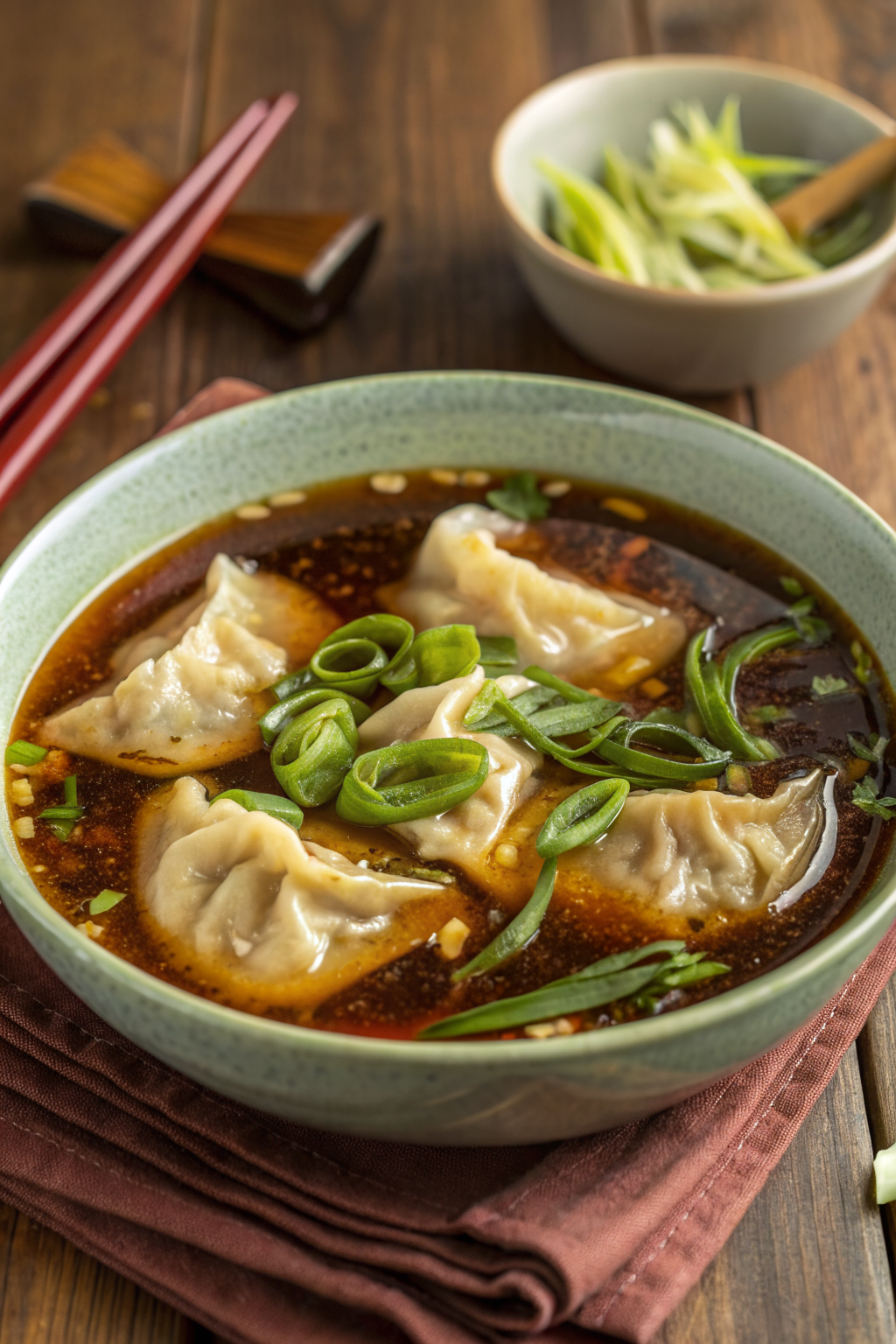
Gyoza Japanese Dumpling Soup tastes like a warm, savory hug: tender pan-seared dumplings, umami-rich broth, and crisp greens. This recipe suits busy home cooks who want a comforting meal and takes about 30 to 40 minutes from start to finish. I learned this version on a rainy night in Osaka and I still sneak a dumpling while testing.
Why Choose This Gyoza Japanese Dumpling Soup
Gyoza Japanese Dumpling Soup packs bold umami, bright ginger notes, and satisfying textures in every spoonful. The dish balances quick weeknight prep with restaurant-style flavor, so you get a show-stopping bowl without an all-evening hassle.
Many readers like how flexible the recipe feels. You can swap proteins, make it vegetarian, or speed things up with store-bought wrappers.
Family fought over the last bowl and asked me to make it again the next night ★★★★★
Ingredients You Need
- 20 store-bought gyoza wrappers (wonton wrappers work in a pinch; try a brand like Twin Marquis or local Asian market wrappers).
- 10 to 12 pork gyoza (or 20 homemade filled wrappers; see substitutions below)
- 4 cups chicken or vegetable broth (low-sodium works best)
- 1 cup dashi stock or 1 teaspoon dashi powder for deeper umami (optional)
- 2 cloves garlic, minced
- 1 tablespoon fresh ginger, grated
- 1 tablespoon soy sauce (use tamari for gluten-free)
- 1 tablespoon mirin or 1 teaspoon sugar if you do not have mirin
- 1 teaspoon sesame oil
- 2 heads baby bok choy or 2 cups napa cabbage, sliced
- 2 scallions, thinly sliced for garnish
- 1 teaspoon chili oil or shichimi togarashi, optional for heat
- Salt and black pepper to taste
Pantry shortcuts and substitutions:
- Use frozen pre-cooked gyoza to save time; pan-sear from frozen then add to broth.
- Swap pork for ground chicken, shrimp, or firm tofu for vegetarian bowls.
- Use miso paste (1 tablespoon white miso) to make a miso-gyoza soup variation if you prefer that profile.
Equipment:
- Large pot or Dutch oven for broth
- Nonstick skillet with a lid for pan-frying gyoza
- Cutting board and knife
- Slotted spoon or spider for removing gyoza
- Ladle and bowls for serving
How to Make Gyoza Japanese Dumpling Soup
Prep the Filling and Wrappers (10 minutes)
If you make homemade gyoza, mix 1 pound ground pork, 2 tablespoons finely chopped cabbage, 1 scallion chopped, 1 teaspoon grated ginger, 1 teaspoon soy sauce, 1 teaspoon sesame oil, and a pinch of salt. Spoon about 1 teaspoon filling into each wrapper, wet the edges with water, fold and pleat to seal. If you use store-bought filled gyoza, keep them refrigerated or frozen until cooking time.
Pan-Sear the Gyoza (8 minutes)
Heat 1 tablespoon vegetable oil in a skillet over medium-high heat. Place gyoza flat side down and brown for 2 to 3 minutes until golden. Pour 1/4 cup water into the skillet and immediately cover. Steam the gyoza for 3 minutes so the filling cooks through and wrappers soften while the bottoms stay crisp. Uncover and let any remaining water evaporate so the bottoms re-crisp for another minute.
Make the Broth and Finish the Soup (8 to 12 minutes)
Heat your pot over medium and add garlic and ginger; sauté for 30 seconds until fragrant. Pour in chicken or vegetable broth and dashi if using, then add soy sauce and mirin. Bring to a gentle simmer and add bok choy or napa cabbage; cook until greens become tender, about 2 to 3 minutes. Add pan-seared gyoza to the pot and warm through for another minute. Stir in sesame oil and taste; adjust with salt or a dash more soy sauce.
Serve
Ladle broth and greens into bowls and top with gyoza. Sprinkle scallions and a drizzle of chili oil or a pinch of shichimi togarashi. Serve hot.
Tips & Common Mistakes
- Use cold filling when you fold wrappers. Warm filling makes wrappers slippery and hard to seal.
- Do not overcrowd the skillet when searing. Cook in batches to keep bottoms crisp.
- If broth tastes flat, add a small splash of soy sauce or a teaspoon of dashi powder to punch up umami.
- Avoid boiling the soup vigorously after adding mirin or soy; keep a gentle simmer to preserve flavor.
- Freeze leftover raw gyoza on a tray first, then bag them. That prevents sticking and keeps shape.
- Do not overcook the greens; add them near the end so they keep color and crunch.
Variations I've Tried
- Pork and chive gyoza with a light chicken broth and a touch of rice vinegar for brightness.
- Shrimp gyoza in a spicy kimchi-infused broth for extra kick.
- Miso-based broth with mushroom gyoza and baby spinach for a vegetarian option.
- Chicken gyoza with garlic chips and a lemony soy splash for a brighter bowl.
- Pan-fry gyoza more than once for extra crisp bottoms, then finish in broth for the best texture contrast.
How to Serve
Serve Gyoza Japanese Dumpling Soup in wide shallow bowls so diners can see the dumplings and veggies. Offer small plates of pickled cucumber, sliced radish, or toasted sesame seeds as simple side options. Add scallions and a little chili oil at the table so people can season their bowls. Pair with steamed rice or a light cold noodle salad to round out the meal.
Make-Ahead and Storage
Store leftover soup in airtight containers. Keep broth and gyoza together for up to 3 days in the refrigerator. Freeze assembled soup without greens for up to 2 months; thaw in the refrigerator overnight before reheating. To reheat, simmer gently on the stove until steaming, adding fresh greens at the end to avoid overcooking. If you froze raw gyoza, cook them straight from frozen using the pan-fry then steam method and then add to fresh hot broth.
Gyoza Japanese Dumpling Soup
Ingredients
Instructions
- In a bowl, mix together the ground pork, finely chopped cabbage, chopped scallion, grated ginger, soy sauce, sesame oil, and a pinch of salt until well combined.
- Place about 1 teaspoon of filling in the center of each gyoza or wonton wrapper. Wet the edges with water, fold over, and pleat to seal tightly. Keep filled gyoza chilled until ready to cook.
- Heat the vegetable oil in a nonstick skillet over medium-high heat.
- Arrange the gyoza flat-side down in a single layer and cook for 2 to 3 minutes, until the bottoms are golden brown.
- Carefully pour in 1/4 cup water, immediately cover with a lid, and steam for about 3 minutes so the filling cooks through and the wrappers soften.
- Uncover and cook for about 1 more minute, allowing any remaining water to evaporate and the bottoms to re-crisp. Remove from the pan and set aside.
- In a large pot or Dutch oven over medium heat, add the minced garlic and grated ginger and sauté for about 30 seconds until fragrant.
- Pour in the chicken or vegetable broth and the dashi stock or dashi powder if using. Stir in the soy sauce and mirin (or sugar). Bring to a gentle simmer.
- Add the sliced baby bok choy or napa cabbage and cook for 2 to 3 minutes, just until the greens are tender but still bright.
- Add the pan-seared gyoza to the pot and warm through for about 1 minute. Stir in the sesame oil and taste the broth, adjusting with salt, pepper, or a splash more soy sauce if needed.
- Ladle the hot broth and greens into wide, shallow bowls and top each bowl with several gyoza.
- Garnish with sliced scallions and drizzle with chili oil or sprinkle with shichimi togarashi if you like heat. Serve immediately.
Notes
Approximate per serving (1/4 of recipe, made with pork gyoza, chicken broth, and bok choy): 380–420 calories; fat 18–22 g; saturated fat 5–7 g; carbohydrates 32–38 g; fiber 2–3 g; sugars 4–6 g; protein 18–22 g; sodium 1400–1700 mg. Values will vary based on type of gyoza, broth, and exact portion size. Tips & Storage
• Keep the filling cold when folding gyoza so the wrappers are easier to seal.
• Do not overcrowd the skillet when searing—cook gyoza in batches so the bottoms crisp properly.
• Keep the broth at a gentle simmer rather than a hard boil after adding soy sauce and mirin to preserve flavor.
• Add greens near the end so they stay bright and slightly crisp.
• Store leftover soup (broth with gyoza) in an airtight container in the refrigerator for up to 3 days. Reheat gently on the stove until steaming.
• For freezing, store broth and cooked gyoza without greens for up to 2 months; add fresh greens when reheating.