
Dutch Oven Sourdough Bread Recipe is one of those kitchen adventures that turns out to be way easier than it sounds. If you’ve ever been curious about baking that perfect crusty loaf with a soft, tangy inside, this recipe might just become your new best friend. I’ve been baking sourdough for years, and using a Dutch oven changed the game for me. It traps steam like a pro, giving you that bakery-quality crust without fancy equipment.
Why You'll Love Dutch Oven Sourdough Bread Recipe
Ever bitten into a loaf that’s crispy on the outside but tender and chewy inside? That’s exactly what this recipe delivers. The Dutch oven mimics a professional steam oven, which means your bread gets that irresistible crust and open crumb. Plus, sourdough has this amazing tangy flavor that just feels like home. I find baking sourdough in a Dutch oven takes the guesswork out of the process and makes it accessible for nearly anyone.
Variations I’ve Tried and Loved
Sourdough is pretty forgiving and fun to experiment with. Here are a few tweaks I’ve played around with:
- Add herbs like rosemary or thyme for a savory twist.
- Mix in some seeds (sunflower, flax, sesame) for extra texture.
- Swap out part of the white flour for whole wheat or rye for a deeper flavor.
- Toss in some olives or dried fruit for a sweet and salty combo.
Each variation brings its own personality to the loaf, so don’t be shy about trying something new.
Ingredients You’ll Need
Before you start, gather these simple ingredients:
- 500g bread flour (or all-purpose if that’s what you have)
- 350g water (room temperature)
- 100g active sourdough starter (fed and bubbly)
- 10g salt
That’s it. Just four ingredients that turn into pure magic.
How I Make Dutch Oven Sourdough Bread
Here’s the step-by-step that I follow, and it works like a charm every time.
- Mix the dough: Combine flour and water in a big bowl. Stir until no dry spots remain. Cover and let it rest for 30-45 minutes (this is called autolyse, but don’t worry about the fancy name).
- Add starter and salt: Mix in your bubbly starter and salt. Use your hands or a spoon to knead gently until everything is combined.
- Bulk fermentation: Cover the bowl and let the dough rise at room temp for 4-6 hours. Every 30-45 minutes, do a set of stretch and folds (lift the dough from one side and fold it over itself). This helps build strength.
- Shape the loaf: Turn the dough onto a floured surface, shape it into a tight ball. Place it seam-side up in a floured banneton or bowl lined with a towel.
- Proof: Cover and let it rise for 1-2 hours or overnight in the fridge (overnight gives better flavor).
- Preheat Dutch oven: Heat your oven to 450°F (230°C) with the Dutch oven inside for at least 30 minutes.
- Bake: Carefully transfer the dough onto parchment paper, score the top with a sharp knife, and place it into the hot Dutch oven. Cover with the lid and bake for 20 minutes.
- Finish baking: Remove the lid and bake for another 20-25 minutes until the crust is deep golden brown.
- Cool: Let the bread cool completely on a wire rack before slicing (I know, it’s hard to wait, but it’s worth it).
Serving
Sourdough bread is like a blank canvas. I love it fresh with butter and jam, or as the base for a killer sandwich. Toasting leftover slices with avocado or dipping it in soup just makes me happy. Ever tried sourdough with a drizzle of olive oil and a sprinkle of sea salt? Simple but heavenly.
Expert Baking Tips for Dutch Oven Sourdough Bread
- Keep your starter active and bubbly; it’s the heart of your bread.
- Use a sharp blade to score the dough—this controls how it expands in the oven.
- Don’t rush the cooling process; slicing too early can make the crumb gummy.
- Experiment with hydration (water amount) to get the crumb texture you like.
- If your crust gets too dark, tent the loaf with foil during the last baking minutes.
Storing Leftovers
Wrap your bread in a clean kitchen towel or store it in a paper bag to keep the crust crisp. Avoid plastic bags unless you want a soft crust. For longer storage, slice and freeze the bread. Toast slices straight from the freezer for that fresh-baked vibe anytime.
Common Mistakes to Avoid
- Using a weak starter: If your starter isn’t bubbly, your bread won’t rise properly.
- Skipping stretch and folds: This step develops gluten and structure.
- Baking without preheating the Dutch oven: The heat shock is key for a good crust.
- Cutting the bread too soon: Cooling allows the crumb to set; cutting early makes it gummy.
- Overproofing or underproofing: Timing is everything—too long or too short can mess with texture.
Nutrition Facts (per serving)
- Calories: 180 kcal
- Carbohydrates: 38 g
- Protein: 6 g
- Fat: 1 g
- Fiber: 2 g
- Sugar: 0.2 g
Baking sourdough bread in a Dutch oven isn’t just about making food; it’s about enjoying the process and sharing something wholesome. Give it a shot—you might just surprise yourself!
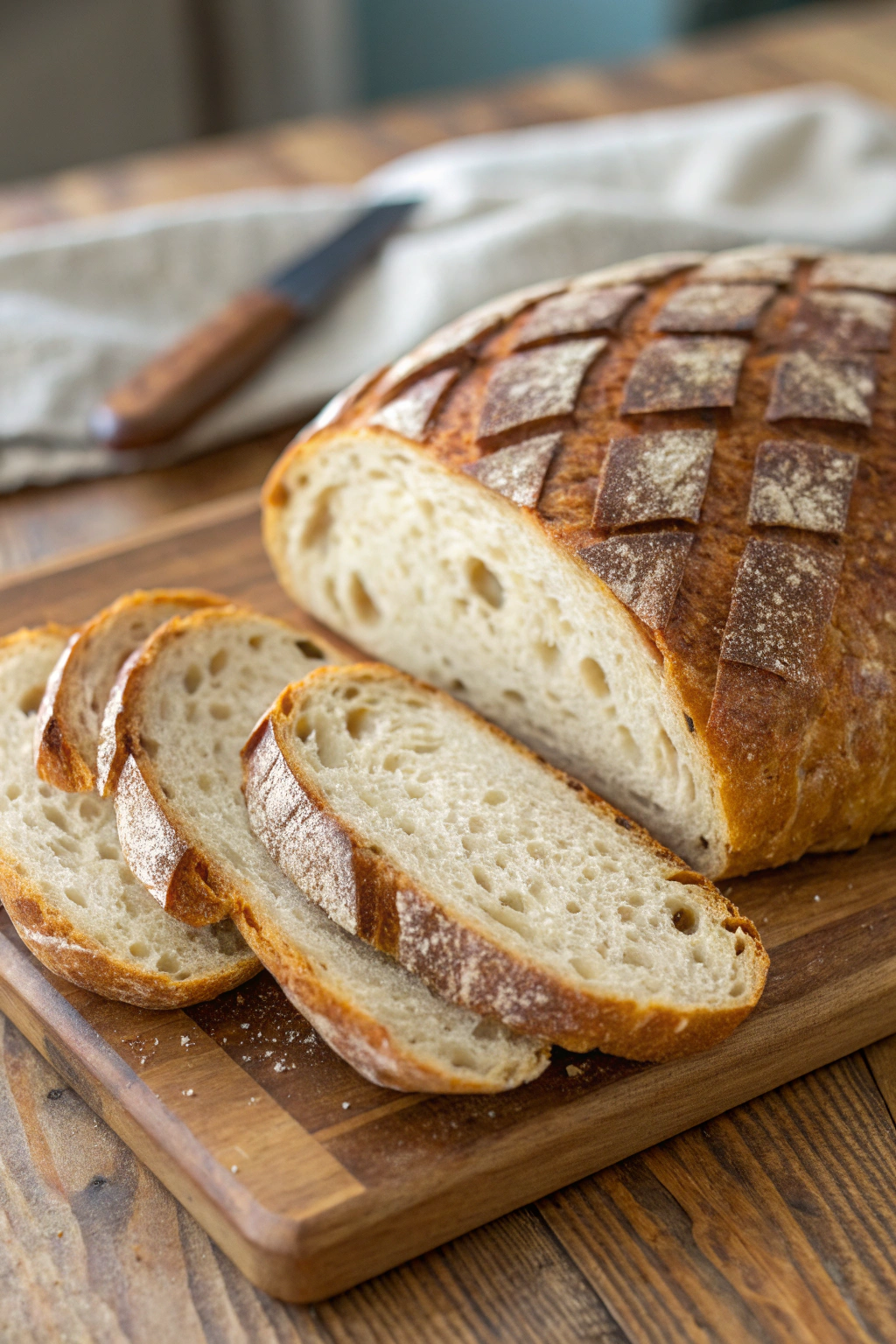
Dutch Oven Sourdough Bread
Ingredients
Instructions
- Mix the flour and water together and let it rest for 30 minutes.
- Add the sourdough starter and salt to the flour mixture and knead until smooth.
- Let the dough ferment at room temperature for 4-5 hours, folding every 30 minutes for the first 2 hours.
- Shape the dough into a round loaf and place it in a floured banneton basket.
- Proof the dough in the refrigerator overnight.
- Preheat the Dutch oven in the oven at 230°C (450°F) for 30 minutes.
- Carefully place the dough into the hot Dutch oven, cover with the lid, and bake for 20 minutes.
- Remove the lid and bake for an additional 25 minutes until the crust is deep brown.
- Cool the bread on a wire rack before slicing.