
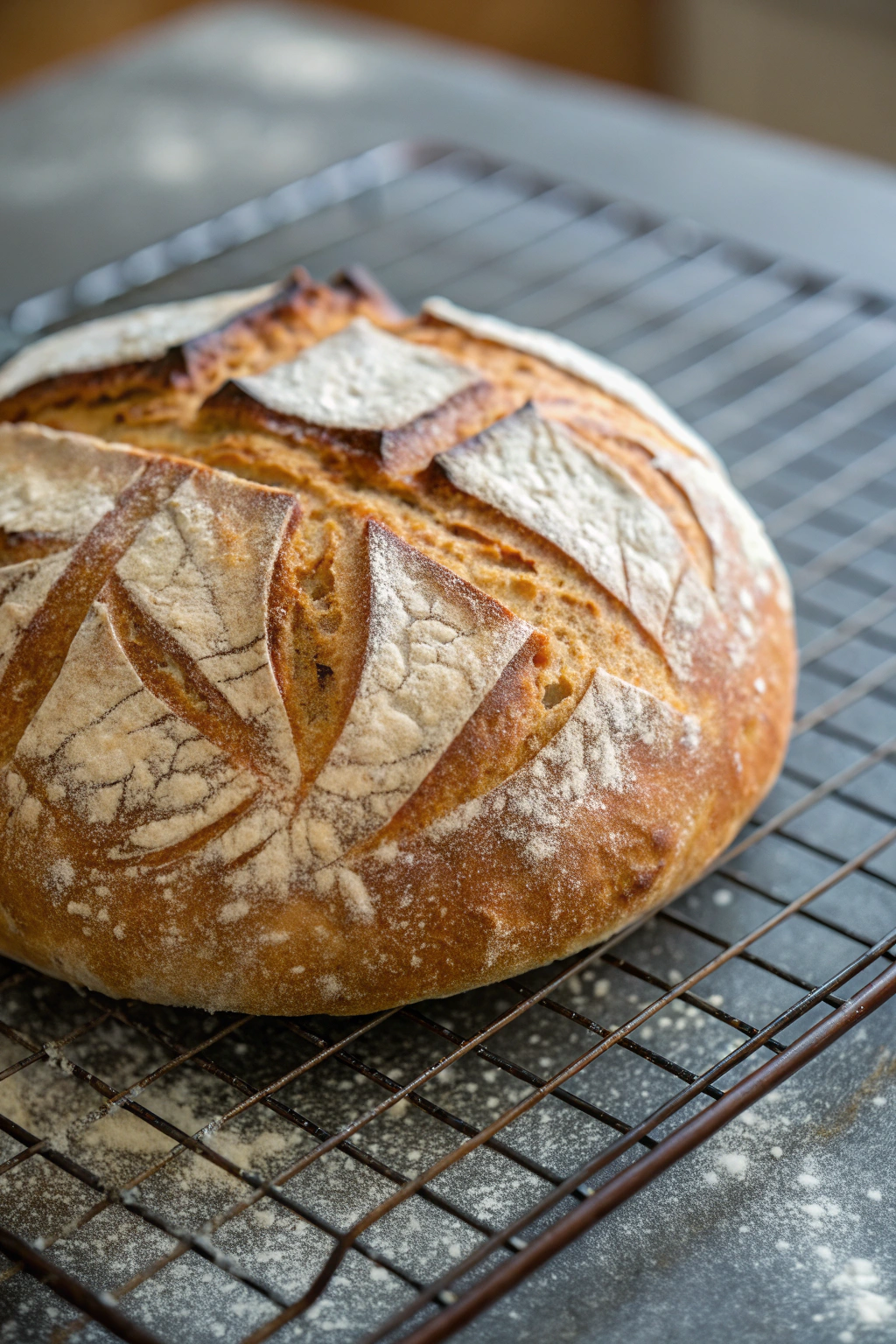
Homemade Sourdough Bread Recipe is one of those kitchen adventures that feels like a science experiment and a cozy Sunday ritual all rolled into one. If you’ve ever been curious about baking your own bread with that perfect tang and crust, you’re in the right place. I’ll walk you through everything from ingredients to pro tips, so you can impress yourself (and maybe your neighbors) with your baking skills.
Why You Should Try Homemade Sourdough Bread Recipe
Sourdough isn’t just bread; it’s a living thing. The natural fermentation process makes it easier to digest and gives it that signature tangy flavor. Plus, baking sourdough feels like stepping back in time when bread was made with patience and care. There’s something incredibly satisfying about nurturing a starter and turning it into a loaf that fills your kitchen with an irresistible aroma.
Variations I’ve Tried and Loved
Over the years, I’ve experimented with different flours and hydration levels. Sometimes I use whole wheat for a nuttier taste or rye for a deeper flavor. Adding seeds like sunflower or flax can give your bread a nice crunch. You don’t have to stick to just white flour—mixing in other grains can make your loaf uniquely yours. Ever thought about a garlic and herb sourdough? It’s a game changer for sandwiches.
Ingredients You’ll Need
Here’s the simple lineup for a basic loaf:
- 500 grams bread flour (or a mix with whole wheat)
- 350 grams water (room temperature)
- 100 grams active sourdough starter (fed and bubbly)
- 10 grams salt
That’s it. Just four ingredients, but each plays a crucial role in the final loaf.
How I Make Homemade Sourdough Bread
Step 1: Feed Your Starter
Make sure your starter is bubbly and active. I usually feed mine the night before baking to give it time to peak.
Step 2: Mix the Dough
Combine the flour and water in a large bowl. Stir until no dry flour remains. Cover and let it rest for about 30 minutes—this is called autolyse, and it helps develop gluten without kneading.
Step 3: Add Starter and Salt
Mix in your sourdough starter and salt. I use my hands because it’s messier but gives me a better feel for the dough. Knead gently until everything is combined.
Step 4: Bulk Fermentation
Cover and let the dough rise at room temperature for 4 to 6 hours. During this time, perform stretch and folds every 30 minutes for the first two hours. This strengthens the dough and builds structure.
Step 5: Shape the Dough
Turn the dough onto a floured surface, shape it into a tight round loaf, and place it in a banneton or bowl lined with a floured towel.
Step 6: Final Proof
Let it proof for 2 to 4 hours at room temperature or overnight in the fridge for more flavor complexity.
Step 7: Bake
Preheat your oven to 475°F with a Dutch oven inside. Carefully transfer your dough into the hot pot, score the top with a sharp knife or razor, cover, and bake for 20 minutes. Remove the lid and bake for another 20 to 25 minutes until the crust is golden and crisp.
Serving Ideas for Homemade Sourdough Bread
Sourdough shines with simple toppings. Slather it with butter and sprinkle some sea salt, or go fancy with avocado and a poached egg. It also makes a killer base for grilled cheese or a hearty sandwich. Ever tried dipping it in olive oil and balsamic vinegar? Trust me, it’s worth a shot.
Holly’s Pro Tips for Homemade Sourdough Bread
- Keep your starter happy by feeding it regularly and storing it properly.
- Use a kitchen scale for precise measurements; it makes a huge difference.
- Don’t rush fermentation. Patience pays off with flavor and texture.
- Scoring the dough isn’t just for looks—it controls how the bread expands in the oven.
- If your crust is too hard, try baking with slightly less time or covering the loaf after baking.
Leftovers
If you have any bread left (which might be a miracle), store it in a paper bag or bread box to keep the crust crisp. Avoid plastic bags unless you want a soft crust. You can revive day-old sourdough by warming it in the oven for a few minutes. And if it gets stale, toast it or turn it into croutons—no crumb goes to waste!
Common Mistakes to Avoid
- Using inactive starter. If it’s not bubbly and smells sour but fresh, your bread won’t rise properly.
- Over or under-proofing. Keep an eye on your dough; it should roughly double in size.
- Skipping the stretch and folds. It might seem like extra work, but it’s key to a good crumb.
- Baking in a cold oven. Preheat your Dutch oven so the bread gets that oven spring.
- Forgetting to score. Without it, your bread might burst unpredictably.
Nutrition Facts (per serving)
- Calories: 180 kcal
- Carbohydrates: 38 g
- Protein: 6 g
- Fat: 1 g
- Fiber: 2 g
- Sugar: 0.5 g
This homemade sourdough bread recipe offers a wholesome, flavorful loaf that’s worth every step and every minute of waiting. Ready to get your hands floury?
Homemade Sourdough Bread Recipe
Ingredients
Instructions
- In a large bowl, combine the sourdough starter with warm water and mix well.
- Gradually add flour and salt, stirring to form a sticky dough.
- Cover the bowl with a damp cloth and let it ferment at room temperature for 4-6 hours.
- Turn the dough onto a floured surface and knead until smooth and elastic.
- Place dough in a greased bowl, cover, and let rise until doubled in size, about 3-4 hours.
- Preheat the oven to 450°F (230°C) and place a Dutch oven inside to heat.
- Shape the dough into a round loaf and place it on parchment paper.
- Carefully transfer the dough with parchment paper into the hot Dutch oven.
- Cover and bake for 30 minutes, then uncover and bake for an additional 15 minutes until golden brown.
- Remove from oven and let cool on a wire rack before slicing.