
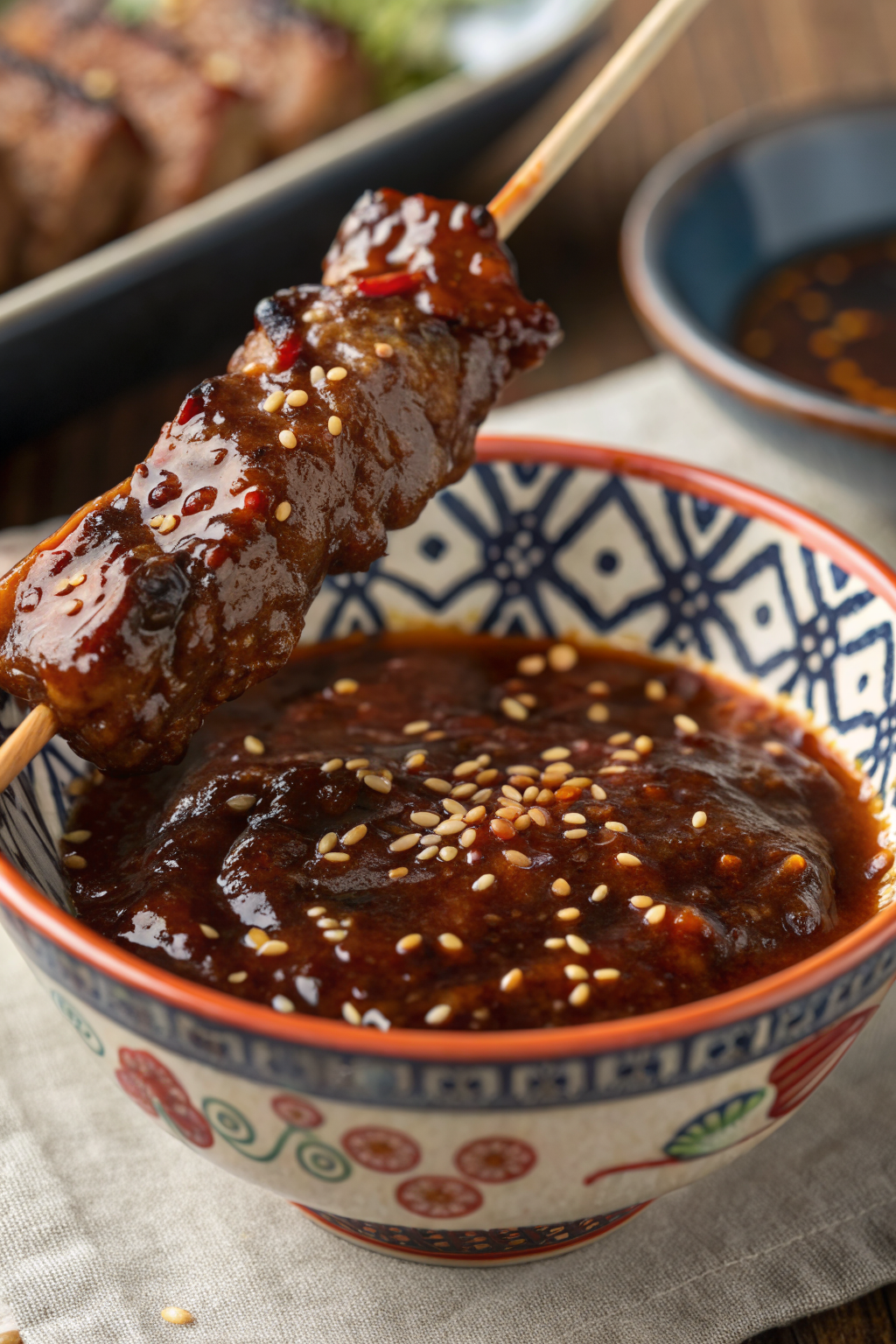
Yakiniku Japanese BBQ Sauce Recipe brings a glossy, sweet-salty umami punch with soy, garlic, sesame, and a bright citrus finish. It suits grill lovers and meal preppers who want a versatile dipping sauce and marinade, and you can make it in about 12 minutes. I learned this version during a late-night yakitori shift in college, and I still keep a jar front and center in my fridge.
Why Choose This Yakiniku Japanese BBQ Sauce Recipe
Yakiniku Japanese BBQ Sauce Recipe gives you restaurant-style tare with pantry staples and clear, quick steps. You control sweetness, heat, and salt, and you skip mystery additives from store bottles.
You can brush it on beef short ribs, toss it with grilled mushrooms, or use it as a dipping sauce for crispy tofu. It clings well, shines beautifully, and boosts every bite.
My family ditched the bottled stuff after one taste of this glossy, garlicky sauce ★★★★★
Ingredients You Need
- Soy sauce, 1 cup — use Japanese-style like Kikkoman or Yamasa; choose low-sodium if you prefer a lighter salt hit
- Mirin, 1/3 cup — if you only have aji-mirin, reduce the sugar a touch
- Sake, 1/4 cup — swap with dry sherry or apple juice; if using juice, add a pinch more salt
- Brown sugar, 3 to 4 tablespoons — honey works too; start with 3 tablespoons and adjust to taste
- Garlic, 3 cloves, finely grated
- Fresh ginger, 1 tablespoon, finely grated
- Asian pear or apple, 1/4 cup finely grated — optional but classic for tenderness and natural sweetness
- Rice vinegar, 1 to 2 teaspoons — or yuzu or lemon juice for a citrus pop
- Toasted sesame oil, 1 to 2 teaspoons
- Gochugaru or crushed red pepper, 1/2 to 1 teaspoon — or use shichimi togarashi for a Japanese spice blend
- Toasted sesame seeds, 1 tablespoon
- Optional depth boosters: 1 teaspoon white miso or 1 teaspoon oyster sauce
- Optional thickener: cornstarch slurry, 1 teaspoon cornstarch mixed with 2 teaspoons cold water
Equipment
- Small saucepan
- Whisk or spatula
- Microplane or fine grater
- Fine mesh strainer, optional
- Heatproof jar with lid
How to Make Yakiniku Japanese BBQ Sauce Recipe
Prep the aromatics
- Grate the garlic, ginger, and pear or apple.
- Measure all liquids and sugar so you can cook without pausing.
Simmer the base, 5 to 6 minutes
- Add soy sauce, mirin, sake, brown sugar, garlic, ginger, and grated fruit to the saucepan.
- Bring the mixture to a gentle simmer over medium heat.
- Stir often and cook until the sugar dissolves and the sauce smells toasty and rich.
Finish and balance, 1 to 2 minutes
- Stir in rice vinegar, sesame oil, chili flakes, and sesame seeds.
- Taste and adjust salt with a splash more soy, sweetness with a pinch of sugar, or brightness with another drop of vinegar or citrus.
Thicken for extra cling, optional, 1 minute
- If you want a glaze-like finish, whisk the cornstarch slurry, then pour it into the simmering sauce while you stir.
- Cook until the sauce coats the back of a spoon and looks glossy.
Strain and cool
- Strain for a smooth sauce or keep the bits in for rustic texture.
- Transfer to a clean jar and cool to room temperature with the lid ajar, then seal.
Tips & Common Mistakes
- Keep the heat at a gentle simmer to avoid scorching sugar.
- Grate aromatics finely so they infuse fast and taste balanced.
- Taste at the end and adjust in tiny increments to avoid overshooting flavor.
- Add citrus at the end so it tastes bright, not cooked.
- Choose low-sodium soy if you plan to reduce the sauce a lot.
- Skip the cornstarch if you want a thinner dipping sauce, use it if you want a brush-on glaze.
- If you marinate raw meat, boil the used marinade for 1 full minute before serving it as a sauce.
- Store in glass, not a reactive metal container, to keep flavors clean.
Variations I've Tried
- Spicy gochujang: Whisk in 1 to 2 teaspoons gochujang for deeper heat and a touch of tang.
- Miso tare: Add 1 teaspoon white or red miso for savory depth and extra body.
- No-alcohol: Replace sake with apple juice and mirin with a mix of water and sugar, then bump vinegar slightly.
- Smoky: Stir in a few drops of smoked soy sauce or a pinch of smoked salt.
- Low sugar: Use half sugar and rely on grated pear for gentle sweetness.
- Keto-ish: Swap sugar for allulose or monk fruit and simmer a minute longer to reduce.
How to Serve
Use it as a yakiniku dipping sauce for grilled short rib, thin-sliced pork belly, chicken thighs, or mushrooms and tofu. Brush it on skewers during the last minute of grilling to build a shiny glaze without burning. Pair with hot rice, crisp lettuce leaves, quick pickles, and cold beer or iced green tea. If you used it as a marinade, boil leftover marinade for a minute before you bring it to the table.
Make-Ahead and Storage
Cool the sauce completely, then refrigerate in a sealed jar for up to 2 weeks without fruit or up to 1 week with grated pear or apple. Freeze portions in an ice cube tray, then bag them for up to 3 months. Reheat gently in a small saucepan over low heat or microwave in short bursts, and whisk to bring the emulsion back. If you want a thick glaze after freezing, add the cornstarch slurry during reheating instead of before storage.
Yakiniku Japanese BBQ Sauce Recipe
Ingredients
Instructions
- Finely grate the garlic, ginger, and Asian pear or apple (if using). Measure out the soy sauce, mirin, sake, and brown sugar so everything is ready to cook.
- In a small saucepan, combine the soy sauce, mirin, sake, brown sugar, grated garlic, grated ginger, and grated fruit (if using).
- Place the saucepan over medium heat and bring the mixture to a gentle simmer, stirring often until the sugar dissolves and the sauce smells toasty and rich, about 5 to 6 minutes. Do not let it boil hard or scorch.
- Stir in the rice vinegar, toasted sesame oil, gochugaru or crushed red pepper, toasted sesame seeds, and optional miso or oyster sauce. Taste and adjust: add a splash more soy for salt, a pinch of sugar for sweetness, or a bit more vinegar or citrus for brightness.
- If you want a thicker, glaze-like sauce, whisk the cornstarch with cold water, then slowly pour the slurry into the gently simmering sauce while stirring. Cook for about 1 minute, until the sauce is glossy and coats the back of a spoon.
- Remove from heat. Strain through a fine mesh strainer for a smooth sauce, or leave the aromatics in for a rustic texture. Transfer to a clean heatproof jar and let cool to room temperature with the lid slightly ajar, then seal and refrigerate.
Notes
Approximate per 2-tablespoon serving (about 12 servings per batch): 45 calories; fat 2 g; saturated fat 0 g; carbohydrates 6 g; fiber 0 g; sugars 4 g; protein 2 g; sodium 880 mg. Values are estimates and will vary based on soy sauce brand, amount of sugar used, and optional ingredients like miso or oyster sauce.