
Tasty Miso Soup Recipe kicks off any meal with a warm, comforting vibe that feels like a gentle hug on a chilly day. If you’ve ever wondered how to whip up this classic Japanese staple at home, you’re in the right spot. I’ve been making miso soup for years, and it’s one of those dishes that’s simple yet endlessly satisfying. Let’s get into what makes this soup so special and how you can make it your own.
Why You Should Try This Miso Soup Recipe
Miso soup isn’t just tasty; it’s packed with umami goodness that hits all the right notes. This recipe balances savory miso paste with a light broth and fresh ingredients, making it a quick fix for any meal. Plus, it’s super versatile. Whether you want a simple bowl or something loaded with tofu and seaweed, this soup adapts easily. I love how it feels like a little wellness boost without any fuss.
Substitutions & Variations
One of the best things about miso soup is how flexible it is. If you don’t have the exact ingredients, no worries. Here are some swaps that work well:
- Miso Paste: White miso is mild and sweet, but you can use red miso for a deeper, earthier flavor. Mixed miso blends are also great.
- Dashi Stock: Traditionally made from bonito flakes and kombu, but you can use vegetable broth or mushroom broth if you want a vegetarian version.
- Tofu: Silken tofu is classic, but firm tofu works fine too. You can even add cooked chicken or shrimp for a heartier twist.
- Seaweed: Wakame is standard, but if you can’t find it, try nori sheets torn into small pieces or even spinach.
Feel free to toss in sliced green onions, mushrooms, or even grated ginger for an extra kick.
Ingredients You’ll Need
Here’s the lineup for a basic, tasty miso soup that serves about 4:
- 4 cups dashi stock (homemade or store-bought)
- 3 tablespoons white miso paste
- 1/2 cup silken tofu, cut into small cubes
- 1/4 cup dried wakame seaweed, soaked and drained
- 2 green onions, thinly sliced
Optional but recommended:
- Mushrooms (shiitake or enoki)
- A pinch of toasted sesame seeds
- Fresh ginger, grated (about 1 teaspoon)
How to Make Tasty Miso Soup
- Heat the Dashi: Pour your dashi stock into a pot and warm it over medium heat. Don’t let it boil vigorously; a gentle simmer is perfect.
- Add Wakame and Tofu: Toss in the soaked wakame and tofu cubes. Let them warm through for about 2-3 minutes.
- Mix Miso Paste: In a small bowl, scoop the miso paste and ladle some warm broth over it. Stir until smooth to avoid lumps.
- Combine: Pour the miso mixture back into the pot. Stir gently and keep the heat low. Avoid boiling after adding miso to preserve its delicate flavors and probiotics.
- Finish with Green Onions: Sprinkle sliced green onions on top just before serving.
Expert Tips
- Use a fine mesh strainer or ladle to mix the miso paste with broth to prevent clumps.
- Keep the soup warm but never boiling after adding miso paste to keep its nutrients intact.
- Fresh ingredients like green onions and seaweed make a noticeable difference in flavor.
- Experiment with different miso types to find your favorite taste profile.
- If you want a richer broth, add a splash of soy sauce or a few drops of toasted sesame oil.
Serving
Miso soup pairs beautifully with a variety of dishes. It’s a classic starter for sushi or any Japanese meal, but it also works well alongside grilled fish, rice bowls, or even a simple salad. For a cozy meal, serve it with steamed rice and pickled vegetables. If you’re feeling adventurous, add a soft-boiled egg or some crispy tempura bits on top for texture.
Mistakes to Avoid
- Boiling the soup after adding miso paste can kill the beneficial bacteria and alter the flavor.
- Using too much miso paste can overpower the soup and make it salty.
- Forgetting to soak dried wakame can result in a chewy, unpleasant texture.
- Skipping the step of dissolving miso in broth before adding to the pot may lead to lumps.
- Overcooking tofu can cause it to break apart, so handle gently.
Leftovers and Storage Tips
Miso soup tastes best fresh, but if you have leftovers, store them in an airtight container in the fridge. Consume within 2 days for the best flavor and to keep the miso’s probiotics alive. When reheating, warm gently on the stove without boiling. If the soup thickens or the miso settles, give it a quick stir and add a splash of water or broth to loosen it up. Avoid microwaving if possible, as it can overheat and kill the delicate flavors. With these tips, you can enjoy your tasty miso soup without wasting a drop.
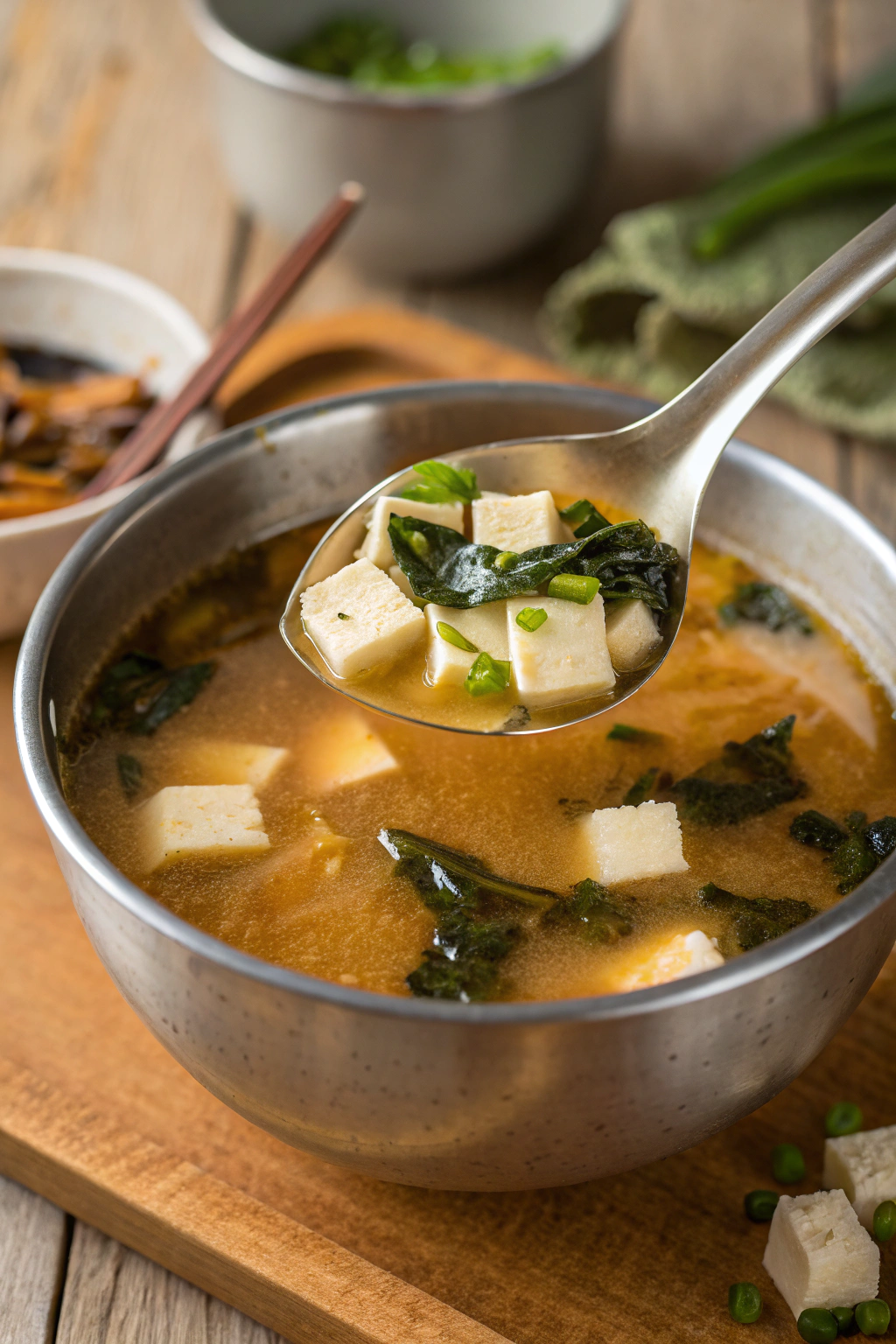
Tasty Miso Soup Recipe
Ingredients
Instructions
- Heat dashi stock in a pot until warm but not boiling.
- Place miso paste in a small bowl and add a ladle of warm dashi. Whisk until smooth.
- Add the miso mixture back into the pot and stir gently.
- Add tofu and wakame seaweed to the pot and warm through.
- Remove from heat and garnish with sliced green onions before serving.