
Tasty Korean Winter Soup Recipe brings cozy, savory heat with tangy kimchi, soft tofu, and a broth that tastes rich without feeling heavy. It suits busy cooks and spice fans who want dinner on the table in about 35 minutes. I pull out this pot as soon as the weather dips below 40 and my Midwestern bones start negotiating for soup.
Tasty Korean Winter Soup Recipe
Tasty Korean Winter Soup Recipe uses one pot, minimal chopping, and pantry bottles like gochujang and soy sauce. You build big flavor fast by blooming spices, then simmering stock with kimchi. The method stays simple, even if you add extras like rice cakes or mushrooms.
You can pick your protein or skip it. Pork belly, thin-sliced beef, or mushrooms all work. The soup forgives measurement wiggles, which suits real life on a weeknight.
Ingredients You Need
- Neutral oil: 1 tablespoon
- Pork belly or thin-sliced beef: 6 to 8 ounces (sub mushrooms for a vegetarian pot)
- Garlic: 4 cloves, minced (jarred minced garlic works)
- Fresh ginger: 1 teaspoon, minced (or ginger paste)
- Gochugaru: 1 to 2 tablespoons, Korean red pepper flakes (use 1 teaspoon for mild)
- Gochujang: 1 tablespoon, Korean chili paste (O’Food or Chung Jung One taste balanced)
- Chopped kimchi: 1.5 cups, plus 1/3 cup kimchi juice (Jongga keeps good crunch)
- Korean radish or daikon: 1 cup, 1/2-inch dice
- Shiitake or cremini mushrooms: 1 cup, sliced
- Soft or silken tofu: 14 ounces, cut into large cubes
- Low-sodium stock: 4 cups (anchovy-kelp stock tastes classic; chicken or vegetable broth works; dashi packets give a quick shortcut)
- Soy sauce: 2 tablespoons (use gluten-free tamari if needed)
- Sugar or mirin: 1 teaspoon, to balance heat and tang
- Sesame oil: 1 teaspoon, for finishing
- Scallions: 4, sliced
- Rice cakes tteok: 1 cup, optional, soaked 10 minutes if frozen
- Salt and pepper to taste
- Cooked white rice, for serving
Equipment
- Medium Dutch oven or heavy pot with lid
- Cutting board and sharp knife
- Measuring cups and spoons
- Ladle and wooden spoon
How to Make Tasty Korean Winter Soup
Prep Time: 15 minutes
Cook Time: 20 minutes
Total Time: 35 minutes
- Set up and prep
Slice pork or mushrooms, mince garlic and ginger, dice radish, and slice scallions. Cube tofu and soak rice cakes if using. Place gochugaru, gochujang, and soy sauce within reach. - Sear the protein
Heat the pot over medium-high. Add oil, then add pork or beef and cook until the edges brown, about 3 to 4 minutes. If you use mushrooms, cook until they release liquid and turn golden. - Bloom aromatics
Lower heat to medium. Add garlic and ginger, then stir for 30 seconds. Add gochugaru and gochujang and stir until the paste looks glossy and smells toasty, about 30 seconds. - Build the base
Stir in chopped kimchi and the diced radish. Cook 2 minutes to soften the kimchi and coat everything in the spicy paste. Scrape the bottom to pick up browned bits. - Add liquid and simmer
Pour in stock and the kimchi juice. Bring to a gentle boil, then lower to a simmer. Cook 12 to 15 minutes until the radish turns tender. - Add veggies and tofu
Stir in mushrooms if you did not use them earlier, the tofu cubes, and rice cakes if using. Simmer 5 to 8 minutes until the rice cakes turn chewy-tender and the tofu heats through. Taste the broth. - Season
Add soy sauce, sugar or mirin, and a few grinds of pepper. Adjust salt if needed. Add more gochugaru for extra heat. - Finish
Turn off heat and drizzle sesame oil. Stir in most of the scallions and save a handful for garnish. - Optional egg finish
Crack an egg into the simmering soup and poach 2 minutes for a soft center. You can also whisk an egg and stream it in for ribbons. - Serve
Ladle the soup into bowls and top with the remaining scallions. Serve with hot rice on the side.
Tips & Common Mistakes
- Bloom the chili flakes and paste briefly; darkening looks good, burning tastes bitter.
- Use older kimchi for deeper tang; add a splash of vinegar if your kimchi tastes young.
- Add tofu near the end so it stays intact.
- Salt at the end; kimchi and soy sauce already carry salt.
- Keep a gentle simmer; a hard boil can break tofu and toughen meat.
- Soak frozen rice cakes so they soften evenly.
- Skim excess fat if you use pork belly for a cleaner broth.
- Taste after adding kimchi juice before adding more salt.
- Double the batch in a larger pot and portion for lunches.
Variations I’ve Tried
- Seafood sundubu style: add clams, peeled shrimp, and soft tofu, then finish with extra gochugaru.
- Doenjang spin: swap half the gochujang for 1 tablespoon doenjang for a deeper, slightly nutty broth.
- Vegetarian bowl: use kelp-shiitake stock, skip meat, and add extra mushrooms and zucchini.
- Beef and radish classic: skip kimchi, use thin beef, add more radish, and season with soy sauce and a pinch of garlic.
How to Serve Tasty Korean Winter Soup
Serve the soup steaming hot with a bowl of short-grain rice and a spoon. Top with scallions, toasted sesame seeds, and a few snips of roasted seaweed. Add simple banchan like cucumber salad, extra kimchi, or seasoned spinach to round out the meal. A light lager, barley tea, or sparkling water with lemon pairs nicely.
Make-Ahead and Storage
Cool the soup quickly, then store it in airtight containers. Keep it in the fridge for up to 4 days. Freeze for up to 2 months, but add fresh tofu after reheating since frozen tofu turns spongy.
Reheat on the stove over medium heat until it gently bubbles. Add a splash of stock or water if the broth reduced in the fridge. Add fresh rice cakes during reheating so they keep the right chew.
Nutrition Information
- Serving size: about 1.5 cups, makes 4 servings
- Approximate per serving: 290 calories, 16 g protein, 18 g carbs, 17 g fat
- Sodium varies by kimchi and soy sauce brand
- These numbers include pork belly and tofu but not rice
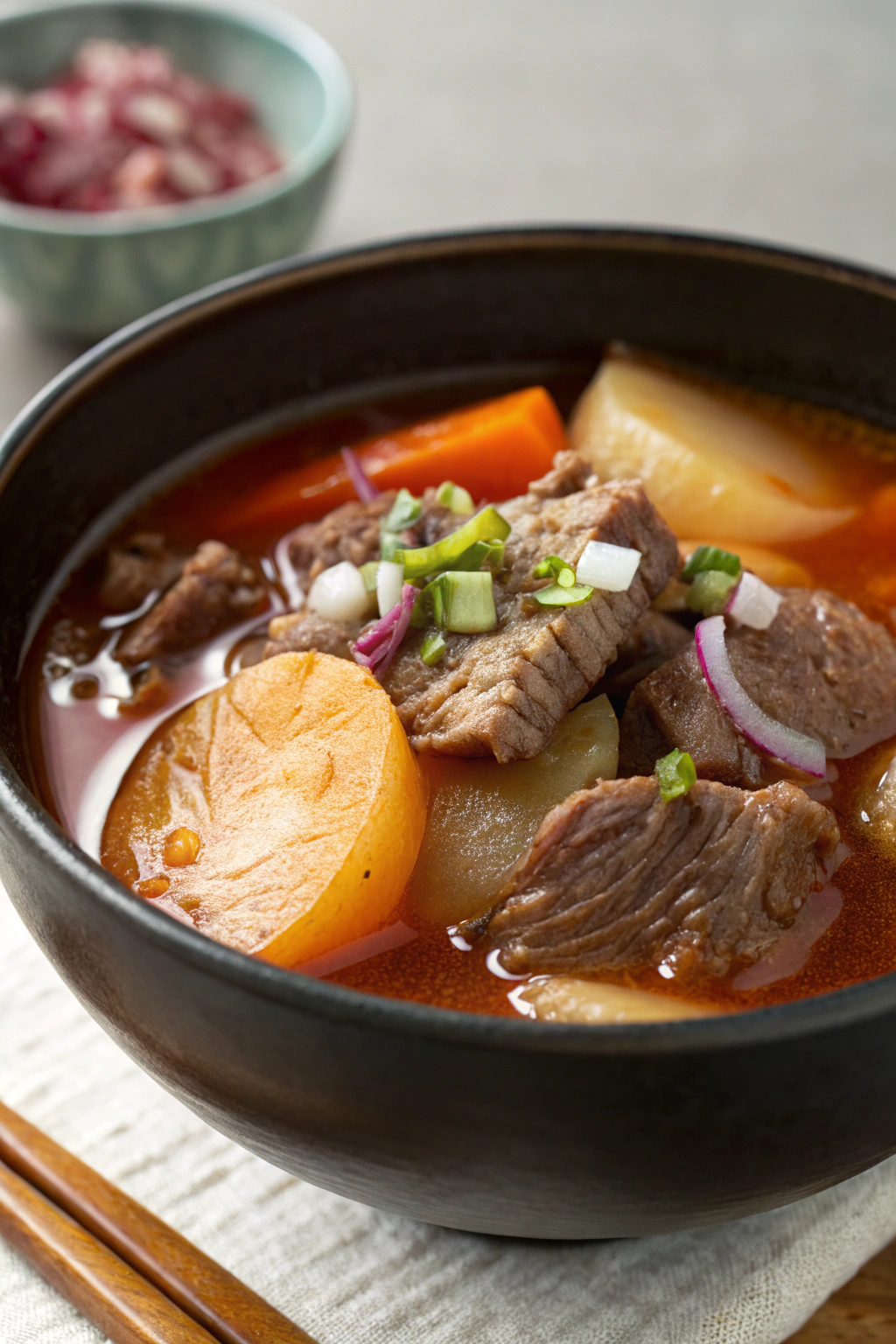
Tasty Korean Winter Soup Recipe
Ingredients
Instructions
- In a pot, add beef brisket and water or beef broth, then bring to a boil.
- Skim off any foam that rises to the surface.
- Add radish, onion, garlic, and soy sauce to the pot.
- Reduce heat, cover, and simmer for about 40 minutes or until the beef and radish are tender.
- Season with sesame oil, salt, and pepper according to taste.
- Garnish with chopped green onions before serving.