
Spring Vegetable Pasta Recipe tastes bright and fresh with lemon, tender asparagus, sweet peas, and a light garlic butter sauce. It suits busy cooks, veggie fans, and anyone craving a meatless weeknight dinner in about 30 minutes. I make it on repeat every April when my farmers market starts shouting with green.
Why Spring Vegetable Pasta Recipe Is Worth It
Spring Vegetable Pasta Recipe delivers peak-season flavor with minimal effort and dishes. You cook the pasta, sauté a quick mix of greens, then bring everything together with lemon, butter, and parmesan. The sauce hugs the noodles without feeling heavy, so you get comfort with a spring vibe. It also scales well for meal prep or a crowd.
You can shop smart for this. Frozen peas work like a charm, a good olive oil adds depth, and a squeeze of lemon brightens everything. The recipe stays flexible, so you can swap in what looks best at your market. That freedom keeps dinner stress low and flavor high.
Ingredients You Need
- Pasta: 12 ounces short pasta like penne, fusilli, or farfalle, or long pasta like linguine. De Cecco and Barilla hold sauce nicely. Use gluten-free pasta if needed and cook 1 minute less.
- Asparagus: 1 bunch, woody ends trimmed, cut in 1-inch pieces.
- Peas: 1 cup fresh or frozen. Frozen peas taste sweet and save time.
- Sugar snap peas or snow peas: 1 cup, sliced on a bias.
- Baby spinach or arugula: 2 cups, loosely packed.
- Cherry tomatoes: 1 cup, halved, optional for color and acidity.
- Garlic: 3 to 4 cloves, thinly sliced.
- Lemon: 1 large, zest and 2 tablespoons juice. Zest first, then juice.
- Unsalted butter: 2 tablespoons. Swap with more olive oil for dairy-free.
- Extra-virgin olive oil: 2 tablespoons. California Olive Ranch or Colavita are reliable.
- Dry white wine: 1/4 cup, optional. Use extra pasta water if you skip wine.
- Parmesan or Pecorino Romano: 1/2 cup freshly grated, plus more for serving. Pre-grated works in a pinch, but fresh melts silkier.
- Fresh herbs: 1/4 cup chopped basil, parsley, chives, or mint.
- Red pepper flakes: 1/2 teaspoon, to taste.
- Kosher salt and black pepper.
Equipment
- Large pot and well-salted water
- Large skillet or sauté pan
- Colander or spider strainer
- Tongs and wooden spoon
- Microplane or fine grater
- Measuring cups and spoons
Quick Tips & substitutions
- Salt the pasta water so it tastes like the sea. The noodles pick up flavor from the start.
- Save at least 1 cup pasta water. The starch builds a glossy sauce.
- Cook pasta to just shy of al dente, then finish it in the skillet with the veggies.
- Slice asparagus evenly so the pieces cook at the same rate.
- Use frozen peas straight from the freezer. They thaw in the pan in a minute.
- Go dairy-free with olive oil and a sprinkle of nutritional yeast instead of cheese.
- No wine on hand. Use pasta water and a splash of lemon juice.
- Want richer sauce. Stir in 2 tablespoons mascarpone or ricotta at the end.
- Use a wide skillet so the vegetables sauté instead of steam.
How to Make Spring Vegetable Pasta Recipe
Boil the pasta – about 10 minutes
- Bring a large pot of salted water to a rolling boil. Add pasta and cook until 1 minute shy of al dente. Scoop out 1 to 1.5 cups pasta water and set aside. Drain the pasta.
Sauté the vegetables – 6 to 8 minutes
- Heat olive oil in a large skillet over medium. Add asparagus and a pinch of salt, then cook 3 to 4 minutes until bright green and just tender.
- Add garlic and red pepper flakes, then cook 30 seconds until fragrant. Stir in snap peas and peas, then cook 2 to 3 minutes. Add tomatoes if using and warm through.
Build the sauce – 2 minutes
- Add butter and let it melt into the veggies. Pour in wine and simmer 1 minute to cook off the alcohol. Stir in 1/2 cup pasta water and the lemon zest.
Toss and finish – 1 to 2 minutes
- Add the drained pasta to the skillet and toss over medium heat. Stir in spinach so it wilts. Add parmesan, a splash more pasta water as needed, and the lemon juice. Season with salt and black pepper, then fold in fresh herbs.
Variations
- Creamy: Add 1/4 cup heavy cream or 2 tablespoons mascarpone in the finish.
- Pesto: Toss in 1/4 cup basil pesto instead of butter for a pasta primavera vibe.
- Zucchini and leek: Swap snap peas for sliced zucchini and add thinly sliced leek.
- Spicy: Stir in 1 teaspoon Calabrian chili paste with the garlic.
- Vegan: Use olive oil only, skip cheese, and add nutritional yeast and toasted pine nuts.
- Whole grain: Use whole wheat pasta and bump lemon juice by 1 teaspoon to brighten.
Ways to Serve
- Top with burrata or an extra shower of parmesan and herbs.
- Add protein on the side for omnivores: grilled shrimp, chicken, or salmon.
- Serve with crusty garlic bread or a simple arugula salad with lemon vinaigrette.
- Pair with Sauvignon Blanc, Pinot Grigio, or sparkling water with lemon.
Storage
Let the pasta cool, then store it in an airtight container for up to 4 days in the fridge. Reheat gently in a skillet with a splash of water or broth until warm and glossy. You can eat leftovers cold as a pasta salad with extra lemon and olive oil. I do not suggest freezing, since asparagus and peas lose their snappy texture.
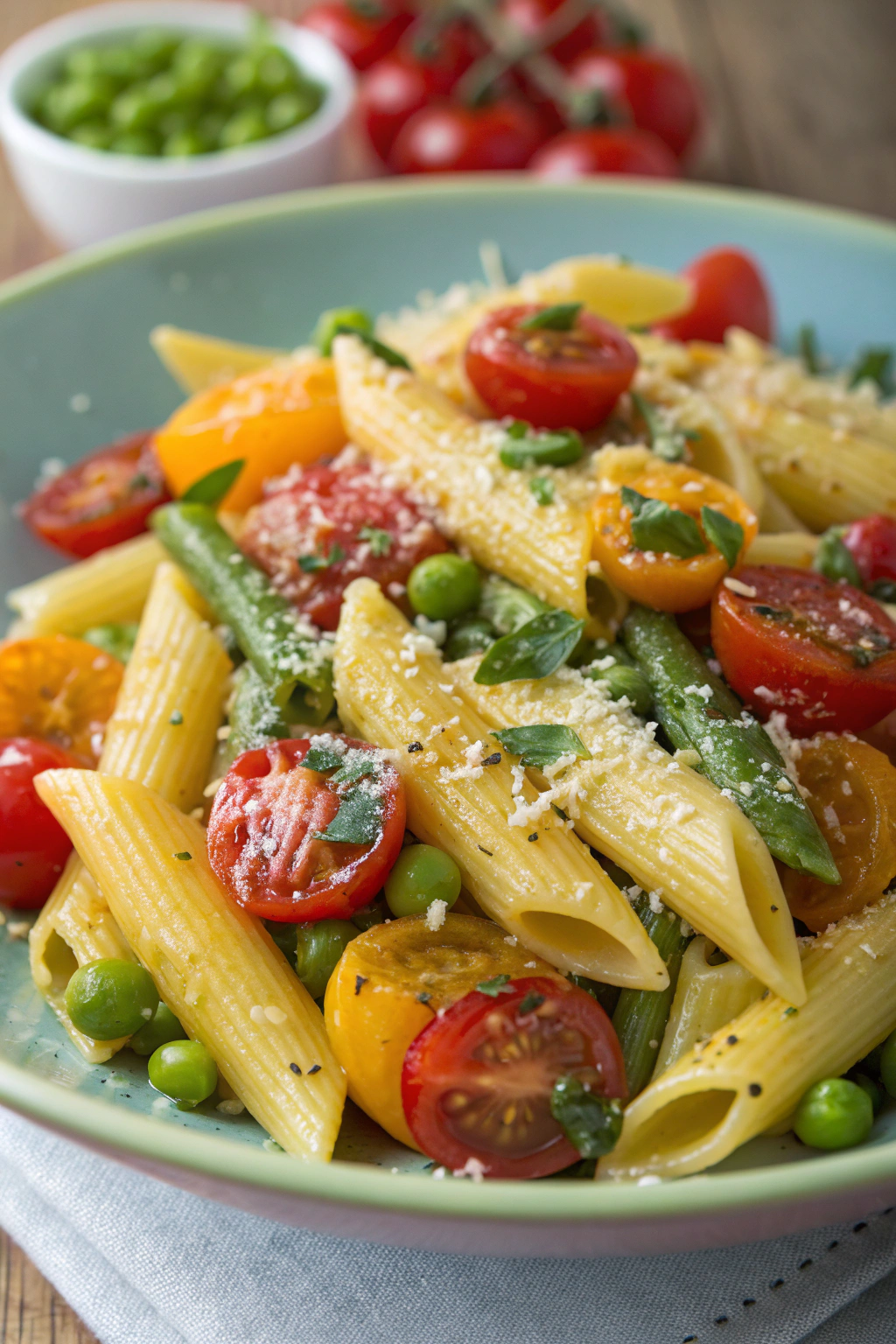
Spring Vegetable Pasta Recipe
Ingredients
Instructions
- Bring a large pot of salted water to a boil. Add the pasta and cook according to package directions until al dente. Reserve 1/2 cup of the pasta cooking water, then drain.
- While the pasta cooks, heat the olive oil in a large skillet over medium heat. Add the minced garlic and cook for 30–60 seconds until fragrant, stirring frequently.
- Add the asparagus, peas, and broccoli to the skillet. Cook, stirring often, for 4–6 minutes or until the vegetables are crisp-tender.
- Stir in the cherry tomatoes and cook for 1–2 more minutes until they begin to soften.
- Add the drained pasta to the skillet along with the lemon juice, salt, black pepper, and red pepper flakes if using. Toss everything together, adding a splash of reserved pasta water as needed to create a light sauce.
- Remove from heat and stir in the grated Parmesan and fresh basil or parsley.
- Taste and adjust seasoning with additional salt, pepper, or lemon juice as desired. Serve warm.
Notes
Approximate per serving (1/4 of recipe): 360 calories; fat 11 g; saturated fat 2.5 g; carbohydrates 55 g; fiber 6 g; sugars 6 g; protein 12 g; sodium 260 mg. Values will vary based on specific ingredients, brands, add-ins, and portion size.