
Soy sauce udon Recipe has a way of sneaking into your comfort food list without even asking. It’s simple, satisfying, and packs enough flavor to make you question why you ever ate plain noodles before. If you’ve got a soft spot for Japanese flavors but want something quicker than a full ramen bowl, this dish might just become your new go-to.
Why You Should Try Soy Sauce Udon Recipe
Ever had one of those meals that feel like a warm hug? That’s exactly what soy sauce udon delivers. It’s quick, uses minimal ingredients, and tastes like you spent hours in the kitchen. Plus, it’s incredibly versatile. Whether you’re cooking for one or feeding a hungry crowd, this recipe scales well and doesn’t demand fancy ingredients.
Variations and Substitutions
Feel like switching things up? No problem. You can toss in veggies like spinach, mushrooms, or bell peppers to add color and crunch. Craving some protein? Add tofu, chicken, or even a fried egg on top. Not a fan of traditional soy sauce? Try tamari or coconut aminos for a gluten-free twist. The beauty lies in its flexibility.
Ingredients You’ll Need
Here’s what you’ll want to gather before the magic begins:
- Udon noodles (fresh or frozen work best)
- Soy sauce (the star of the show)
- Sesame oil (for that nutty aroma)
- Garlic (minced, because garlic makes everything better)
- Green onions (chopped, for freshness)
- Mirin or a pinch of sugar (to balance the saltiness)
- Optional: tofu, mushrooms, or any veggies you love
How I Make Soy Sauce Udon
Cooking this dish feels like a breeze, even after a long day. Here’s how I roll:
- Boil the udon noodles according to the package instructions. Drain and set aside.
- Heat sesame oil in a pan over medium heat. Toss in minced garlic and sauté until fragrant.
- Add any veggies or protein you’re using and cook until tender.
- Pour in soy sauce and mirin (or sugar), stirring to combine.
- Toss the cooked udon noodles into the pan, mixing everything well so the sauce coats every strand.
- Finish with a sprinkle of chopped green onions and a dash of sesame seeds if you have them.
Pro Tips for Soy Sauce Udon
Want to make this dish pop even more? Use fresh udon noodles if you can find them—they have a better chew than dried. Don’t overdo the soy sauce at first; you can always add more, but you can’t take it out once it’s in. And if you like a little heat, a pinch of chili flakes or a drizzle of chili oil works wonders.
Leftovers
Leftover soy sauce udon tastes just as good reheated, which is always a win. Store it in an airtight container in the fridge for up to two days. When reheating, splash a bit of water or broth to keep the noodles from sticking together.
Common Mistakes to Avoid
Watch out for overcooking your noodles—they should be tender but still have a bit of bite. Also, be careful with the soy sauce quantity; too much can turn the dish overly salty. And don’t skip the garlic; it’s the flavor backbone here.
Nutrition Information
- Calories: 420 kcal
- Carbohydrates: 60 g
- Protein: 12 g
- Fat: 10 g
- Fiber: 4 g
- Sugar: 6 g
This recipe balances carbs and protein nicely, making it a satisfying meal without feeling heavy. Plus, the veggies add a bit of fiber and nutrients to keep things interesting.
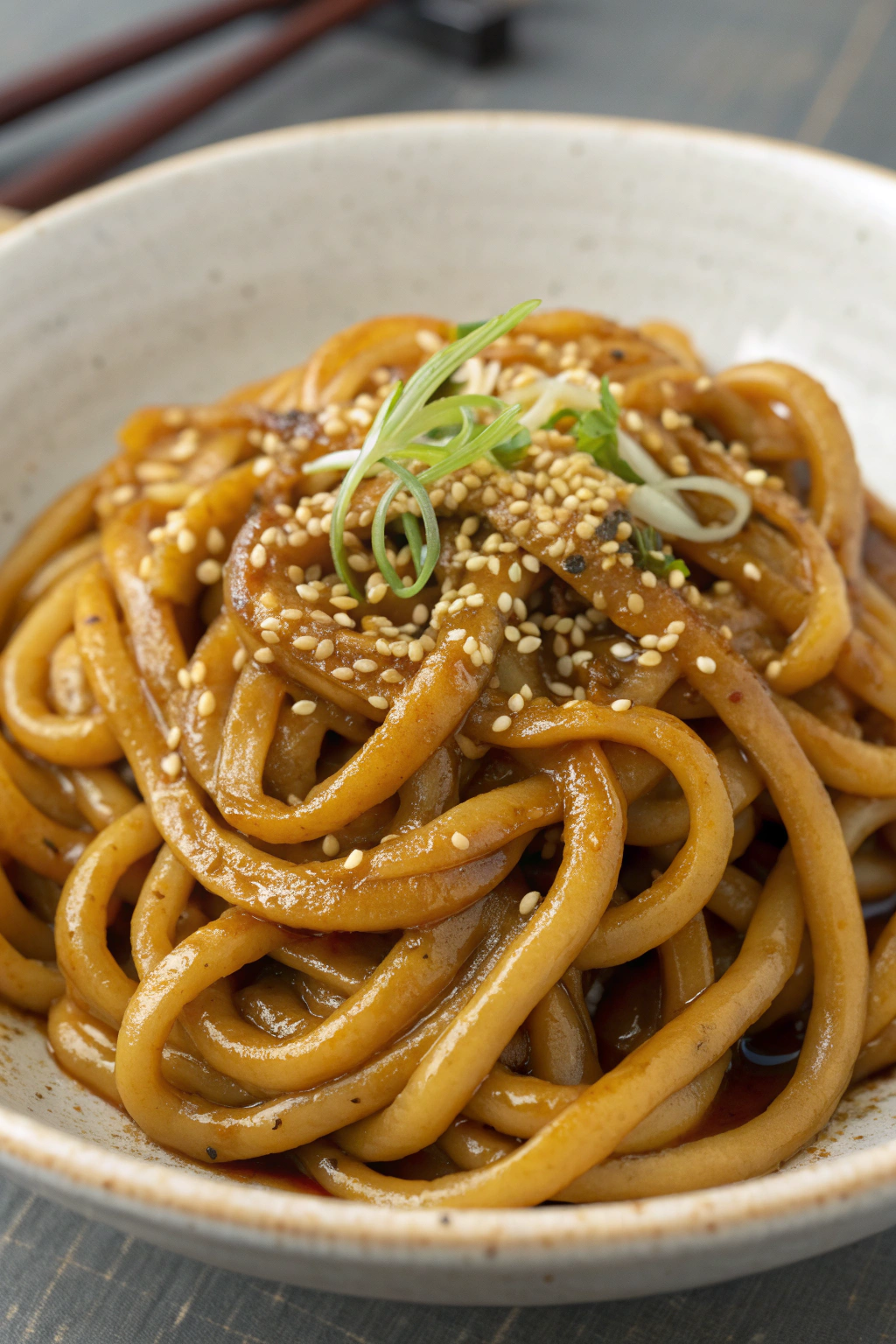
Soy Sauce Udon Recipe
Ingredients
Instructions
- Cook udon noodles according to package instructions. Drain and set aside.
- Heat sesame oil in a pan over medium heat. Add minced garlic and sauté until fragrant.
- Add cooked udon noodles to the pan.
- Pour soy sauce and sprinkle sugar over the noodles. Stir-fry for 2-3 minutes until well combined.
- Remove from heat, garnish with chopped green onions if desired, and serve warm.