
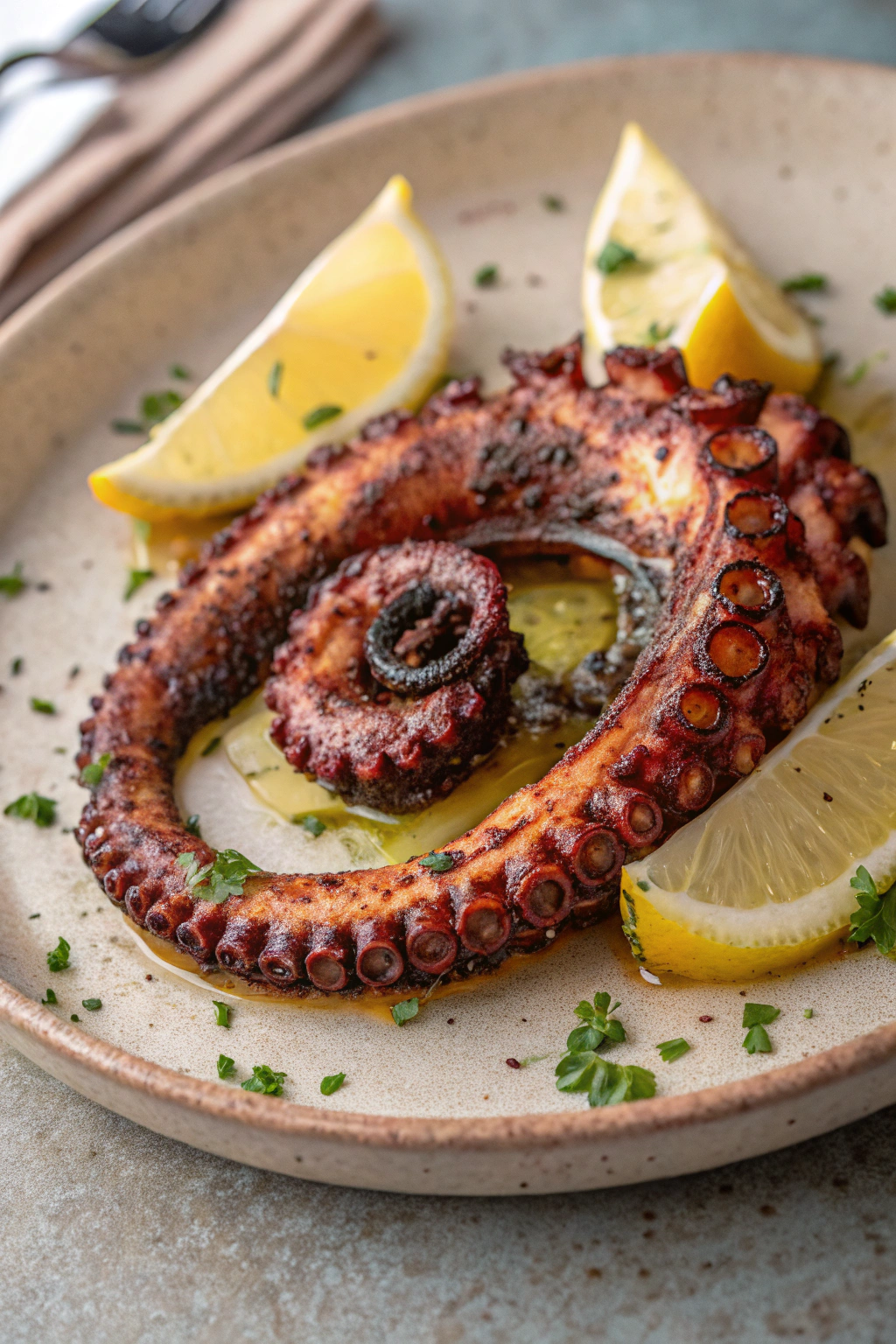
The Sous Vide Octopus Recipe yields tender, silky tentacles with gentle briny sweetness and bright citrus. It suits seafood lovers who want restaurant-level results at home in about 5 hours 30 minutes total. I grew up near the coast, so I chase that perfect balance of tender bite and char like it owes me lunch.
Why This Sous Vide Octopus Recipe
This Sous Vide Octopus Recipe uses precise temperature control, so you hit that tender, never-rubbery texture every time. You bag it, drop it in the water bath, and let the circulator do the heavy lifting. You finish with a quick sear or grill for caramelized edges.
You do not need fancy marinades or complicated steps. The octopus cooks in its own juices with olive oil, aromatics, and citrus peel. The process stays forgiving, even if you multitask dinner sides.
Ingredients You Need
- 1 whole octopus, 2.5 to 3 pounds, cleaned, fresh or thawed frozen
- 3 tablespoons extra-virgin olive oil
- 4 garlic cloves, smashed
- 2 bay leaves
- 1 teaspoon smoked paprika
- 1 teaspoon kosher salt, plus more to taste
- 1 strip lemon peel or 1 teaspoon zest
- 1/2 teaspoon red pepper flakes, optional
- Black pepper to taste
- 1 tablespoon neutral high-heat oil for searing
- Chopped parsley and lemon wedges for serving
Pantry shortcuts and notes:
- Use jarred garlic or garlic paste if you want speed.
- Smoked paprika from La Chinata brings classic Spanish flavor.
- No lemon at home? Use a splash of sherry vinegar after cooking.
- Frozen octopus often cooks more tender than fresh. I buy Spanish or Portuguese packs when I see a sale.
Equipment:
- Immersion circulator and large pot or heat-safe container
- Vacuum sealer or heavy zip-top freezer bags
- Trivet or rack to keep the bag off the bottom
- Skillet or hot grill for finishing
- Paper towels and tongs
How to Make Sous Vide Octopus
Prep Time: 15 minutes
Cook Time: 5 hours at 170 F
Total Time: 5 hours 30 minutes
- Standard texture: 170 F for 5 hours
- Slightly firmer bite: 160 F for 6 hours
- Smaller octopus under 2 pounds: start checking at 4 hours
- Set the water bath to 170 F. Rinse the octopus under cold water and pat it dry.
- If needed, remove the beak and eyes. Many stores already do this, but check quickly.
- Place octopus in a large bag with olive oil, garlic, bay leaves, smoked paprika, lemon peel, salt, red pepper flakes, and black pepper.
- Seal the bag. Use the water displacement method if you use zip-top bags, and double-bag because octopus releases a lot of liquid.
- Submerge the bag. Clip it to the side and weigh it down so it stays under.
- Cook for 5 hours. The tentacles should feel very tender when you press the thickest part through the bag.
- Remove the bag. Let the octopus cool in its juices for 10 to 15 minutes so it firms up for easier handling.
- Transfer the octopus to a tray and pat it very dry. Save the cooking liquid for rice, broth, or a quick pan sauce.
- Separate the tentacles. Keep the head for slicing or snacking cooks’ choice.
- Heat a skillet over high heat until it shimmers, or preheat a grill to high. Add a small splash of neutral oil.
- Sear the tentacles 1 to 2 minutes per side until the edges char and the surface turns bronze and crisp.
- Finish with olive oil, lemon juice, and parsley. Taste and adjust salt and pepper.
Tips & Common Mistakes
- Dry the octopus very well before searing so you get crust, not steam.
- Double-bag to avoid leaks. The bag fills with flavorful liquid as it cooks.
- Keep the water bath covered to limit evaporation during long cooks.
- Use a rack or butter knives under the bag to prevent contact with the hot base.
- Do not oversalt the bag. The cooking liquid concentrates and can push salt levels up fast.
- Chill the octopus for 20 minutes before slicing for clean cuts and neat presentation.
- Finish hot and fast. Long sears can toughen the exterior.
- Size matters. Smaller octopus needs less time, so start checking texture at 4 hours.
- Save the cooking liquid. Reduce it with a knob of butter and a splash of sherry for a quick sauce.
Variations I’ve Tried
- Spanish: extra smoked paprika, garlic, olive oil, and a sprinkle of flaky salt.
- Greek: oregano, lemon zest, and red wine vinegar splash after cooking.
- Chili-lime: chipotle powder, lime zest, and cilantro at the finish.
- Gochugaru-garlic: Korean chili flakes, sesame oil drizzle at the end, and scallions.
- Herby salad: chill the sliced octopus and toss with olive oil, lemon, celery, parsley, and capers.
How to Serve Sous Vide Octopus
Serve warm with olive oil, lemon, parsley, and flaky salt. Pair with potatoes tossed in smoked paprika and olive oil, or spoon over creamy polenta. Add a swoosh of romesco or garlic aioli for a rich, tangy contrast. A crisp white like Albariño or a bright pilsner plays nicely with the char and citrus.
Make-Ahead and Storage
Cook the octopus up to 2 days in advance, keep it in its cooking liquid in the fridge, and sear right before serving. Reheat gently in the bag in a 140 F bath for 20 minutes, then dry and sear.
Store leftovers in an airtight container in the fridge for 3 days. Freeze portions in their liquid for up to 2 months, then thaw overnight in the fridge and reheat as above.
Nutrition Information
Per serving, about 4 ounces cooked octopus with a light olive oil finish: calories 190, protein 27 g, fat 7 g, carbs 2 g, sodium varies by salt. Octopus brings lean protein and minerals with minimal carbs. Numbers are estimates and can change with oil amounts and finishing sauces.
Sous Vide Octopus Recipe
Ingredients
Instructions
- Preheat sous vide cooker to 77°C (170°F).
- Clean the octopus and remove the beak.
- Place octopus in a vacuum bag with olive oil, garlic, smoked paprika, salt, and black pepper.
- Seal the bag and cook sous vide for 2 hours.
- Remove octopus from the bag and pat dry.
- Heat a grill or skillet on high and sear octopus for 2-3 minutes per side.
- Drizzle with lemon juice and serve warm.