
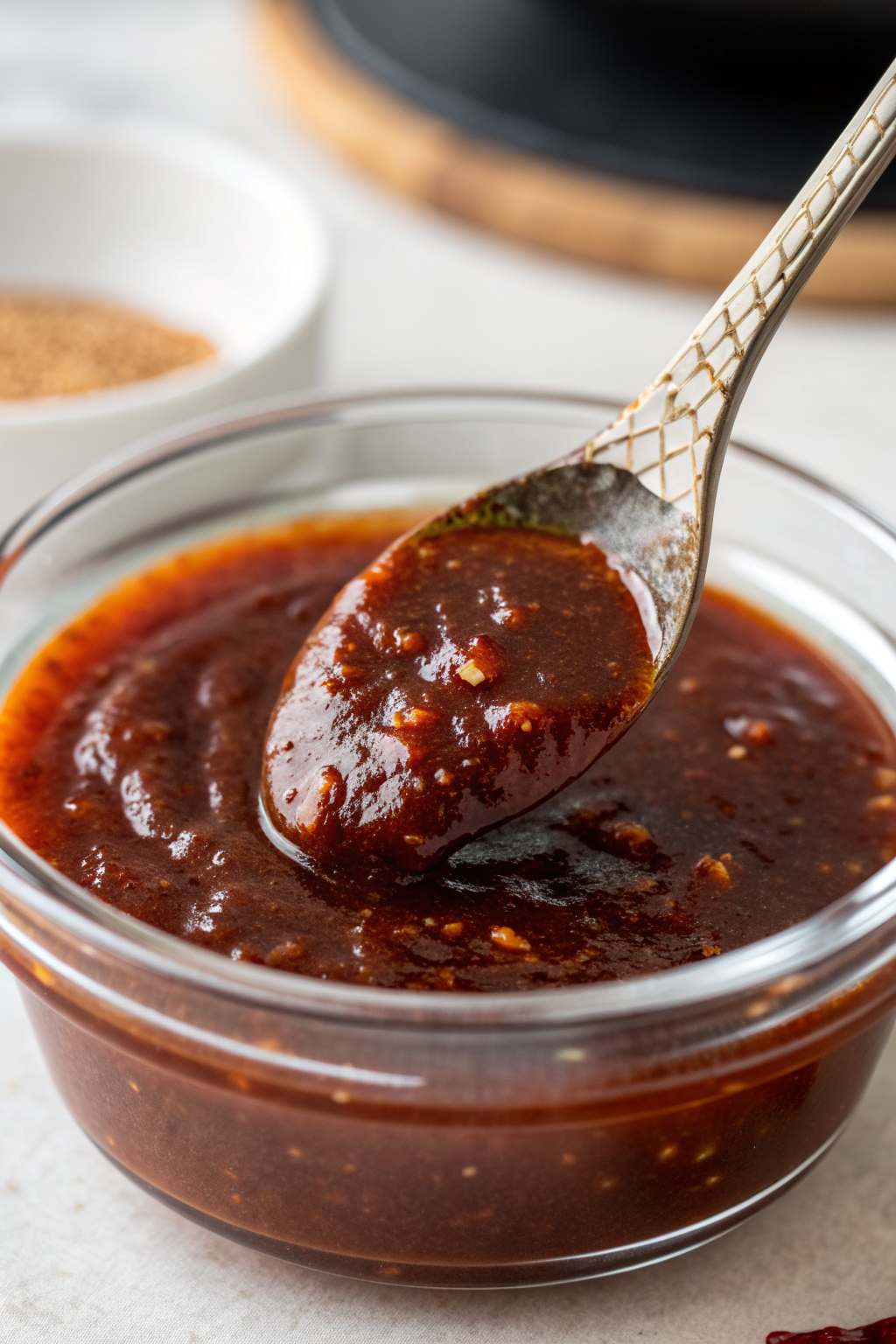
Simple Korean Bibimbap Sauce Recipe: spicy, slightly sweet, and deeply savory with gochujang, garlic, and toasted sesame. It suits busy home cooks and Korean food fans who want big flavor in about 5 minutes. I keep a jar in my fridge and spoon it over eggs when I need lunch to solve itself.
Why Choose This Simple Korean Bibimbap Sauce Recipe
Simple Korean Bibimbap Sauce Recipe delivers bold heat and clean umami with a short ingredient list. You mix it in one bowl, tweak sweetness or heat, and dinner jumps from meh to wow. The sauce coats rice, veggies, and protein without tasting heavy or sticky.
This sauce nails the sweet-heat balance and makes a plain bowl taste like your favorite Korean spot at home ★★★★★
Ingredients You Need
- Gochujang paste (Korean chili paste; brands I like: Chung Jung One Sunchang, Haechandle; look for medium heat)
- Soy sauce or tamari (tamari keeps it gluten-free)
- Rice vinegar (unseasoned; swap apple cider vinegar in a pinch)
- Toasted sesame oil (the dark, fragrant kind)
- Honey or sugar (honey blends fast; brown sugar adds a deeper note)
- Garlic, finely grated or minced (use jarred minced garlic for a pantry shortcut)
- Ginger, finely grated (optional but bright)
- Water (to thin to drizzling consistency)
- Toasted sesame seeds (optional garnish)
- Korean pear juice or grated Asian pear (optional for classic fruity sweetness; applesauce works in a pinch)
- Gochugaru or red pepper flakes (optional if you want extra heat)
Equipment:
- Small mixing bowl
- Whisk or spoon
- Measuring spoons
- Microplane or grater for garlic and ginger
- Clean jar with lid for storage
How to Make Simple Korean Bibimbap Sauce Recipe
Mix the base (2 minutes)
- Add 3 tablespoons gochujang, 1 tablespoon soy sauce or tamari, 1 tablespoon rice vinegar, and 1 tablespoon toasted sesame oil to a bowl.
- Whisk until the gochujang loosens and looks glossy.
Sweeten and season (2 minutes)
- Whisk in 1 to 1.5 tablespoons honey or sugar, plus 1 grated garlic clove and 1 teaspoon grated ginger.
- If using, add 1 to 2 teaspoons pear juice or a teaspoon of grated Asian pear for gentle sweetness.
Adjust heat and texture (1 to 2 minutes)
- Stir in 1 to 3 tablespoons water until the sauce drizzles but still clings to a spoon.
- Taste and tweak: add a pinch more sugar for balance, a splash of vinegar for brightness, or a pinch of gochugaru for extra kick.
Rest and serve (1 minute, optional 10-minute rest)
- Let the sauce sit 10 minutes so garlic and ginger bloom.
- Sprinkle sesame seeds right before serving, then spoon over hot rice bowls.
Tips & Common Mistakes
- Aim for drizzle, not paste; thin with water a tablespoon at a time so the sauce coats every grain.
- Balance heat and sweet; if it bites too hard, add a touch of honey or sugar.
- Use toasted sesame oil, not plain; plain sesame oil tastes flat here.
- Keep the vinegar light; too much turns the sauce sharp instead of bright.
- Whisk until smooth; streaks of gochujang lead to salty hot spots.
- Store in a jar with a tight lid; exposure to air dulls flavor.
- Taste with warm rice, not just a spoon; rice softens heat and changes perception.
- Skip extra salt; soy sauce and gochujang already bring plenty.
Variations I've Tried
- Vegan maple gochujang: swap honey for maple syrup for a round, caramelly finish.
- Miso twist: whisk in 1 teaspoon white miso for deeper umami and a creamier body.
- Citrus pop: add 1 teaspoon yuzu or lemon juice for a bright top note.
- Nutty boost: stir in 1 tablespoon toasted sesame seeds and a pinch of roasted ground sesame for texture.
- Extra smoky heat: add a pinch of smoked paprika with gochugaru.
- Low sugar: reduce sweetener and add 1 teaspoon pear puree to keep balance without extra sugar.
- No-garlic lunch: skip garlic and lean on ginger for a cleaner, gentler bite.
How to Serve
Spoon the bibimbap sauce over hot rice topped with sautéed spinach, shiitakes, carrots, bean sprouts, and a fried egg. Toss gently so every bite gets glossy heat and umami. Pair it with kimchi, roasted seaweed snacks, and a cold lager or iced green tea. Use leftovers on grilled chicken, tofu, or noodles for a fast weeknight win.
Make-Ahead and Storage
- Make ahead: mix the sauce and let it sit 10 minutes so flavors settle.
- Fridge: store in a sealed jar for up to 2 weeks; stir or shake before each use.
- Freezer: portion into small containers or ice cube trays and freeze for up to 3 months.
- To loosen: warm the sealed jar briefly in a bowl of warm water or microwave a small portion 5 to 10 seconds, then stir until smooth.
Simple Korean Bibimbap Sauce Recipe
Ingredients
Instructions
- In a small mixing bowl, whisk together the gochujang, soy sauce or tamari, rice vinegar, and toasted sesame oil until the gochujang loosens and looks glossy.
- Whisk in the honey or sugar, grated garlic, and grated ginger. If using, add the Korean pear juice or grated Asian pear and whisk to combine.
- Stir in 1 to 3 tablespoons water, a little at a time, until the sauce reaches a drizzling consistency that still clings to a spoon. Adjust to taste with a pinch more sugar for sweetness, a splash of vinegar for brightness, or a pinch of gochugaru for extra heat.
- Let the sauce rest for about 10 minutes so the garlic and ginger flavors can bloom. Sprinkle with toasted sesame seeds just before serving, then spoon over hot rice bowls, veggies, or protein.
Notes
Approximate per serving (about 1 tablespoon, 8 servings total): 35 calories; fat 2 g; saturated fat 0.3 g; carbohydrates 4 g; fiber 0.2 g; sugars 3 g; protein 1 g; sodium 270 mg. Values are estimates and will vary based on exact ingredients, brands, and portion size.