
Shrimp Etouffee Recipe serves buttery, peppery shrimp in a rich roux gravy over fluffy rice, with slow-building heat and deep Cajun flavor. It suits weeknight cooks and New Orleans fans, and you can get it on the table in about 45 minutes. I learned to stir a blond roux from a line cook in Lafayette who guarded that pot like it held the family jewels.
Why You Should Try This Shrimp Etouffee Recipe
Shrimp Etouffee Recipe brings restaurant-level flavor with pantry-friendly moves and zero fuss. You build a quick roux, sweat the Cajun trinity, and finish with juicy shrimp for a silky, savory sauce that hits all the cozy notes.
You can tweak the spice, choose tomatoes or go no-tomato, and use either homemade or store-bought stock. The method stays simple, the results taste big, and the leftovers make lunch feel fancy.
Ingredients You’ll Need
- 1.5 pounds large shrimp, peeled and deveined, tails off or on by preference (thaw frozen shrimp overnight, 21 to 26 count works great)
- 2 tablespoons neutral oil plus 3 tablespoons unsalted butter, divided
- 1/3 cup all-purpose flour
- 1 large yellow onion, finely chopped
- 1 green bell pepper, finely chopped
- 2 ribs celery, finely chopped
- 4 cloves garlic, minced
- 1 tablespoon Cajun seasoning, plus more to taste (Tony Chachere’s or Slap Ya Mama, use low-sodium if sensitive)
- 1 teaspoon smoked paprika
- 1/2 teaspoon dried thyme
- 1 bay leaf
- 1.5 to 2 cups seafood or chicken stock, warm (Better Than Bouillon works well when you need a shortcut)
- 1 tablespoon Worcestershire sauce
- 1 to 2 teaspoons hot sauce, to taste (Crystal or Tabasco)
- 1 cup diced tomatoes, optional for a Creole-style note (canned works)
- 2 tablespoons chopped fresh parsley
- 3 scallions, thinly sliced
- Juice of 1/2 lemon
- Kosher salt and black pepper, to taste
- Cooked long-grain white rice, for serving
Substitutions and notes:
- Use 1/4 cup jarred dark roux, such as Kary’s, if you want a shortcut, then reduce the flour and butter.
- Swap butter with ghee if you want a richer nutty flavor.
- Use rice flour to keep the roux gluten-free.
- Add a pinch of filé powder at the end for a classic touch, if you keep it in the pantry.
Equipment:
- Large Dutch oven or heavy pot
- Wooden spoon or heatproof spatula
- Whisk
- Chef’s knife and cutting board
- Measuring cups and spoons
- Rice pot or cooker
How to Make Shrimp Etouffee Recipe
Step 1: Season the shrimp
Pat the shrimp dry. Toss with 1 teaspoon Cajun seasoning, a pinch of salt, and black pepper. Set the bowl in the fridge while you start the base.
Step 2: Make a blond to peanut-butter roux
Heat 2 tablespoons oil and 2 tablespoons butter in a Dutch oven over medium heat. Sprinkle in the flour while whisking. Stir constantly until the roux turns the color of peanut butter, about 6 to 10 minutes, adjusting heat so it darkens without scorching.
Step 3: Sweat the trinity
Stir in onion, bell pepper, and celery. Cook until soft and glossy, about 6 to 8 minutes, stirring often so the roux does not stick. Add the garlic and cook 1 minute until fragrant.
Step 4: Season the base
Stir in remaining Cajun seasoning, smoked paprika, thyme, and bay leaf. Cook 30 seconds to wake up the spices. If you use tomatoes, add them now and simmer 2 minutes.
Step 5: Build the sauce
Whisk in 1.5 cups warm stock in small splashes until the sauce turns smooth and silky. Add Worcestershire and hot sauce. Simmer on medium-low for 8 to 12 minutes until the sauce coats a spoon, adding more stock if it gets too thick.
Step 6: Cook the shrimp
Stir in the shrimp and cook until just pink and opaque, 2 to 4 minutes depending on size. Do not walk away. Pull the pot off heat as soon as the shrimp finish so they stay tender.
Step 7: Finish and serve
Stir in remaining 1 tablespoon butter, parsley, scallions, and lemon juice. Taste and adjust salt, pepper, and heat. Spoon the etouffee over hot rice and pass extra hot sauce at the table.
Tips & Tricks
- Keep the roux moving to avoid hot spots and bitterness.
- Warm the stock so the roux stays smooth and does not seize.
- Use jarred roux when the week runs wild, then thin with stock to your ideal texture.
- Salt in layers, not just at the end, to build depth.
- Do not overcook shrimp, pull them as soon as they curl and turn pink.
- Want richer flavor fast? Brown the butter for the roux and stop just before it goes too dark.
- Prefer thicker sauce? Simmer a few extra minutes or whisk in a teaspoon more flour with a splash of stock, then cook 2 minutes.
- Sensitive to heat? Start with mild Cajun seasoning and finish with a few drops of hot sauce on your own bowl.
- Save shrimp shells and simmer them with water, onion ends, and a splash of Better Than Bouillon for a quick stock.
What to Serve with Shrimp Etouffee
Spoon the etouffee over fluffy long-grain rice or buttery grits. Add a side of crusty French bread to mop the pot clean, which counts as exercise for the forearms. A crisp green salad with lemon vinaigrette cuts the richness, and roasted okra or sautéed green beans fit right in. For drinks, pour a light beer or a bright sauvignon blanc.
Make-Ahead and Storage
Cook the sauce base through Step 5 up to 3 days ahead, then chill it and reheat gently before adding shrimp. Store finished etouffee in the fridge for up to 3 days, though the shrimp stay juiciest on day one. Freeze the sauce base without shrimp for up to 3 months, then thaw overnight and add fresh shrimp during reheating. Reheat leftovers low and slow on the stove, splash in stock if thick, and pull it off heat as soon as it steams.
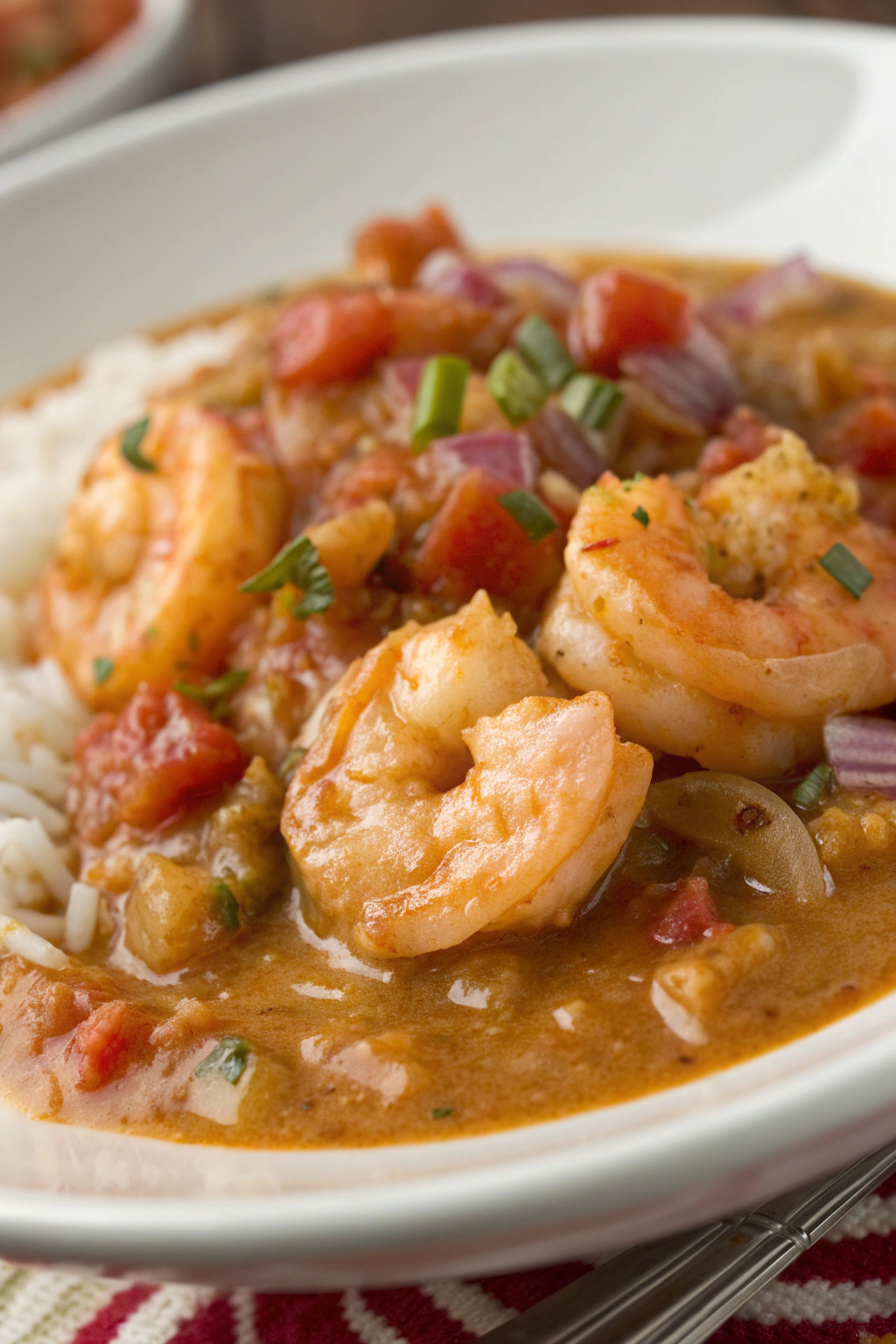
Shrimp Étouffée Recipe
Ingredients
Instructions
- Season the peeled and deveined shrimp lightly with Creole or Cajun seasoning and set aside in the refrigerator.
- In a large heavy skillet or Dutch oven, melt the butter over medium heat. Sprinkle in the flour and cook, stirring constantly, until the roux turns a medium to dark caramel color, 8 to 12 minutes. Adjust heat as needed to avoid burning.
- Add the onion, bell pepper, and celery to the roux. Cook, stirring often, until the vegetables soften, about 5 to 7 minutes. Stir in the garlic and cook 1 minute more.
- Slowly whisk in the stock until smooth, then add the diced tomatoes with their juices, paprika, thyme, bay leaf, cayenne (if using), salt, and black pepper. Bring to a simmer.
- Reduce heat to low and simmer gently for 15 to 20 minutes, stirring occasionally, until the sauce thickens and flavors meld. Adjust seasoning to taste.
- Add the seasoned shrimp to the pan and cook, stirring occasionally, until the shrimp are just opaque and cooked through, about 4 to 6 minutes. Do not overcook.
- Remove the bay leaf. Stir in parsley, green onions, and lemon juice if using.
- Serve the shrimp étouffée hot over cooked white rice.
Notes
Approximate per serving (1/4 of recipe, without rice): 310 calories; fat 16 g; saturated fat 8 g; carbohydrates 12 g; fiber 2 g; sugars 4 g; protein 28 g; sodium 980 mg. Values will vary based on specific ingredients, added salt, and portion size.