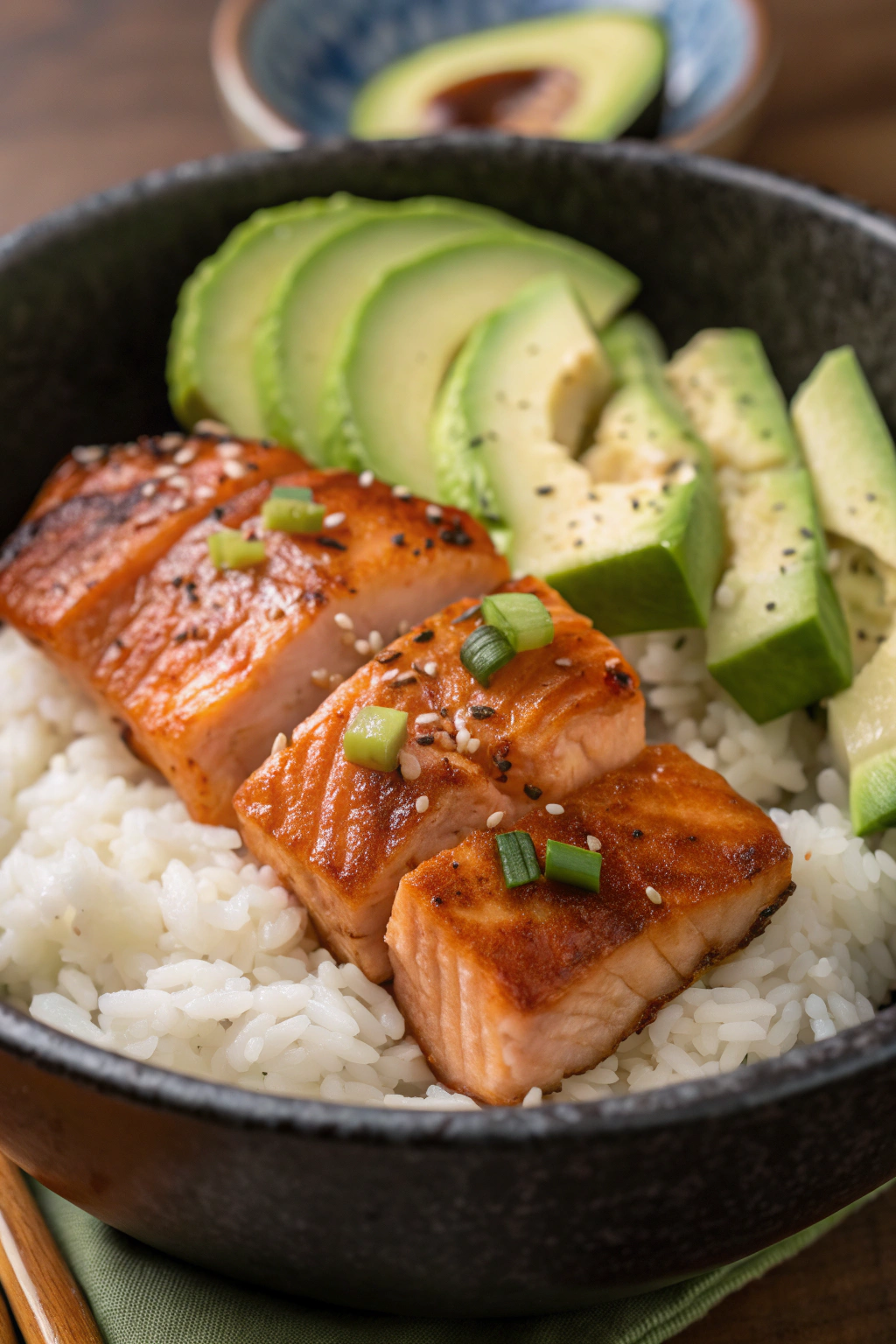
Salmon Rice Bowls Recipe brings juicy, caramelized salmon over fluffy rice with tangy-sweet sauce and crisp veggies. Busy weeknights or meal prep fans will love it, and the whole bowl comes together in about 30 minutes. I cook this when I need dinner that tastes like takeout but behaves like a weeknight hero.
Why Salmon Rice Bowls Recipe Is Worth It
Salmon Rice Bowls Recipe gives you bold flavor, simple steps, and a rainbow of textures. You get savory glazed salmon, warm rice, cool crunchy veggies, and a creamy drizzle that ties it together.
You can swap sauces, grains, and toppings without stress. The bowl still hits that satisfying, balanced sweet-salty-umami note.
Ingredients You Need
- Salmon: 1 to 1.25 pounds skin-on salmon fillet, cut into 4 pieces (farmed or sustainably raised; thaw fully if frozen)
- Rice: 3 cups cooked jasmine or short-grain rice (microwave pouches or leftover rice work great)
- Sauce base: 3 tablespoons low-sodium soy sauce or tamari, 1 tablespoon rice vinegar, 1 tablespoon honey or maple syrup, 1 teaspoon toasted sesame oil
- Garlic and ginger: 1 clove garlic grated, 1 teaspoon fresh ginger grated (use paste from a tube if short on time)
- Spicy mayo: 1/3 cup mayo (Kewpie tastes extra silky), 1 to 2 tablespoons sriracha, 1 teaspoon lime juice
- Veggies and toppings: 1 avocado sliced, 1 cup edamame thawed, 1 small cucumber thinly sliced, 2 scallions sliced, 1 small carrot shredded, sesame seeds or furikake, lime wedges
- Optional quick pickle mix: 2 tablespoons rice vinegar, 1 teaspoon sugar, pinch of salt
- Oil and seasoning: 1 tablespoon neutral oil, kosher salt, black pepper
Equipment:
- Rice cooker or saucepan for rice
- Sheet pan or air fryer
- Mixing bowls and whisk
- Fish spatula and sharp knife
Substitutions:
- Fish: use steelhead trout or shrimp; canned salmon works in a pinch
- Grains: swap brown rice, quinoa, or cauliflower rice
- Sauce: use bottled teriyaki or unagi sauce when you need a shortcut
- Heat: swap sriracha with gochujang or chili crisp
Quick Tips & substitutions
- Pat salmon dry so the glaze sticks and browns nicely.
- Use parchment on the sheet pan for easy cleanup.
- Keep rice hot and fluffy by covering the pot off heat for 5 minutes.
- Stir spicy mayo until smooth, then taste and adjust heat level.
- Microwave frozen edamame and bagged rice to save time.
- Slice cucumbers thin for crunch; quick-pickle them while the salmon cooks.
- No oven space? Air fry the salmon at 400 F for 7 to 9 minutes.
- Gluten-free swap: use tamari or coconut aminos.
- Dairy-free by default; keep it that way with mayo that fits your needs.
- Leftover rice feels firm; splash in water and reheat covered to steam back.
How to Make Salmon Rice Bowls Recipe
Cook the rice: 15 minutes
Rinse 1.5 cups raw rice until the water runs mostly clear. Cook it in your rice cooker or a pot with 2 cups water and a pinch of salt. Cover and rest 5 minutes off heat so the grains stay tender.
Mix the sauce: 5 minutes
Whisk soy sauce or tamari, rice vinegar, honey, sesame oil, garlic, and ginger in a small bowl. Split the mixture in half: one half for glazing, the other half for drizzling.
Season and cook the salmon: 10 to 12 minutes
Heat the oven to 425 F and line a sheet pan. Pat salmon dry, then rub with oil, salt, and pepper. Brush on half of the sauce you set aside for glazing. Roast 8 to 12 minutes depending on thickness until the center flakes and looks glossy, not dry.
Make spicy mayo: 2 minutes
Stir mayo, sriracha, and lime juice until smooth and peachy. Thin with a splash of water if you want a drizzle.
Optional quick pickles: 10 minutes
Toss cucumber slices with rice vinegar, sugar, and salt. Let them sit while the salmon cooks. They turn crisp and tangy.
Assemble the bowls: 3 minutes
Spoon hot rice into bowls. Add salmon, edamame, cucumbers, carrots, and avocado. Drizzle with the remaining sauce and spicy mayo, then shower with scallions, sesame seeds, and a squeeze of lime.
Variations
- Teriyaki salmon rice bowl: use bottled teriyaki for the glaze and finish with pineapple chunks.
- Miso maple salmon bowl: whisk 1 tablespoon white miso with 1 tablespoon maple and a splash of soy, then brush on before roasting.
- Gochujang salmon bowl: blend 1 tablespoon gochujang with soy, honey, and sesame oil for a sweet heat glaze.
- Lemon herb salmon bowl: season with lemon zest, garlic, and parsley; drizzle olive oil and a squeeze of lemon.
- Poke-style bowl: cube raw-grade salmon, toss with soy, sesame oil, and scallions, then serve over rice with avocado and nori.
Ways to Serve
- Top with kimchi, roasted seaweed, or pickled ginger.
- Add shredded cabbage or a spring mix salad on the side.
- Pair with miso soup or a simple cucumber salad.
- Serve with sparkling water and lime or chilled green tea.
Storage
Pack salmon and rice in one container and toppings in another so textures stay fresh. Refrigerate for up to 3 days. Reheat salmon and rice gently in the microwave with a splash of water on the rice, then add cold toppings and sauces. Keep spicy mayo and pickles in separate containers to preserve flavor and crunch.
Salmon Rice Bowls Recipe
Ingredients
Instructions
- Preheat the oven to 400°F (200°C). Line a baking sheet with parchment paper.
- In a small bowl, whisk together the soy sauce, sesame oil, honey, garlic, ginger, and rice vinegar.
- Place the salmon fillets on the prepared baking sheet and brush generously with the sauce mixture.
- Bake the salmon for 10–12 minutes, or until it flakes easily with a fork. Let it rest for a few minutes, then gently flake into large pieces.
- While the salmon bakes, prepare the rice and vegetables. Arrange warm rice in four bowls.
- Top each bowl with cucumber slices, shredded carrots, edamame, avocado slices (if using), and flaked salmon.
- In a small bowl, mix mayonnaise and sriracha to make a spicy drizzle, if desired.
- Drizzle bowls with any remaining salmon sauce and the spicy mayo. Garnish with green onions, sesame seeds, and lime wedges.
- Serve warm and enjoy your salmon rice bowls.
Notes
Approximate per serving (1 of 4): 560 calories; fat 24 g; saturated fat 4 g; carbohydrates 48 g; fiber 5 g; sugars 7 g; protein 38 g; sodium 720 mg. Values will vary based on brands, add-ins, and portion size.