
Okonomiyaki Japanese Pancakes Recipe has been one of my favorite discoveries in the kitchen. If you’re into savory pancakes that pack a punch with layers of flavor and texture, this dish is a must-try. It’s like a Japanese version of a pancake party where cabbage, batter, and your choice of toppings all come together in a crispy, satisfying stack. I’ve played around with this recipe over the years, tweaking it to suit my taste buds and kitchen style, and I’m excited to share what I’ve learned.
Substitutions & Variations
One of the best parts about okonomiyaki is how forgiving it is. You can swap out ingredients based on what’s in your fridge or dietary preferences.
- Cabbage: Napa cabbage is traditional, but green cabbage works just fine. You can also mix in shredded carrots or bean sprouts for extra crunch.
- Protein: Pork belly slices are classic, but you can use shrimp, squid, or even thinly sliced chicken. Vegetarians can skip the meat and add mushrooms or tofu.
- Flour: Regular all-purpose flour is standard, but you can experiment with gluten-free flour blends if needed.
- Toppings: Don’t hesitate to add green onions, pickled ginger, or bonito flakes if you want to stick closer to the authentic style.
- Sauce: If you can’t find okonomiyaki sauce, a mixture of Worcestershire sauce and ketchup works as a decent substitute.
Ingredients You’ll Need
Here’s a straightforward list to get you started:
- 2 cups finely shredded cabbage
- 1/2 cup all-purpose flour
- 1/2 cup dashi stock or water
- 2 large eggs
- 4-5 slices of thin pork belly or bacon (optional)
- 2 green onions, chopped
- 1/4 cup tenkasu (tempura scraps) or crushed crispy onions (optional)
- Pickled ginger (beni shoga), a small handful
- Okonomiyaki sauce (store-bought or homemade)
- Japanese mayonnaise (Kewpie is best)
- Aonori (dried seaweed flakes) and bonito flakes for garnish
How to Make Okonomiyaki Japanese Pancakes
- In a large bowl, mix the flour and dashi stock until smooth.
- Beat in the eggs, then fold in the cabbage, green onions, tenkasu, and pickled ginger.
- Heat a non-stick skillet over medium heat and lightly oil it.
- Pour half of the batter into the skillet, shaping it into a round pancake about 6-7 inches wide.
- Lay the pork belly slices on top of the batter.
- Cook for 4-5 minutes until the bottom is golden and crispy.
- Flip the pancake carefully and cook for another 4-5 minutes until the pork is cooked through and the pancake is firm.
- Transfer to a plate and drizzle generously with okonomiyaki sauce and Japanese mayo.
- Sprinkle aonori and bonito flakes on top for that classic finish.
Helpful Tips
- Use a spatula that’s wide and sturdy to flip the pancake without breaking it.
- Don’t overcrowd the skillet; cooking one pancake at a time ensures even cooking.
- If you want a fluffier texture, add a pinch of baking powder to the batter.
- Let the pancake rest for a minute after cooking; it helps the flavors meld and makes it easier to cut.
- Experiment with toppings—sometimes I throw on some cheese or kimchi for a twist.
Serving
Okonomiyaki works well as a main dish or a hearty snack. Serve it with a simple side of steamed rice or miso soup for a full meal. Pickled vegetables or a light salad with sesame dressing complement the rich flavors nicely. If you’re feeling adventurous, pair it with a cold Japanese beer or green tea to round out the experience.
Leftovers and Storage Tips
If you happen to have leftovers (which is rare in my house), store them in an airtight container in the fridge for up to two days. Reheat gently in a skillet over low heat to keep the pancake crispy instead of soggy. Avoid microwaving unless you’re in a hurry; it tends to make the texture rubbery. You can also freeze cooked okonomiyaki by wrapping it tightly in plastic wrap and foil just thaw overnight in the fridge before reheating. This way, you have a quick, tasty meal on hand for busy days.
Mistakes to Avoid
- Overmixing the batter can make the pancake tough. Stir just until everything is combined.
- Using too much oil can make the pancake greasy. A light brush is enough.
- Cooking on too high heat might burn the outside while leaving the inside raw. Medium heat is your friend.
- Forgetting to drain excess moisture from the cabbage can make the batter runny. Give it a quick squeeze if it looks too wet.
Why You Should Try This Recipe
Okonomiyaki stands out because it’s incredibly versatile and fun to make. The name literally means “grilled as you like it,” so you get to customize it with whatever ingredients you love. It’s a great way to sneak some veggies into a meal without it feeling like a chore. Plus, it’s a crowd-pleaser whether you’re cooking for family or friends, everyone ends up asking for seconds.
The combination of cabbage, batter, and savory toppings creates a unique texture that’s crispy on the outside and tender inside. The special okonomiyaki sauce and mayo drizzle add that umami kick that keeps you coming back for more. Honestly, once you try it, you’ll wonder why this wasn’t part of your regular cooking rotation sooner.
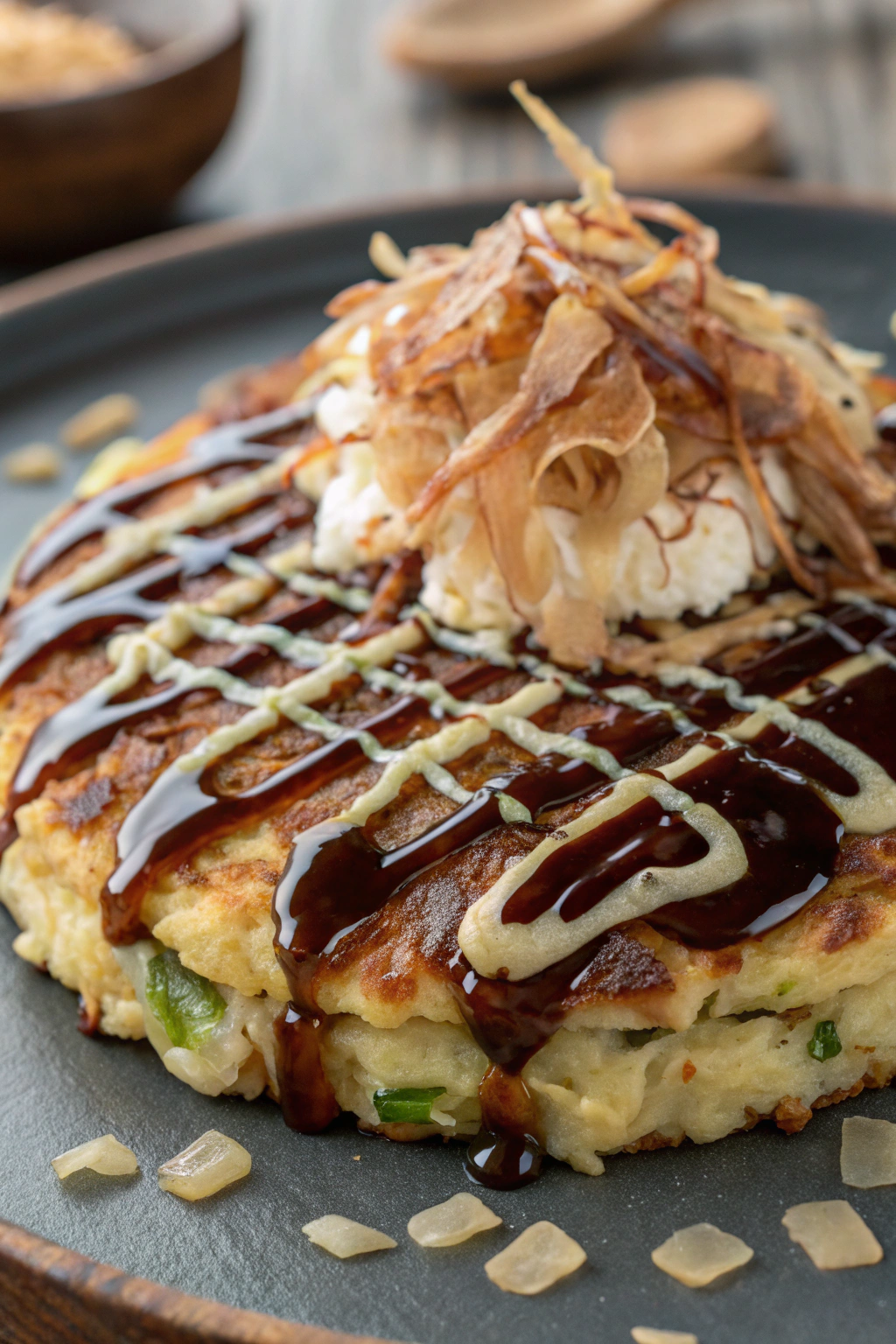
Okonomiyaki Japanese Pancakes
Ingredients
Instructions
- In a large bowl, combine the flour and dashi stock (or water) to form a smooth batter.
- Add the eggs, shredded cabbage, and chopped green onions to the batter and mix until well combined.
- Heat vegetable oil in a non-stick skillet over medium heat.
- Pour half the batter into the skillet and shape it into a round pancake about 6-8 inches in diameter.
- Place slices of pork belly or bacon on top of the pancake.
- Cook for about 5-7 minutes until the bottom is golden brown, then flip carefully.
- Cook the other side for another 5-7 minutes until pork is cooked through and pancake is firm.
- Remove from skillet and transfer to a plate.
- Generously brush the top with okonomiyaki sauce and drizzle mayonnaise over.
- Sprinkle with bonito flakes and aonori if using.
- Repeat for the remaining batter.
- Serve warm and enjoy!