
Hollandaise Sauce Recipe: a velvety, lemony butter sauce that tastes rich, tangy, and a little fancy without any fuss. It suits brunch fans who want a classic eggs Benedict sauce in about 15 minutes, start to finish. I still whisk this on sleepy Sundays while my coffee cools to the perfect sip.
Why Choose This Hollandaise Sauce Recipe
This Hollandaise Sauce Recipe keeps the method simple, the flavor bright, and the texture consistently silky. You get options for whisking by hand or using a blender, plus fixes for a sauce that misbehaves.
Ingredients You Need
- Egg yolks: 3 large
- Unsalted butter: 8 tablespoons, melted and hot (European-style butter tastes richer; if you use salted butter, add less salt)
- Fresh lemon juice: 1 to 1.5 tablespoons, to taste
- Water: 1 tablespoon, plus more as needed to thin
- Dijon mustard: 1/2 teaspoon optional, helps the emulsion hold
- Kosher salt and cayenne pepper or a dash of hot sauce, to taste
- Pantry shortcut: use clarified butter or ghee for extra-stable hollandaise and easier reheating
- Substitutions: swap half the lemon juice with white wine vinegar for a sharper edge, or use Meyer lemon for a softer citrus note
Equipment
- Small saucepan with 1 inch of water
- Heatproof bowl for a DIY double boiler, or a proper bowl that fits your pan
- Whisk
- Instant-read thermometer optional, but helpful
- Blender or immersion blender as an alternate method
- Small ladle or measuring cup for pouring butter in a thin stream
How to Make Hollandaise Sauce Recipe
Set Up and Melt the Butter
- Add 1 inch of water to a small saucepan and bring it to a gentle simmer over medium-low heat. Keep it at a lazy bubble, not a boil.
- Melt the butter until hot and steamy. Keep it warm on the lowest heat so it stays liquid.
Whisk the Yolks with Acid
- In a heatproof bowl off the heat, whisk together the yolks, lemon juice, water, and mustard if using. The mixture should look smooth and slightly foamy.
- Set the bowl over the pan of simmering water. Whisk constantly and keep the bowl from touching the water.
Thicken the Base
- Whisk until the yolk mixture thickens slightly and turns pale, 2 to 3 minutes. You should see faint trails from the whisk.
- Aim for 150 to 160 degrees F if you use a thermometer. Pull the bowl off the heat if it thickens too fast.
Emulsify with Butter
- While whisking, start drizzling in the hot butter in a thin, steady stream. Pour slowly at first so the sauce grabs the fat.
- After it starts to look creamy, you can add the butter a bit faster. Pause and whisk off the heat if it thickens too much.
Season and Adjust
- Whisk in a pinch of salt and a small pinch of cayenne or a dash of hot sauce. Taste and add more lemon if you want extra brightness.
- If the sauce looks too thick, whisk in a teaspoon of warm water at a time until it flows like warm custard. Keep it warm off the heat.
Blender Method Option
- Add yolks, lemon juice, water, and mustard to a blender. Blend on low for 10 seconds.
- With the blender running on low, stream in hot butter slowly through the lid opening until the sauce turns glossy and thick. Season to taste and thin with warm water if needed.
Quick Fixes if It Splits
- If the sauce looks greasy or curdled, whisk in 1 tablespoon warm water. If that fails, whisk a fresh yolk with 1 teaspoon water in a clean bowl, then slowly whisk in the broken sauce.
- If it turns too thick, add warm water a teaspoon at a time until it loosens.
Tips & Common Mistakes
- Keep the heat gentle. High heat scrambles yolks fast.
- Start with a slow butter drizzle. A fast pour breaks the emulsion.
- Use warm, not scorching, butter. You want steam but not browning.
- Keep the bowl off the water. Gentle steam cooks more evenly.
- Add an extra splash of lemon at the end if the sauce tastes flat.
- Whisk constantly. Short pauses can lead to hot spots and curdling.
- Stabilize with Dijon or use clarified butter for an easier emulsion.
- Fix a broken sauce by whisking in warm water or starting with a fresh yolk.
- Thin with warm water, not lemon, once it reaches proper acidity.
- Hold the sauce warm, not hot. A preheated thermos works well for up to an hour.
Variations I’ve Tried
- Lime or Meyer lemon hollandaise for citrus twists.
- Brown butter hollandaise for nutty depth.
- Tarragon and vinegar for a quick bearnaise-style vibe.
- Smoked paprika or chipotle for a subtle spicy note.
- Roasted garlic or shallot-infused butter for savory complexity.
- Olive oil and butter blend for a lighter profile.
- Yuzu or grapefruit zest for a bright brunch sauce that surprises in the best way.
How to Serve
Spoon over eggs Benedict with Canadian bacon, smoked salmon, or sautéed spinach. Drizzle on steamed asparagus, roasted broccoli, or artichokes. Pair with seared salmon, crab cakes, or roasted potatoes and a crisp sparkling wine or strong coffee. Use extra sauce on a breakfast sandwich and watch it turn into a small victory.
Make-Ahead and Storage
Keep hollandaise warm for up to 1 hour in a preheated thermos or an insulated mug. Store leftovers in an airtight container in the fridge for up to 2 days. Reheat gently over a double boiler or in the microwave at 50 percent power in 10-second bursts, whisking with a teaspoon of warm water to revive the texture. I avoid freezing hollandaise because it tends to break after thawing, and a fresh batch takes only minutes.
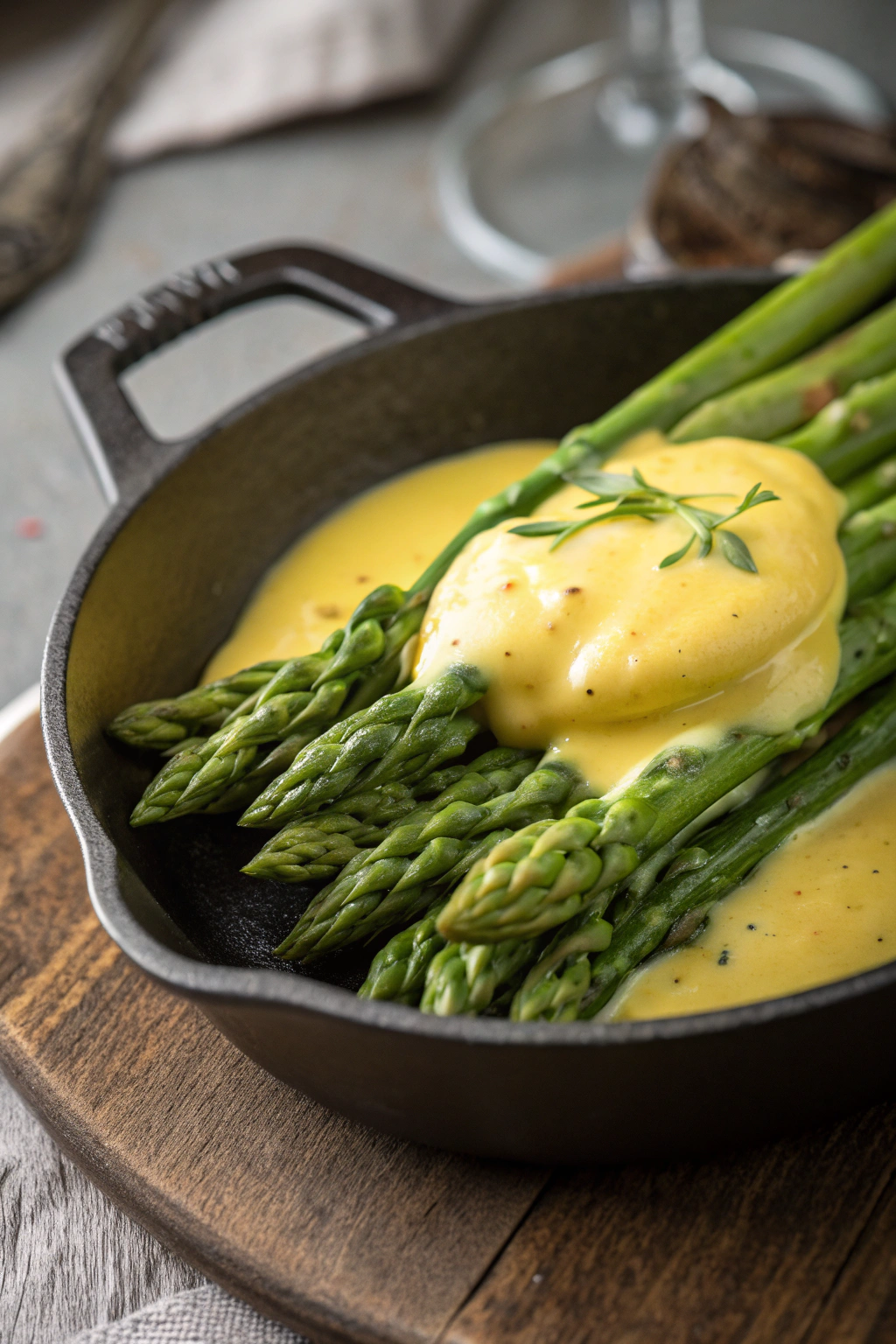
Hollandaise Sauce Recipe
Ingredients
Instructions
- In a heatproof bowl, whisk together the egg yolks and lemon juice until the mixture is thickened and slightly lightened in color.
- Place the bowl over a saucepan of gently simmering water, making sure the bottom of the bowl does not touch the water.
- Whisk constantly while very slowly drizzling in the warm melted butter, a few drops at a time at first, until the sauce begins to thicken and emulsify.
- Once about half of the butter is incorporated, you can add the remaining butter in a thin, steady stream, whisking continuously until the sauce is thick, smooth, and glossy.
- Remove the bowl from the heat and season the sauce with salt and cayenne or white pepper to taste. Whisk in a tablespoon of warm water if needed to adjust the consistency.
- Serve immediately over poached eggs, steamed vegetables, or fish, or keep warm for up to 30 minutes in a warm (not hot) spot, stirring occasionally.
Notes
Approximate per serving (1 of 4): 240 calories; fat 25 g; saturated fat 14 g; carbohydrates 1 g; fiber 0 g; sugars 1 g; protein 3 g; sodium 160 mg. Values will vary based on exact ingredients, brands, and portion size.