
Pasta Primavera Recipe tastes bright, fresh, and creamy with tender-crisp veggies and a light lemon parmesan sauce. It suits busy cooks who want a colorful vegetarian pasta in about 30 minutes start to finish. I learned this trick-filled version after many Tuesday nights when my fridge held more zucchini than social plans.
Why Choose This Easy Pasta Primavera Recipe
Pasta Primavera Recipe shines because it balances creamy sauce with bright lemon and crisp spring vegetables. The method keeps every veggie vibrant while the pasta stays al dente. You also get pantry shortcuts that save time without losing flavor.
I build the sauce right in the skillet with the vegetables, then loosen it with starchy pasta water. That move coats every bite without a heavy cream overload. You can tweak the veggies based on what you have and still hit that restaurant-level finish.
Ingredients You Need
- 12 ounces short pasta like penne, farfalle, or rigatoni (De Cecco or Barilla hold texture well)
- 2 tablespoons olive oil
- 1 tablespoon unsalted butter (Kerrygold melts smooth, optional)
- 3 cloves garlic, thinly sliced
- 1 teaspoon kosher salt, plus more for the pasta water
- 1 teaspoon lemon zest and 2 tablespoons lemon juice
- 1 cup cherry tomatoes, halved
- 1 medium zucchini, halved lengthwise and sliced
- 1 small yellow squash, halved and sliced (optional)
- 1 red bell pepper, sliced thin
- 1 bunch thin asparagus, trimmed and cut in 1-inch pieces
- 1 cup peas, fresh or frozen straight from the bag
- 1 cup light cream or half and half (use a splash more as needed)
- 1 cup finely grated parmesan or Parmigiano Reggiano, plus extra to serve
- 1 pinch red pepper flakes
- Fresh basil, torn, for finish
- Freshly ground black pepper, to taste
Pantry shortcuts and swaps:
- Use frozen peas without thawing.
- Sub jarred roasted red peppers for fresh bell pepper on busy nights.
- Sub broccoli florets or snap peas for asparagus when out of season.
- Go dairy-free with 1 cup unsweetened cashew milk and 2 tablespoons cashew butter, then finish with nutritional yeast.
- Use vegetable broth instead of cream for a lighter sauce. Add an extra handful of parmesan at the end for body.
Equipment:
- Large pot for boiling pasta
- Large 12-inch skillet or sauté pan
- Colander
- Tongs and a wooden spoon
- Microplane or fine grater
- Chef’s knife and cutting board
- Measuring cups and spoons
How to Make Tasty Pasta Primavera Recipe
Prep the vegetables and start the pasta
- Bring a large pot of water to a boil and salt it so it tastes like the sea.
- Chop all vegetables into bite-size, similar pieces for even cooking.
- Drop the pasta into the boiling water and cook until just shy of al dente. Reserve 1.5 cups pasta water before you drain.
Sauté the vegetables
- Heat olive oil and butter in a large skillet over medium-high heat.
- Add zucchini, yellow squash, and bell pepper. Season with a pinch of salt and cook 3 to 4 minutes until they soften at the edges.
- Stir in asparagus and cherry tomatoes. Cook 2 to 3 minutes until the asparagus turns bright green.
- Lower heat to medium. Add garlic and red pepper flakes and stir 30 seconds until fragrant.
Build the light cream sauce
- Pour in the cream and 1 teaspoon lemon zest. Stir and let it steam for 1 minute.
- Add 1 cup reserved pasta water and bring the sauce to a lively simmer.
- Stir in peas and cook 1 minute so they warm through.
Toss and finish
- Add the drained pasta to the skillet and toss until the sauce coats every piece. Add more pasta water as needed to keep it glossy.
- Take the skillet off the heat. Sprinkle in parmesan and toss until it melts and thickens the sauce.
- Finish with lemon juice, torn basil, and black pepper. Taste and adjust salt, then serve hot with extra parmesan.
Tips & Common Mistakes
- Salt the pasta water generously to season from the inside out.
- Cut vegetables to similar size so they cook evenly.
- Use a wide skillet so vegetables sauté rather than steam.
- Pull the pasta a minute early since it finishes in the sauce.
- Reserve pasta water before you drain. It brings the sauce together.
- Add garlic near the end so it does not burn.
- Stir in cheese off the heat to avoid clumping or grainy sauce.
- Keep veggies crisp-tender for color and snap. Mushy vegetables lose charm.
- Finish with acid. A squeeze of lemon wakes up creamy sauces.
- Taste and season at each step for balanced flavor.
Variations I’ve Tried
- Pesto Primavera: Stir in 2 tablespoons basil pesto with the parmesan for a herbal kick.
- Roasted Veggie Version: Roast zucchini, peppers, and tomatoes at 425°F for 15 to 20 minutes, then toss with pasta and sauce.
- Tomato-Forward: Add 1 cup halved cherry tomatoes earlier and cook until they burst for extra sweetness.
- Protein Boost: Add sautéed shrimp, grilled chicken, or crispy prosciutto bits.
- Lemon Ricotta: Dollop 1 cup ricotta mixed with lemon zest and pepper over bowls.
- Spicy Calabrian: Stir in 1 teaspoon Calabrian chili paste with the garlic.
- Gluten-Free: Use a sturdy gluten-free pasta and keep the toss gentle.
- Dairy-Free Creamy: Blend cashews with hot pasta water for a silky finish, then add nutritional yeast.
How to Serve
Twirl the pasta into warm bowls and top with extra parmesan, basil, and a few red pepper flakes. Pair it with a crisp white wine like Sauvignon Blanc or Pinot Grigio, or pour sparkling water with lemon for a zero-proof match. Add a simple arugula salad with olive oil and lemon and a side of garlic bread. This pasta also tastes great at room temp, which makes backyard dinners low stress.
Make-Ahead and Storage
- Prep ahead: Chop vegetables up to 2 days in advance and store them in airtight containers. Zest the lemon and grate the cheese ahead to save minutes.
- Fridge: Store leftovers in a sealed container for 3 to 4 days.
- Freezer: Skip freezing the finished dish since dairy sauces can separate. Freeze blanched veggies on a sheet tray, then bag them for a quick future batch.
- Reheat: Warm gently in a skillet over medium with a splash of water or milk until the sauce loosens and turns glossy. Microwave in short bursts, stirring between intervals, and add a spoon of water if it tightens.
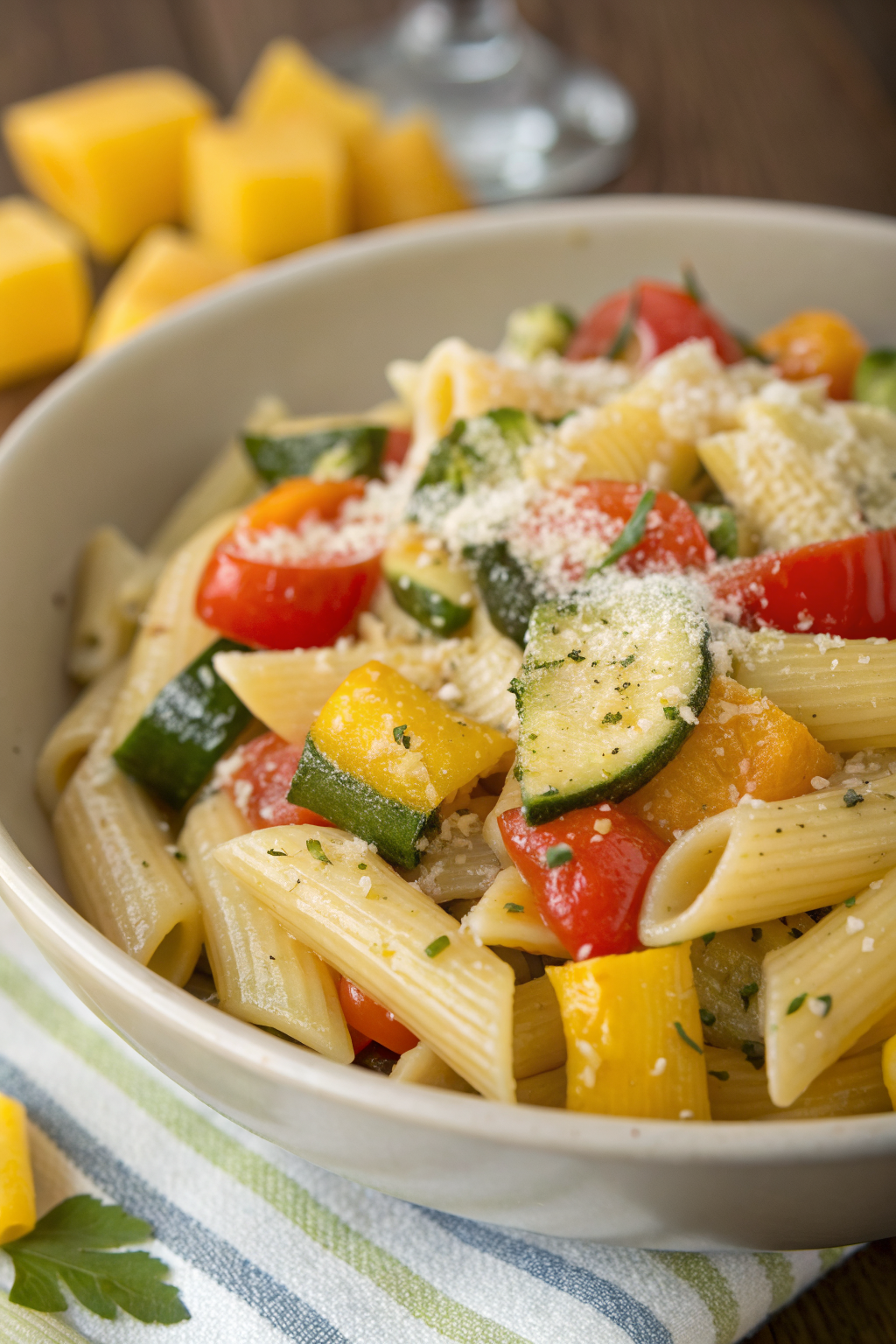
Easy Pasta Primavera Recipe
Ingredients
Instructions
- Bring a large pot of salted water to a boil. Add the pasta and cook according to package directions until al dente. Reserve about 1/2 cup of the pasta cooking water, then drain the pasta.
- While the pasta cooks, heat the olive oil and butter (if using) in a large skillet over medium heat. Add the garlic and cook for about 30 seconds until fragrant, stirring constantly to avoid burning.
- Add the broccoli, asparagus, and carrot to the skillet. Season lightly with salt and pepper. Cook, stirring often, for 4–5 minutes until they begin to soften.
- Add the zucchini, yellow squash (if using), and cherry tomatoes. Cook for another 3–4 minutes until the vegetables are tender-crisp and the tomatoes start to soften. Stir in the peas and cook for 1 more minute.
- Reduce the heat to low. Stir in the heavy cream (if using) and Parmesan cheese, along with a splash of the reserved pasta water to loosen the sauce. Add the red pepper flakes if desired, and season to taste with more salt and pepper.
- Add the drained pasta to the skillet and toss well with the vegetables and sauce, adding more reserved pasta water a little at a time if needed to coat the pasta evenly.
- Remove from heat and stir in the fresh basil and parsley. Taste and adjust seasoning as needed.
- Serve immediately, topped with extra Parmesan and more fresh herbs if desired.
Notes
Approximate per serving (1/4 of recipe, made with cream and butter): 520 calories; fat 21 g; saturated fat 10 g; carbohydrates 68 g; fiber 6 g; sugars 8 g; protein 19 g; sodium 260 mg. Values will vary based on exact ingredients, brands, and portion size.