
Beginner's Sourdough Bread Recipe can seem intimidating, but it’s actually a lot friendlier than you think. If you’ve ever wanted to bake your own loaf with that perfect tang and crust, this guide will walk you through it step-by-step. I promise, even if you’re new to bread baking, you’ll find this process straightforward and rewarding.
Why You Should Try Beginner's Sourdough Bread Recipe
Sourdough isn’t just bread; it’s a little living thing that you nurture. There’s something satisfying about watching your starter bubble and grow, knowing it will give you that signature flavor. Plus, homemade sourdough tastes way better than anything store-bought. Ever bitten into a crusty loaf fresh from the oven and felt like a baking wizard? That’s the feeling sourdough gives you.
Variations I’ve Tried
I started with a simple white flour sourdough, but over time, I’ve added whole wheat and rye flours for extra depth. Adding seeds like sunflower or flax can give your bread a nice crunch. Sometimes, I toss in herbs like rosemary or thyme for a savory twist. Don’t be afraid to experiment—each variation teaches you something new about how the dough behaves.
Ingredients You’ll Need
- 100 grams active sourdough starter (fed and bubbly)
- 375 grams bread flour (you can mix white and whole wheat)
- 275 grams water (room temperature)
- 8 grams salt
That’s it! Just four simple ingredients, but they come together to make something amazing. Make sure your starter is active; it should smell pleasantly tangy and show bubbles on the surface.
How I Make Beginner's Sourdough Bread
- Mix the dough: Combine the starter, water, and flour in a large bowl. Stir until no dry flour remains. Cover and let it rest for 30 minutes (this is called autolyse).
- Add salt: Sprinkle salt over the dough and mix it in by folding the dough over itself a few times.
- Bulk fermentation: Let the dough rise at room temperature for 4 to 5 hours. Every 30 minutes during the first 2 hours, do a series of stretch and folds—grab a side of the dough, stretch it gently, and fold it over the center. This strengthens the dough.
- Shape the dough: Turn the dough onto a lightly floured surface and shape it into a tight round loaf. Place it seam-side up in a floured banneton or a bowl lined with a tea towel.
- Proof: Cover and refrigerate overnight or for about 12 hours. This slow proof develops flavor and makes the dough easier to handle.
- Bake: Preheat your oven to 250°C (480°F) with a Dutch oven inside. Carefully transfer the dough into the hot Dutch oven, score the top with a sharp knife, cover, and bake for 20 minutes. Remove the lid and bake for another 20-25 minutes until golden and crusty.
- Cool: Let the bread cool completely on a wire rack before slicing. Patience here pays off!
Serving Ideas for Beginner's Sourdough Bread
Sourdough shines with simple toppings. Slather it with butter and a sprinkle of sea salt, or pile on avocado and a squeeze of lemon. It’s also fantastic for sandwiches, toast, or alongside soups and stews. Ever tried dipping sourdough in olive oil and balsamic vinegar? It’s like a little party for your taste buds.
Holly’s Pro Tips for Beginner's Sourdough Bread
- Keep your starter happy by feeding it regularly. A lively starter means better bread.
- Use a kitchen scale for accuracy. Baking is a science that loves precision.
- Don’t rush the bulk fermentation; it’s where flavor and texture develop.
- Scoring the dough isn’t just for looks—it helps the bread expand properly in the oven.
- If your crust gets too dark, tent the bread with foil for the last 10 minutes.
Leftovers
If you have any bread left (big if), store it in a paper bag or bread box to keep the crust crisp. Avoid plastic bags unless you want a soft crust. To revive day-old sourdough, toast it or warm it in the oven for a few minutes. It’s like bringing it back to life.
Common Mistakes to Avoid
- Using inactive starter: Your bread won’t rise well, and the flavor will be flat.
- Over or under fermenting: Too short, and the dough won’t develop flavor; too long, and it can become overly sour or collapse.
- Skipping the stretch and folds: This step builds the dough’s strength and structure.
- Baking without preheating the Dutch oven: The initial burst of heat creates that great oven spring and crust.
- Cutting the bread too soon: It’s tempting, but slicing while warm can make the crumb gummy.
Nutrition Facts (per serving)
- Calories: 180 kcal
- Carbohydrates: 38 g
- Protein: 6 g
- Fat: 1 g
- Fiber: 2 g
- Sugar: 0.5 g
Baking sourdough is a journey, but with this beginner's sourdough bread recipe, you’re well on your way to mastering a classic that’s both tasty and satisfying. Ready to get that starter bubbling?
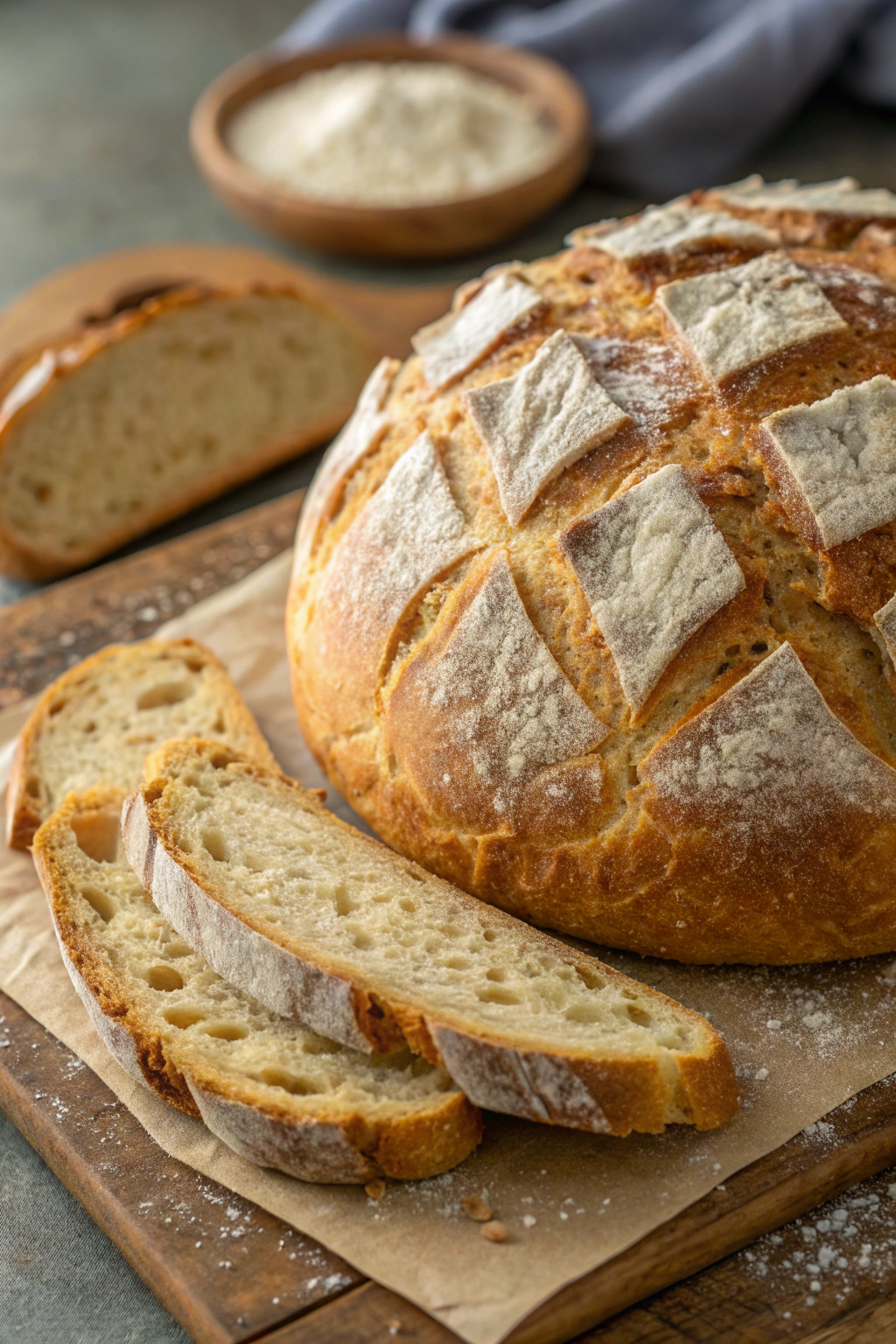
Beginner's Sourdough Bread Recipe
Ingredients
Instructions
- In a large bowl, mix the sourdough starter with warm water until combined.
- Add the flour and salt to the starter mixture and stir to form a shaggy dough.
- Cover the bowl and let the dough rest for 30 minutes.
- Knead the dough on a lightly floured surface for about 10 minutes until smooth.
- Place the dough in a lightly oiled bowl, cover it, and let it rise for 4-6 hours until doubled in size.
- Preheat the oven to 450°F (232°C) with a Dutch oven inside.
- Shape the dough into a round loaf and place it on parchment paper.
- Carefully transfer the dough into the hot Dutch oven, cover, and bake for 20 minutes.
- Remove the lid and bake for an additional 20 minutes until the crust is golden brown.
- Let the bread cool completely before slicing and serving.