
Harusame Japanese Glass Noodle Soup tastes light, savory, and a little gingery, with springy glass noodles soaking up a clean dashi broth. It suits anyone who wants a soothing weeknight bowl in about 25 to 30 minutes without heavy prep or cleanup. I first slurped it at a tiny station-side counter on a rainy night, and I still chase that steam in my own kitchen.
Why Harusame Japanese Glass Noodle Soup Is Worth It
Harusame Japanese Glass Noodle Soup rewards you with flavor and texture far beyond the effort. Glass noodles stay silky, and the broth brings umami from dashi, soy sauce, and mirin with a whisper of sesame.
You can tailor heat, veggies, and protein in minutes, so everyone at the table wins. I rotate tofu, shrimp, and chicken depending on cravings and what the fridge offers.
Clean, slurpable, and soothing, this bowl beats takeout and warms you from the inside ★★★★★
Ingredients You Need
- Harusame glass noodles, 4 ounces by weight (bean thread or potato starch noodles; brands like Kikkoman or Shirakiku work great)
- Dashi, 4 cups total
- Quick route: 2 teaspoons instant dashi granules such as HonDashi in 4 cups water
- From scratch: 1 piece kombu 4 inches and 1 packed cup bonito flakes steeped in hot water, then strained
- Soy sauce, 2 to 3 tablespoons (use low-sodium if you prefer; use tamari for gluten-free)
- Mirin, 1 tablespoon
- Sake, 1 tablespoon (optional, but it rounds the broth)
- Toasted sesame oil, 1 teaspoon
- Fresh ginger, 1 tablespoon finely grated (tube ginger works)
- Garlic, 1 small clove minced (optional)
- Shiitake mushrooms, 1 cup sliced
- Dried option: soak 4 to 5 dried shiitake in hot water, then slice and add the soaking liquid to the broth
- Napa cabbage or bok choy, 2 cups shredded
- Carrot, 1 small, cut into matchsticks
- Scallions, 3, thinly sliced
- Protein options, choose one:
- Silken or firm tofu, 8 ounces cut into cubes
- Thin-sliced chicken thigh, 8 ounces
- Medium shrimp, 8 ounces peeled and deveined
- Fine sea salt, to taste
- Optional toppings: shichimi togarashi, chili oil, toasted sesame seeds, nori strips, a splash of rice vinegar or yuzu juice
Equipment: medium pot, ladle, cutting board and knife, heatproof bowl for soaking noodles, fine mesh strainer, kitchen scissors.
Quick Tips & substitutions
- Soak harusame in hot tap water, not boiling water, to keep a springy bite.
- Snip long noodles with kitchen scissors before serving to make slurping easier.
- Drop noodles into the pot at the end so they do not over-soften.
- Use instant dashi for weeknights; use kombu and bonito when you want a deeper broth.
- Go vegetarian with kombu and dried shiitake dashi, then use tofu for protein.
- Swap napa cabbage with baby bok choy, spinach, or a coleslaw mix from the bag.
- Choose tamari for gluten-free and watch labels on dashi granules.
- Miso twist: whisk in white miso off heat to keep it smooth.
- Spice it up with chili oil or shichimi togarashi.
- No dashi on hand? Use chicken stock for a different but tasty bowl, then add a little soy and a small piece of kombu if you have it.
How to Make Harusame Japanese Glass Noodle Soup
Step 1: Soak the noodles (8 to 10 minutes)
Place the glass noodles in a heatproof bowl and cover with hot tap water. Let them soften until pliable, then drain well. Snip once or twice with scissors.
Step 2: Build the broth base (6 to 8 minutes)
Set a medium pot over medium heat. Add sesame oil, ginger, and garlic, and cook until fragrant, about 30 seconds. Pour in dashi, soy sauce, mirin, and sake, then bring it to a gentle simmer.
Step 3: Add veggies and mushrooms (3 to 5 minutes)
Stir in shiitake, carrot, and cabbage. Simmer until the veggies turn tender but still bright. Taste and adjust salt or soy.
Step 4: Cook the protein (2 to 5 minutes)
- For tofu: slide in the cubes and warm them through for 2 minutes.
- For chicken: add thin slices and simmer until the centers turn opaque, 3 to 4 minutes.
- For shrimp: add and cook until pink and just curled, about 2 minutes.
Step 5: Finish with noodles and scallions (1 to 2 minutes)
Add the drained harusame and simmer for 1 minute. Stir in most of the scallions and a few drops of sesame oil if you crave extra aroma. Ladle into bowls and top with more scallions and your favorite toppings.
Variations
- Miso broth: whisk in 2 tablespoons white miso off heat for a creamy, savory finish.
- Ginger-chicken: double the ginger, use chicken thigh, and finish with a squeeze of lemon.
- Tofu and mushroom medley: load up shiitake and add enoki and shimeji for an umami burst.
- Spicy sesame: stir in 1 tablespoon tahini and chili oil for a nutty, spicy bowl.
- Seafood: use shrimp and a few scallops, then finish with a splash of rice vinegar.
Ways to Serve
- Pair with gyoza or vegetable tempura.
- Add a side of cucumber sunomono or a crisp salad with sesame dressing.
- Serve with steamed rice or onigiri for a heartier meal.
- Sip hot green tea, light lager, or chilled sake alongside.
Storage
Store broth and noodles in separate containers so the noodles keep their bite. Refrigerate both for up to 3 days and keep toppings in small containers. Reheat broth until hot, then add noodles and greens so they warm gently. Freeze only the broth for up to 2 months and add fresh noodles when you reheat.
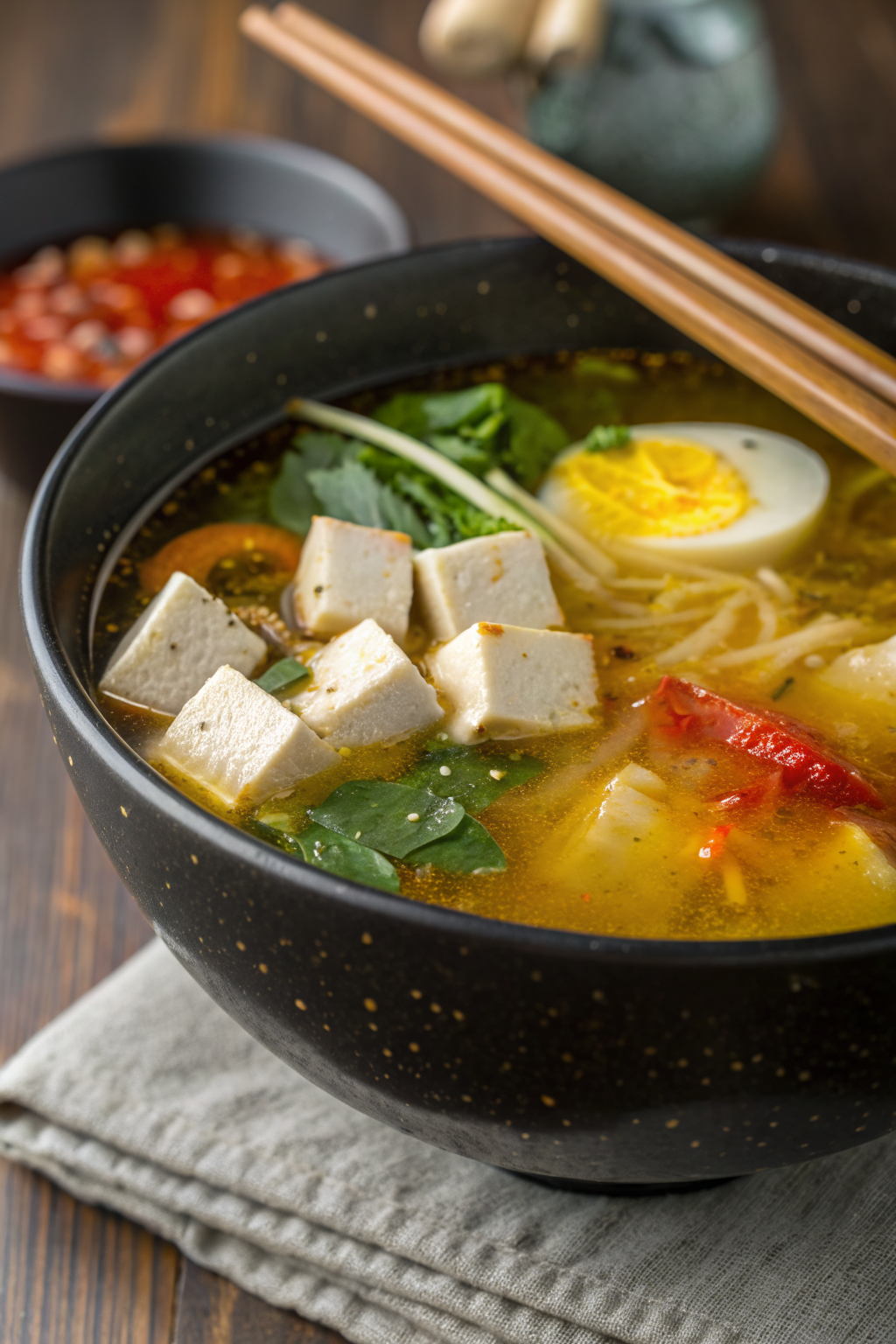
Harusame Japanese Glass Noodle Soup
Ingredients
Instructions
- Place the glass noodles in a heatproof bowl and cover with hot tap water. Soak for 8 to 10 minutes until softened and pliable, then drain well and snip once or twice with kitchen scissors.
- Set a medium pot over medium heat. Add toasted sesame oil, ginger, and garlic, and cook until fragrant, about 30 seconds.
- Pour in the dashi, soy sauce, mirin, and sake (if using). Bring the broth to a gentle simmer.
- Stir in the sliced shiitake mushrooms, shredded Napa cabbage or bok choy, and carrot matchsticks. Simmer 3 to 5 minutes until the vegetables are tender but still bright. Taste and adjust seasoning with salt or additional soy sauce.
- Add your chosen protein: for tofu, slide in the cubes and warm gently for about 2 minutes; for thin-sliced chicken thigh, simmer until opaque throughout, 3 to 4 minutes; for shrimp, simmer until pink and just curled, about 2 minutes.
- Add the drained harusame noodles to the pot and simmer for about 1 minute to heat through. Stir in most of the sliced scallions and a few extra drops of sesame oil if desired.
- Ladle the soup into bowls, top with remaining scallions, and finish with any optional toppings such as shichimi togarashi, chili oil, toasted sesame seeds, nori strips, or a splash of rice vinegar or yuzu juice.
Notes
Approximate per 1 of 4 servings (made with tofu and low-sodium soy sauce): 260–310 calories; fat 8–11 g; saturated fat 1–2 g; carbohydrates 32–38 g; fiber 3–4 g; sugars 6–8 g; protein 14–18 g; sodium 900–1200 mg. Using chicken or shrimp will slightly increase protein and may reduce carbohydrates. Values will vary based on specific brands, protein choice, and toppings.