
Hollandaise Sauce Homemade Recipe tastes silky and buttery with bright lemon, a whisper of heat, and a spoon-coating texture that feels fancy without the fuss. It suits brunch lovers, veggie fans, and anyone who wants a 15-minute sauce that turns simple food into something special. I whisk a batch most Sundays while my coffee cools and the kitchen wakes up.
Why You Should Try This Hollandaise Sauce Homemade Recipe
This Hollandaise Sauce Homemade Recipe gives you cafe-level flavor with pantry ingredients and a whisk. You control the tang, heat, and thickness, which means you skip jarred versions and packet mixes. The method builds confidence fast, and the payoff tastes rich and glossy.
You can make it classic with a whisk or go blender-style when time feels tight. Both versions hold beautifully and serve eggs Benedict or asparagus like a pro. Once you see how stable it turns, you will keep this sauce in your brunch rotation.
Creamy, bright, and fuss-free, this hollandaise turned my home brunch into a diner-level plate ★★★★★
Ingredients You’ll Need
- 3 large egg yolks (use pasteurized yolks if food safety concerns apply)
- 1 tablespoon fresh lemon juice (bottled juice works in a pinch, but fresh tastes brighter)
- 1 teaspoon white wine vinegar, optional for extra tang and stability
- 1 tablespoon water (keeps yolks fluid while you whisk)
- 8 tablespoons unsalted butter, melted and hot, about 200 F (clarified butter or ghee adds richness and stability; Trader Joe’s ghee works great)
- 1/4 teaspoon kosher salt, to taste (Diamond Crystal is lighter than Morton, so season to taste)
- Pinch of cayenne or a few dashes hot sauce, to taste (Tabasco plays nicely)
- 1/2 teaspoon Dijon mustard, optional for a touch of tang and extra emulsion support
Equipment:
- Small saucepan and heatproof bowl to make a simple double boiler, or a dedicated double boiler
- Whisk
- Blender for the alternate method
- Instant-read thermometer, optional but helpful
- Kitchen towel, measuring spoons, insulated mug or thermos to hold the sauce warm
How to Make Hollandaise Sauce Homemade Recipe
Classic Whisk Method
- Melt the butter until hot and bubbling. Aim for about 200 F so it emulsifies easily.
- Bring 1 inch of water to a gentle simmer in a saucepan. Set a heatproof bowl on top so the bottom does not touch the water.
- Off the heat, whisk yolks, lemon juice, water, and vinegar or Dijon until smooth and slightly lighter in color, about 30 seconds.
- Set the bowl over the simmering water and whisk constantly. Lift the bowl on and off the steam as needed to keep the yolks warm, not hot. Thicken to light ribbons and about 150 to 155 F, 2 to 3 minutes.
- Drizzle in the hot butter slowly while whisking. Start with a few drops, then a thin stream. Keep the bowl warm and whisk until the sauce turns thick and glossy.
- Season with salt and cayenne. If the sauce feels too thick, whisk in a teaspoon or two of warm water or lemon juice until it coats a spoon.
- Hold the sauce warm. Tuck the bowl over a pan of hot water with the heat off, or transfer to an insulated mug.
Blender Method
- Melt the butter until very hot and bubbling. Hot butter helps the emulsion.
- Add yolks, lemon juice, water, salt, cayenne, and Dijon to the blender. Blend on low to medium for 10 seconds.
- With the lid vented, run the blender on medium and stream in the hot butter slowly. Blend until thick and satiny, about 20 to 40 seconds.
- Thin with warm water or more lemon if needed, then taste and adjust salt and heat.
Tips & Tricks
- Use clarified butter or ghee for a thicker, more stable hollandaise.
- Keep yolks warm, not hot. Target 150 to 155 F to avoid scrambling.
- Start the butter drizzle very slowly, then increase the flow once the emulsion forms.
- If the sauce splits, whisk a fresh yolk with a teaspoon of warm water, then slowly stream in the broken sauce.
- Hold the finished sauce around 120 to 130 F. A thermos or insulated mug keeps it happy.
- Season at the end. Salt can thin the sauce, so taste and adjust after it thickens.
- Use pasteurized yolks if you want extra reassurance.
- Add a pinch of sugar for balance when your lemons taste extra sharp.
What to Serve with Hollandaise Sauce Homemade Recipe
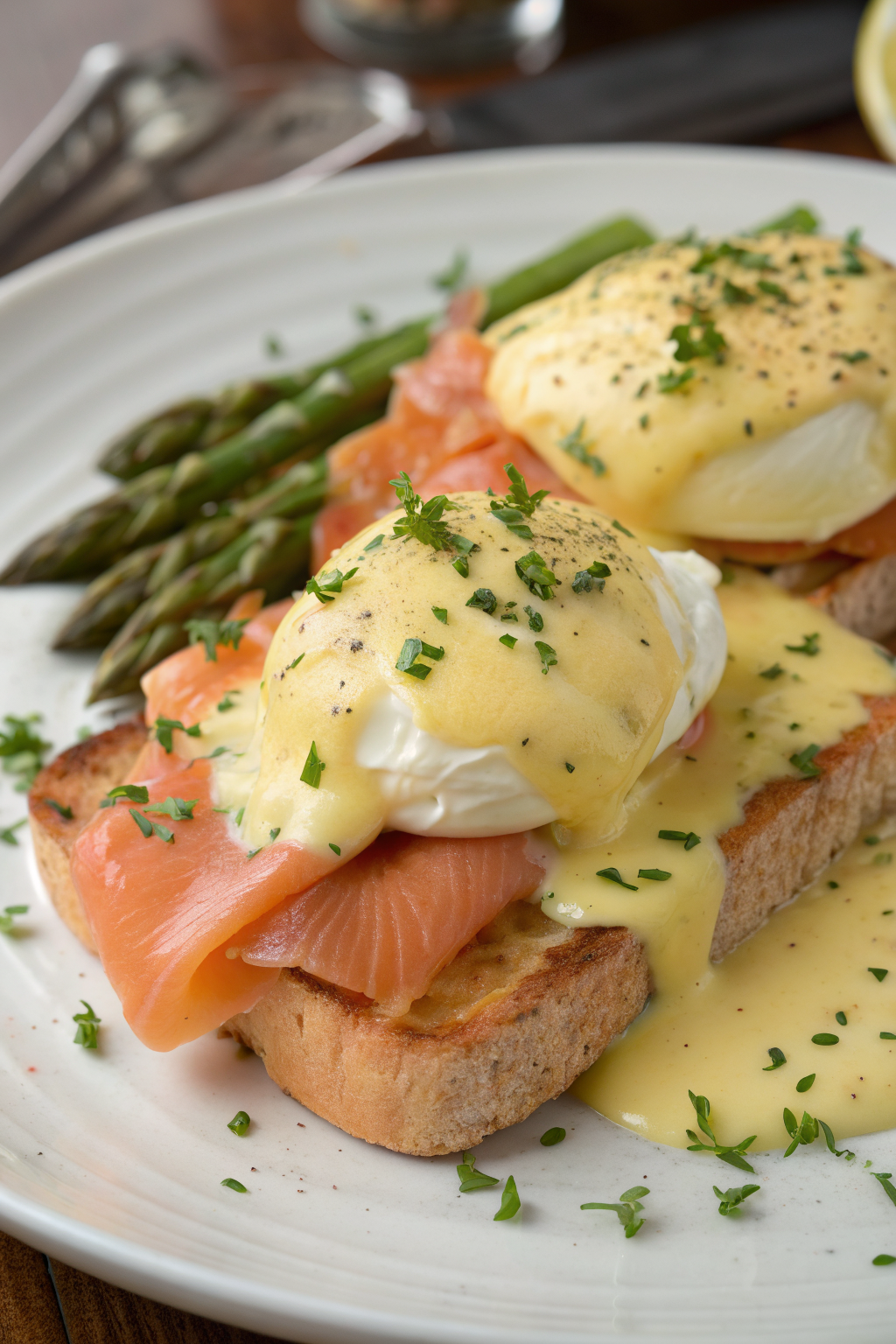
Spoon this classic hollandaise over eggs Benedict, eggs Florentine, or soft-scrambled eggs for a brunch plate that feels special. Drizzle it on steamed asparagus, broccoli, or artichokes and watch vegetables act like they won a trophy. It also flatters seared or poached salmon, crab cakes, and roasted potatoes. Finish with chopped chives, dill, or a dusting of smoked paprika to make flavors pop.
Make-Ahead and Storage
Serve hollandaise fresh for the best texture, but you can hold it warm for up to 1 hour. To store, press plastic wrap directly on the surface, cover, and refrigerate for up to 2 days. Reheat low and slow: set the sauce in a heatproof bowl over hot water and whisk gently, adding warm water a teaspoon at a time to loosen.
If you need to freeze, portion the sauce into silicone trays and freeze for up to 1 month. Thaw overnight in the fridge, then re-emulsify in a blender with a splash of hot water or a fresh yolk. Expect a softer texture after freezing, so use it on vegetables or potatoes where a slight change matters less.
Hollandaise Sauce Homemade Recipe
Ingredients
Instructions
- Melt the butter in a small saucepan until hot and bubbling, about 200°F, then keep warm.
- Bring about 1 inch of water to a gentle simmer in a saucepan. Set a heatproof bowl on top, making sure the bottom does not touch the water.
- Off the heat, whisk together the egg yolks, lemon juice, water, and vinegar or Dijon (if using) until smooth and slightly lighter in color, about 30 seconds.
- Set the bowl over the simmering water and whisk constantly, lifting the bowl on and off the steam as needed to keep the yolks warm but not hot. Cook until the mixture thickens to light ribbons and reaches about 150–155°F, 2 to 3 minutes.
- While whisking constantly, slowly drizzle in the hot butter, starting with a few drops and then a thin, steady stream, until the sauce is thick, smooth, and glossy.
- Season with salt and cayenne or hot sauce to taste. If the sauce is too thick, whisk in a teaspoon or two of warm water or lemon juice until it thinly coats a spoon.
- Keep the hollandaise warm by setting the bowl over a pan of hot water with the heat off, or transfer it to an insulated mug or thermos until ready to serve.
- Melt the butter until very hot and bubbling, then keep it ready to pour.
- Add the egg yolks, lemon juice, water, salt, cayenne or hot sauce, and Dijon (if using) to a blender. Blend on low to medium speed for about 10 seconds until combined and slightly thickened.
- With the blender running on medium and the lid vented, slowly stream in the hot butter until the sauce becomes thick, smooth, and satiny, about 20 to 40 seconds.
- If needed, blend in a little warm water or more lemon juice to reach your desired consistency, then taste and adjust salt and heat before serving.
Notes
Approximate per serving (about 2 tablespoons, 6 servings total): 145 calories; fat 15 g; saturated fat 8 g; carbohydrates 0.5 g; fiber 0 g; sugars 0.3 g; protein 2 g; sodium 120 mg. Values will vary based on exact ingredients, brands, and portion size.