
Easy Korean Bibimbap Recipe gives you a crunchy, saucy, savory rice bowl with pops of heat, sweet, and toasted sesame. It suits busy cooks and curious eaters and takes about 40 minutes from chop to bowl. I fell for bibimbap in a tiny late-night spot during college, and I still chase that sizzle at home.
Why Easy Korean Bibimbap Recipe Is Worth It
Easy Korean Bibimbap Recipe delivers color, texture, and bold flavor without fussy steps. You cook simple components, stack them over hot short-grain rice, and finish with a punchy gochujang bibimbap sauce. The bowl feels restaurant-level, yet you can tweak toppings to match your fridge and weeknight energy.
This bowl hits every craving on a busy night and tastes like my favorite Korean spot ★★★★★
Ingredients You Need
- Rice
- 3 cups cooked short-grain white rice or sushi rice (Calrose works great; day-old rice reheats well with a splash of water)
- Optional: cooked brown short-grain rice for a heartier bite
- Protein
- 12 ounces thinly sliced beef ribeye or sirloin for quick bulgogi (shortcut: use CJ Korean BBQ Sauce Bulgogi as marinade)
- Swap: ground beef, sliced chicken thighs, extra-firm tofu, or mixed mushrooms
- Quick bulgogi-style marinade
- 2 tablespoons soy sauce or tamari
- 1 tablespoon brown sugar or honey
- 1 teaspoon grated garlic
- 1 teaspoon grated ginger
- 1 teaspoon sesame oil
- Pinch black pepper
- Vegetables and toppings
- 1 cup bean sprouts, quickly blanched
- 2 cups baby spinach, quickly blanched
- 1 small zucchini, matchsticks
- 1 medium carrot, matchsticks (use pre-shredded to save time)
- 1 cup shiitake or cremini mushrooms, sliced
- 1 small cucumber, thinly sliced
- 1 cup kimchi, chopped
- 2 scallions, thinly sliced
- 1 to 2 teaspoons toasted sesame seeds
- Roasted seaweed strips, optional
- Eggs
- 4 eggs, sunny-side up or over-easy
- Bibimbap sauce
- 3 tablespoons gochujang (O’Food or Chung Jung One both deliver clean heat; choose gluten free if needed)
- 1 tablespoon sesame oil
- 1 tablespoon rice vinegar
- 1 to 2 teaspoons sugar or honey, to taste
- 1 teaspoon grated garlic
- 1 to 2 tablespoons water to thin to drizzle
- Oil and seasoning
- 1 to 2 tablespoons neutral oil for sautéing
- Kosher salt, to taste
- Equipment
- Rice cooker or lidded pot, 12-inch skillet or cast-iron pan, small saucepan for blanching, colander, mixing bowls, spatula, chef’s knife, cutting board
Quick Tips & substitutions
- Rinse rice until water runs mostly clear for the best chew.
- Use pre-shredded carrots and bagged spinach to cut prep time.
- Pick thinly sliced beef from the freezer section labeled for hot pot or bulgogi to save knife work.
- Swap tofu for beef and pan-sear it golden on two sides for a sturdy vegetarian bowl.
- Stir a little mayo into canned tuna with gochujang for a quick spicy tuna option.
- Thin the sauce with water until it drips easily; adjust heat with more gochujang or sweetness with a touch more honey.
- Season each veggie lightly with salt and a few drops of sesame oil so every bite tastes distinct.
- Use tamari and a gluten free gochujang if you need a gluten free bowl.
- Crisp the rice in a hot skillet with a teaspoon of oil for that dolsot-style edge.
- Keep eggs runny so the yolk mixes with sauce and coats the rice.
How to Make Easy Korean Bibimbap Recipe
Cook the rice
- Rinse 1.5 cups uncooked short-grain rice, then cook in a rice cooker or pot until tender, about 18 to 20 minutes.
- Fluff and keep it hot; hot rice makes the best bibimbap texture.
Marinate the protein
- Stir soy sauce, brown sugar, garlic, ginger, sesame oil, and pepper.
- Toss beef in the marinade and let it sit 10 to 20 minutes while you prep veggies.
Blanch sprouts and spinach
- Boil water, salt it, then blanch bean sprouts for 45 to 60 seconds; drain and pat dry.
- Blanch spinach for 30 seconds; drain, squeeze out moisture, and season both with pinches of salt and a few drops of sesame oil.
Prep and sauté vegetables
- Julienne zucchini and carrot; slice mushrooms and cucumber.
- Heat 1 teaspoon oil and quickly sauté zucchini with a pinch of salt, 2 to 3 minutes; set aside.
- Sauté mushrooms with a touch more oil and a pinch of salt, 3 to 4 minutes; set aside.
- Keep carrot raw for crunch or sauté 1 to 2 minutes for a softer bite.
Cook the protein
- Heat the skillet over medium-high, add 1 teaspoon oil, and spread the beef in a single layer.
- Sear until browned and just cooked through, 3 to 5 minutes, stirring once or twice.
Make the bibimbap sauce
- Whisk gochujang, sesame oil, rice vinegar, sugar, garlic, and water until smooth.
- Taste and adjust sweetness or heat to your liking.
Fry the eggs
- Heat a nonstick pan with a little oil.
- Fry eggs sunny-side up or over-easy until whites set and yolks stay runny, 2 to 3 minutes.
Assemble
- Scoop hot rice into bowls.
- Arrange beef, spinach, sprouts, zucchini, carrot, mushrooms, cucumber, and kimchi over the rice.
- Top with an egg, spoon on bibimbap sauce, and finish with scallions, sesame seeds, and seaweed strips.
- Mix at the table so the yolk and sauce coat every grain.
Variations
- Tofu bibimbap: Press tofu, cut into slabs, sear until golden, and glaze with a little soy and gochujang.
- Chicken bibimbap: Use thigh meat and cook until juicy, then slice thin.
- Mushroom lovers: Mix shiitake, oyster, and cremini for a deep, savory base.
- Spicy tuna: Mix canned tuna with gochujang, mayo, and a squeeze of lime, then pile it on.
- Veg-forward: Add radish, sautéed bell pepper, or blanched broccoli.
- Lower carb: Use cauliflower rice and keep the sauce generous.
- Dolsot-style: Heat a stone bowl or cast iron, oil it, press in rice, and cook until the bottom crisps.
Ways to Serve
- Add banchan like kimchi, cucumber salad, and seasoned spinach.
- Pour hot barley tea or serve a crisp lager, light pilsner, or sparkling water with lime.
- Set extra bibimbap sauce and a side of roasted seaweed on the table.
- Pair with a simple soup like miso or a light beef broth.
Storage
Store rice, protein, veggies, and sauce in separate containers for 3 to 4 days in the fridge. Keep eggs separate and cook them fresh during reheating for the best texture. Reheat rice and toppings in a hot skillet to bring back the sizzle, then top with a fresh egg and sauce. Freeze cooked beef and plain rice up to 2 months, but skip freezing delicate veggies and cucumber.
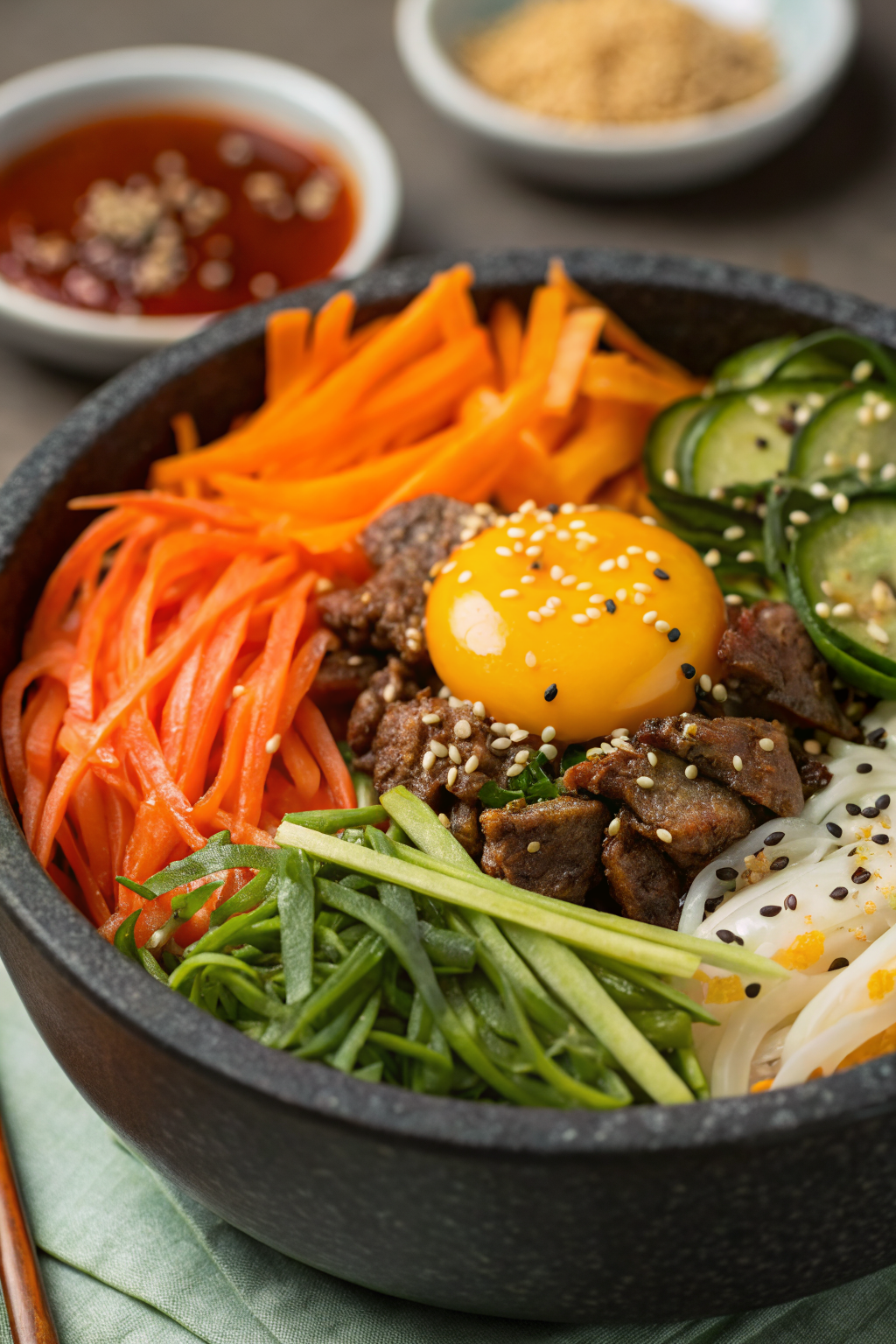
Easy Korean Bibimbap Recipe
Ingredients
Instructions
- In a bowl, combine soy sauce, sesame oil, sugar, minced garlic, and black pepper. Add the sliced beef and mix well. Let it marinate for at least 10 minutes.
- Heat a pan over medium-high heat and cook the marinated beef until browned and cooked through. Set aside.
- Blanch the bean sprouts in boiling water for 1–2 minutes, drain, and season lightly with a pinch of salt and a few drops of sesame oil. Set aside.
- Blanch the spinach in boiling water for 30 seconds, drain, squeeze out excess water, and season with a pinch of salt and a few drops of sesame oil. Set aside.
- Heat a little vegetable oil in a pan over medium heat. Sauté the carrot matchsticks with a pinch of salt until just tender, then set aside.
- In the same pan, sauté the zucchini with a pinch of salt until just softened, then set aside.
- If using mushrooms, sauté them with a small splash of soy sauce until tender, then set aside.
- In a clean pan, fry the eggs sunny-side up (or to your preferred doneness), leaving the yolks runny if possible.
- Divide the warm cooked rice among 4 bowls.
- Arrange the beef, bean sprouts, spinach, carrots, zucchini, and mushrooms (if using) on top of the rice in sections.
- Place a fried egg in the center of each bowl.
- Drizzle each bowl with a little sesame oil and add a spoonful of gochujang on top. Sprinkle with sesame seeds and green onions if desired.
- To eat, mix everything together in the bowl so the rice, vegetables, beef, egg, and sauce are evenly combined.
Notes
Approximate per serving (1 of 4): 540 calories; fat 22 g; saturated fat 5 g; carbohydrates 60 g; fiber 4 g; sugars 6 g; protein 24 g; sodium 780 mg. Values are estimates and will vary based on exact ingredients, brands, and portion sizes.