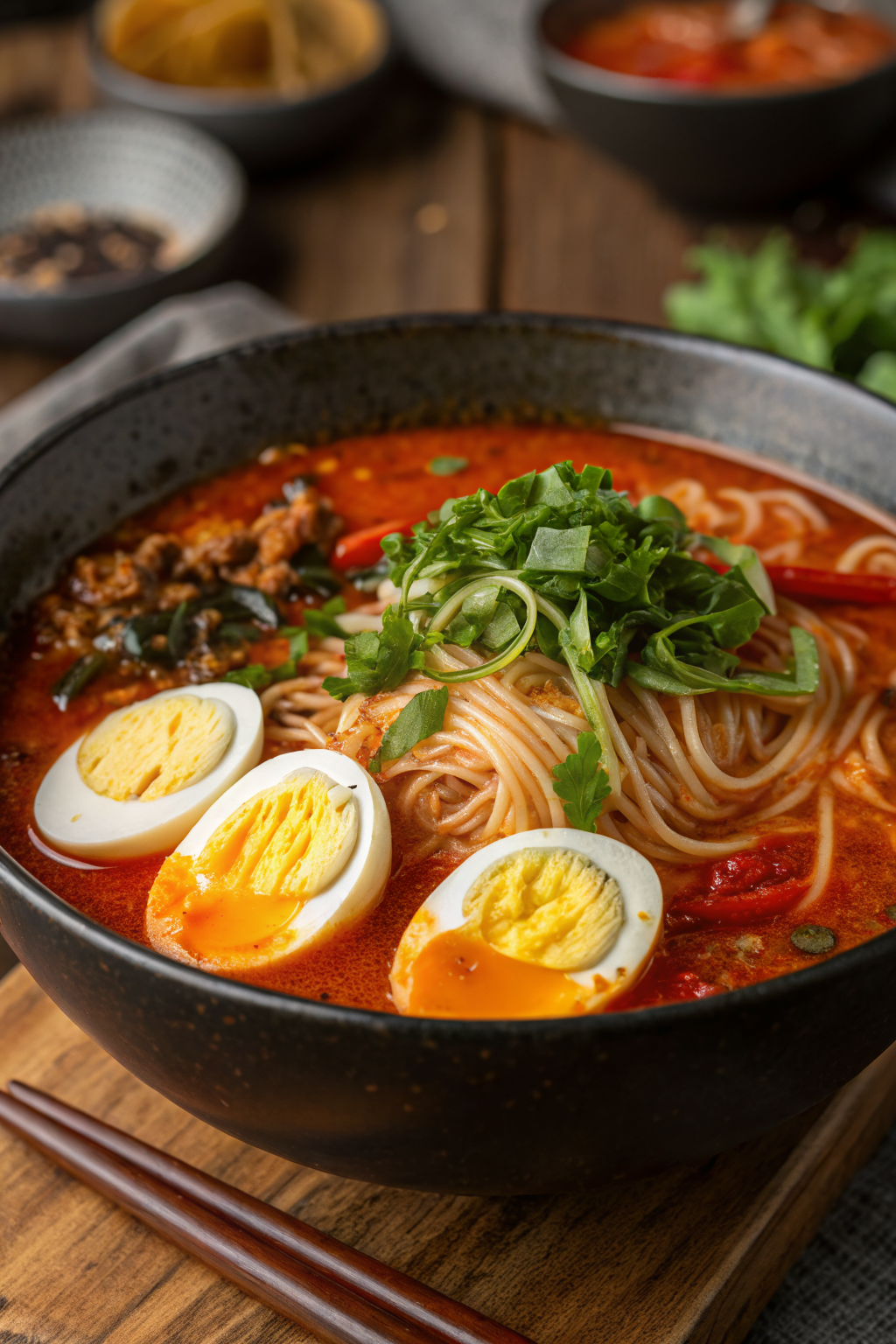
Spicy Gochujang Noodle Soup Recipe brings deep chile warmth, savory umami, and a touch of sweetness in a slurpable bowl. It fits weeknights, college cravings, and anyone who wants bold Korean noodle soup in about 25 minutes. I cook this on rainy nights and keep a tub of gochujang in the fridge for moments like that.
Why Spicy Gochujang Noodle Soup Recipe Is Worth It
Spicy Gochujang Noodle Soup Recipe rewards you with a broth that coats noodles, balances heat with sweetness, and lands a clean savory finish. Gochujang brings fermented depth, while garlic, ginger, and soy round it out. You can scale the heat, swap the protein, and keep the cook time short, which makes this a keeper for busy cooks.
Huge flavor, quick cook, and slurp-worthy heat that tastes like a cozy restaurant bowl at home. ★★★★★
Ingredients You Need
- Gochujang: 2 to 3 tablespoons, to taste. Pick a medium heat paste for balance. I like Chung Jung One or Sempio for smooth flavor.
- Low sodium stock: 4 cups chicken or vegetable. Low sodium lets you season precisely.
- Soy sauce: 2 tablespoons. Use tamari or coconut aminos if you want gluten free.
- Rice vinegar or mirin: 1 to 2 tablespoons for brightness. A squeeze of lime works too.
- Sesame oil: 1 to 2 teaspoons for nutty finish.
- Sugar or honey: 1 to 2 teaspoons to balance the heat.
- Gochugaru or red pepper flakes: 1 teaspoon for extra fire, optional.
- Neutral oil: 1 tablespoon for sautéing.
- Garlic: 4 cloves, minced. Pantry shortcut: use 1 tablespoon jarred minced garlic.
- Ginger: 1 tablespoon, minced or grated. Pantry shortcut: use ginger paste.
- Scallions: 4, thinly sliced. Save greens for garnish.
- Vegetables: 2 cups total mix. Try shiitake or cremini mushrooms, baby bok choy, spinach, napa cabbage, or matchstick carrots.
- Protein options: 8 ounces tofu cubes, thinly sliced chicken thigh or breast, shrimp, or leftover rotisserie chicken.
- Noodles: 8 to 10 ounces ramen, udon, or rice noodles. Use plain ramen bricks and skip the seasoning packet. Fresh udon cooks fast and stays bouncy.
- Toppings: soft jammy eggs, kimchi, toasted sesame seeds, nori strips, chili oil, extra scallions, lime wedges.
Equipment
- Medium pot or Dutch oven, medium saucepan for noodles or eggs
- Tongs, ladle, fine mesh strainer
- Knife and cutting board
- Measuring cups and spoons
Quick Tips & substitutions
- Build heat gradually. Start with 2 tablespoons gochujang, then whisk in more after you taste the broth.
- Cook noodles in a separate pot if you want a clear broth and springy texture.
- Keep it vegetarian. Use vegetable stock, tofu, and add mushrooms for umami.
- Make it creamy. Stir in 2 to 4 tablespoons half-and-half, evaporated milk, or coconut milk at the end.
- No rice vinegar on hand. Use lime juice or a splash of apple cider vinegar.
- No gochugaru. Use a pinch of red pepper flakes or leave it out.
- Gluten free path. Use rice noodles and tamari.
- Short on veg. Toss in a bag of coleslaw mix or spinach right at the end.
How to Make Spicy Gochujang Noodle Soup Recipe
Step 1: Prep the aromatics and veg, 5 minutes
Slice scallions, mince garlic and ginger, and cut vegetables into bite-size pieces. If you use chicken, slice it thin so it cooks quickly. Pat tofu dry or peel shrimp while you wait for the pot to heat.
Step 2: Sauté aromatics, 2 minutes
Heat neutral oil in a medium pot over medium heat. Add garlic, ginger, and the white parts of scallions. Stir until fragrant and lightly golden, about 60 to 90 seconds, and keep the heat friendly so nothing scorches.
Step 3: Build the gochujang broth, 8 minutes
Whisk in gochujang until it melts into the aromatics. Pour in stock, then add soy sauce, sugar or honey, and a splash of rice vinegar. Bring to a gentle simmer and let the flavors mingle for 6 to 8 minutes, then taste and adjust salt, vinegar, or heat.
Step 4: Add protein and vegetables, 3 to 6 minutes
Slide in mushrooms and sturdy veg first, then add quick-cooking greens near the end. Drop in chicken and simmer until it turns opaque and cooked through, 4 to 5 minutes. Add shrimp and cook until pink, 2 minutes, or warm tofu and leftover chicken gently so they do not break apart.
Step 5: Cook noodles, 3 to 5 minutes
Boil noodles in a separate pot in lightly salted water until just tender. Drain well so the broth keeps its body. If you prefer, simmer noodles right in the broth, but watch the texture.
Step 6: Finish the soup, 1 minute
Stir in sesame oil and the scallion greens. Taste again, then fine-tune with more gochujang for heat, vinegar or lime for brightness, or soy for depth.
Step 7: Serve
Divide noodles into bowls, ladle hot gochujang broth with veg and protein over the top, and garnish with eggs, sesame seeds, kimchi, nori, and a flick of chili oil.
Variations
- Kimchi gochujang noodle soup: Stir in 1 cup chopped kimchi and a splash of kimchi juice for tangy heat.
- Creamy “ramyun” style: Add 3 tablespoons milk, half-and-half, or coconut milk at the end for a silky finish.
- Miso gochujang mash-up: Whisk in 1 tablespoon white miso off the heat for extra umami.
- Peanut or tahini twist: Blend 1 to 2 tablespoons peanut butter or tahini into the broth for nutty richness.
- Mushroom-forward: Use mixed mushrooms, add a dash of mushroom powder, and skip meat.
- Extra lean: Use poached chicken breast sliced thin and lots of bok choy and spinach.
Ways to Serve
- Add banchan like kimchi, pickled radish, or quick cucumber salad.
- Pair with pan-fried dumplings or scallion pancakes.
- Pour cold barley tea, a crisp lager, or sparkling water with lime.
- Serve with roasted seaweed snacks for crunch and extra umami.
Storage
Store broth and noodles in separate containers so the noodles keep their bite. Refrigerate broth for up to 4 days and noodles for up to 2 days. Freeze the broth without noodles for up to 2 months, then thaw in the fridge. Reheat on the stove, thin with a splash of water if needed, and finish with fresh scallions and a squeeze of lime.
Spicy Gochujang Noodle Soup Recipe
Ingredients
Instructions
- Cook the noodles according to package directions until just tender. Drain, rinse lightly with cool water, and set aside.
- Heat the neutral oil in a large pot over medium heat. Add the sliced onion and cook for 3 to 4 minutes until softened.
- Stir in the minced garlic and ginger, cooking for 30 to 60 seconds until fragrant, being careful not to burn.
- Add the sliced mushrooms, shredded cabbage, and julienned carrot. Cook for 3 to 4 minutes, stirring occasionally, until the vegetables begin to soften.
- Whisk the gochujang, soy sauce, and gochugaru (if using) into the broth until fully dissolved, then pour the mixture into the pot with the vegetables.
- Bring the soup to a gentle boil, then reduce the heat and simmer for 8 to 10 minutes to allow the flavors to develop.
- Add the tofu or cooked chicken if using, and simmer for an additional 2 to 3 minutes to heat through. Stir in the toasted sesame oil and season with salt and black pepper to taste.
- Divide the cooked noodles among serving bowls. Ladle the hot gochujang broth and vegetables over the noodles.
- Garnish each bowl with sliced green onions and toasted sesame seeds if desired. Serve hot.
Notes
Approximate per serving (4 servings): 360 calories; fat 11 g; saturated fat 2 g; carbohydrates 52 g; fiber 4 g; sugars 6 g; protein 13 g; sodium 1180 mg. Values will vary based on specific brands, optional protein choice, and portion size.