
Sheetpan Salmon and Potatoes With Veggies tastes bright, savory, and a little zippy from lemon and garlic, with crispy potatoes and juicy salmon. This one pan salmon dinner works for busy families, meal prep fans, and anyone who wants dinner in about 35 minutes. I make it when soccer practice runs long and still sit down with a hot plate.
Why Choose This Sheetpan Salmon and Potatoes With Veggies
Sheetpan Salmon and Potatoes With Veggies gives you a balanced dinner without juggling pans. Crispy potatoes, tender salmon, and roasted vegetables hit the table at the same time, which saves sanity on weeknights.
You mix one versatile lemon garlic sauce, toss, roast, and eat. Cleanup stays easy, flavor stays bold, and the oven does the heavy lifting.
Ingredients You Need
- Salmon fillets, 4 pieces, skin-on, 5 to 6 ounces each
- Wild salmon cooks faster and tastes leaner; farmed salmon stays richer and needs an extra minute or two.
- Swap with trout or arctic char with the same timing. Use cod in a pinch and add 2 to 3 minutes.
- Baby gold potatoes, 1.5 pounds, halved or quartered for 1-inch pieces
- Yukon Golds crisp well and stay fluffy inside.
- Veggies, about 5 cups total, cut bite-size
- Good picks: broccoli florets, green beans, bell pepper, red onion, zucchini, or asparagus.
- Choose a mix of one hearty veg and one quick-cooking veg for even timing.
- Olive oil, 5 tablespoons total
- Lemon zest and juice from 1 large lemon
- Garlic, 3 cloves, minced
- Dijon mustard, 1 tablespoon
- Honey or maple syrup, 1 tablespoon
- Smoked paprika, 1 teaspoon
- Dried oregano, 1 teaspoon
- Red pepper flakes, a pinch
- Kosher salt and black pepper
- Fresh dill or parsley, chopped, for garnish
Pantry shortcuts and notes:
- Use jarred minced garlic and bottled lemon juice if you need speed. Zest gives the best punch, so keep a lemon if you can.
- Use prewashed steam-in-bag green beans or broccoli to shave prep time.
Equipment:
- Half sheet pan, 18 by 13 inches
- Parchment paper or heavy-duty foil
- Large mixing bowl and small bowl
- Instant-read thermometer
- Microplane zester
- Tongs or a spatula
How to Make Sheetpan Salmon and Potatoes With Veggies
Step 1: Heat the oven and start the potatoes
- Heat oven to 450 degrees F. Line the sheet pan with parchment for easy cleanup.
- Toss potatoes with 2 tablespoons olive oil, 1 teaspoon kosher salt, 1 teaspoon black pepper, and half the smoked paprika.
- Spread in an even layer, cut sides down. Roast 15 minutes until the edges start to brown.
Step 2: Mix the lemon garlic sauce
- In a small bowl, whisk 3 tablespoons olive oil, lemon zest, 2 tablespoons lemon juice, garlic, Dijon, honey, oregano, remaining smoked paprika, red pepper flakes, 1 teaspoon kosher salt, and 0.5 teaspoon black pepper.
- Taste and adjust salt or lemon. You want bright acidity and a hint of heat.
Step 3: Season the salmon and quick-cooking veggies
- Pat salmon dry. Spoon 2 tablespoons of the sauce over the fillets and rub to coat the tops and sides.
- Toss quick-cooking veggies, like green beans, bell pepper, zucchini, or asparagus, with 2 to 3 tablespoons of the sauce in a bowl.
Step 4: Add everything to the pan
- Pull the pan from the oven. Scoot potatoes to one side and add the sauced veggies in the open space.
- Nestle salmon fillets skin-side down between the veggies. Drizzle any leftover veggie sauce over the vegetables, not the potatoes, so they caramelize instead of steam.
Step 5: Roast to juicy perfection
- Roast 8 to 12 minutes, based on thickness and salmon type. Aim for 120 to 125 degrees F in the thickest part for medium, or cook to your preferred doneness.
- Broil 1 minute at the end if you want extra color on the salmon and veggies. Rest 2 to 3 minutes, then finish with a squeeze of lemon and a shower of dill or parsley.
Tips & Common Mistakes
- Dry the salmon or it steams instead of browns.
- Cut potatoes the same size so they cook evenly.
- Start potatoes early, then add salmon and quick veggies later. This timing keeps the fish juicy and the spuds crisp.
- Keep space between pieces. Crowding softens the potatoes and veggies.
- Line the pan with parchment, not wax paper. Wax melts and makes a mess.
- Taste the sauce before you toss. A pinch of salt or a splash of lemon can fix a flat flavor.
- Use an instant-read thermometer. Guesswork often leads to overcooked fish.
- Skip asparagus in the first roast segment. Add it only with the salmon so it stays tender.
- Broil briefly for color, but watch it. A minute can turn golden to charred fast.
- Swap honey with maple if you prefer less bite. Dijon adds balance, so keep at least a small spoonful.
Variations I’ve Tried
- Maple Dijon: Use maple instead of honey and add a teaspoon of whole-grain mustard. Add chopped pecans in the last 5 minutes.
- Miso Ginger: Whisk white miso, grated ginger, and a splash of rice vinegar into the sauce. Pair with broccoli and snap peas.
- Cajun Spice: Rub salmon with Cajun seasoning and smoked paprika. Roast with bell peppers and red onion, then finish with lime.
- Pesto Lemon: Brush salmon with pesto and lemon zest, and toss potatoes with pesto and a little oil. Add cherry tomatoes in the last 8 minutes.
- Mediterranean: Add olives to the veggies and finish with feta and fresh oregano after roasting. A quick drizzle of red wine vinegar wakes it up.
How to Serve
Plate salmon with a pile of crispy potatoes and roasted vegetables, then add lemon wedges for extra brightness. Spoon on dill yogurt, tzatziki, or a quick caper butter if you want sauce. Pair with a simple green salad or couscous for a fresh side. Pour Sauvignon Blanc, Pinot Noir, or sparkling water with citrus and mint.
Make-Ahead and Storage
- Prep ahead: Cut potatoes and hardy veggies up to 24 hours in advance and store them in airtight containers. Mix the lemon garlic sauce up to 3 days ahead and keep it chilled. Pat salmon dry and season right before roasting.
- Fridge: Store leftovers in shallow containers for up to 3 days. Keep salmon separate from potatoes and veggies if you plan to reheat in different ways.
- Freezer: Freeze cooked salmon portions for up to 2 months. Skip freezing the potatoes and tender veggies since the texture turns mealy.
- Reheat: Warm salmon in a 300 degree F oven for 8 to 10 minutes or in an air fryer at 325 degrees F for 4 to 6 minutes. Crisp potatoes and veggies at 400 degrees F for 8 to 10 minutes, or use a skillet with a little oil over medium heat. Avoid long microwave blasts on salmon to keep it tender.
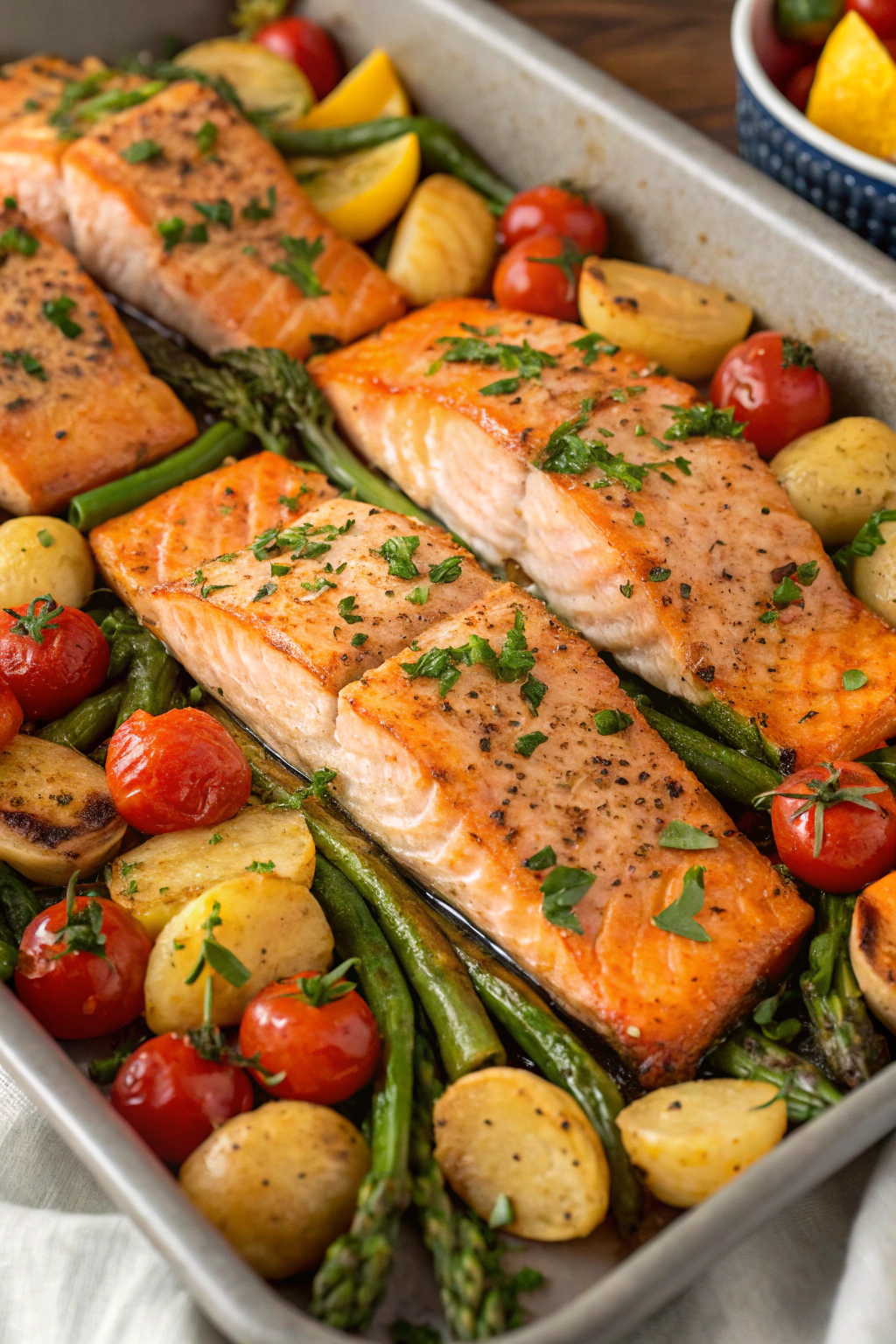
Sheetpan Salmon and Potatoes With Veggies
Ingredients
Instructions
- Preheat the oven to 425°F (220°C). Line a large sheet pan with parchment paper or lightly grease it.
- In a large bowl, toss the halved baby potatoes with 1 1/2 tablespoons olive oil, about half of the salt, and half of the black pepper. Spread the potatoes in a single layer on the prepared sheet pan.
- Roast the potatoes for 12 to 15 minutes, or until they begin to soften and brown on the edges.
- While the potatoes roast, pat the salmon fillets dry with paper towels. In a small bowl, whisk together the remaining 1 1/2 tablespoons olive oil, lemon juice, garlic powder, smoked paprika, Italian seasoning, and the remaining salt and pepper.
- After the potatoes have started to brown, remove the sheet pan from the oven. Add the broccoli florets, red bell pepper strips, and red onion wedges to the pan. Drizzle with about half of the seasoned oil mixture and toss gently to coat the vegetables.
- Make spaces on the sheet pan and place the salmon fillets skin-side down (if using skin-on) among the potatoes and vegetables. Brush or spoon the remaining seasoned oil mixture over the top of the salmon fillets.
- Return the sheet pan to the oven and roast for 10 to 12 minutes more, or until the salmon is opaque and flakes easily with a fork and the vegetables are tender and lightly browned.
- Remove from the oven and garnish with chopped fresh parsley and lemon wedges, if desired. Serve the salmon with roasted potatoes and veggies immediately.
Notes
Approximate per serving (1 salmon fillet with potatoes and veggies): 430 calories; fat 22 g; saturated fat 4 g; carbohydrates 28 g; fiber 5 g; sugars 5 g; protein 31 g; sodium 520 mg. Values are estimates and will vary based on exact ingredients, brands, and portion sizes.